Smithells Metals Reference Book, Eighth Edition

Chapter 9: Physical Properties of Molten Salts

Overview

In the following tables are given densities, electrical conductivities, surface tensions and coefficients of viscosity of pure molten salts, molten binary salt systems and other ionic melts. For comprehensive data and treatment, reference should be made to G. J. Janz, 'Molten Salts Handbook', 1967, Academic Press, New York/London.

REFERENCES TO TABLE 9.1
TABLE 9.1: DENSITY OF PURE MOLTEN SALTS

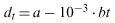
The density of most pure molten salts varies almost linearly with temperature, and may be represented by the equation:


where d t is the density in g cm -3, a and b are constants, and t is the temperature in C over appreciable ranges of temperature. Values of the constants and the appropriate temperature ranges are given below. Principal references are in bold type.

Substance

a

b

Range of observations [*] C

References

AgBr

6.025

1.04

m.p. to 820

91, 60, 33, 10

AgCl

5.257

0.849

467 to 637

140,97,91,33

AgClO 3

4.262 6

1.742

m.p. to 250

18

AgI

6.139

1.01

600 to 800

33

AgNO 3

4.167

1.00

m.p. to 410

108,100,97,18,112, 105,93,34, 10

AlBr 3

2.875

2.314

m.p. to 225

89, 88, 38

AlCl 3

1.805

2.5

194 to 250

38

AlI 3

3.70

2.5

m.p. to 250

38

Al 2O 3

5.259

1.127

2 102 to 2 352

121

AsBr 3

3.455

2.6

50 to 100

96, 34, 14

AsCl 3

2.205

2.18

m.p. to 130

87, 8, 1

AsF 3

d 1 = 2.665 9 = 3.839 10

UNLIMITED FREE
ACCESS
TO THE WORLD'S BEST IDEAS

SUBMIT
Already a GlobalSpec user? Log in.

This is embarrasing...

An error occurred while processing the form. Please try again in a few minutes.

Customize Your GlobalSpec Experience

Category: Heat Treatment Salts
Finish!
Privacy Policy

This is embarrasing...

An error occurred while processing the form. Please try again in a few minutes.