Gas Well Deliquification

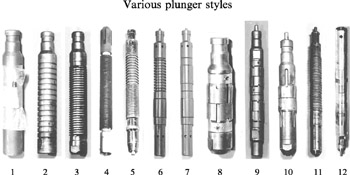
Figure 7-3 shows some typical plungers that were tested to provide data for developing plunger lift system models. [2] The types shown are typical but do not include all types of plungers available to the industry.
In this figure, the plungers are identified from left to right as:
Capillary plunger, which has a hole and orifice through it to allow gas to "lighten the liquid slug above the plunger"
Turbulent seal plunger with grooves to promote the "turbulent seal"
Brush plunger used especially when some solids or sand are present
Another type of brush plunger
Combination grooved plunger with a section of "wobble washers" to promote sealing
Plunger with a section of turbulent seal grooves and a section of spring-loaded expandable blades. Also, a rod can be seen that will open and close a flow-through path through the plunger depending if it is traveling down or up
Plunger with two sections of expandable blades with a rod to open flow through plunger on downstroke
Mini-plunger with expandable blades
Another with two sections of expandable blades and rod to open flow-through passage during plunger fall
Another with expandable blades and a rod to open a flow through passage during the plunger fall and to close it during the plunger rise
Wobble washer plunger and rod to open flow passage during the plunger fall
Plunger with expandable blades with a rod to open a flow-through passage on the plunger fall
Several of these...