Manufacturing Technology for Aerospace Structural Materials

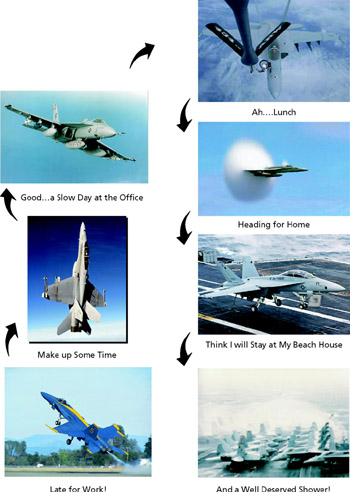
The remarkable performance characteristics of a modern fighter aircraft (Fig. 1.1) are, to a large degree, a result of the high performance materials used in both the airframe and propulsion systems. A commercial aircraft will fly over 60 000 h. during its 30-year life, with over 20 000 flights, and will taxi over 100 000 miles. [1] To obtain continual performance increases, designers are constantly searching for lighter and stronger materials. Reducing material density is recognized as the most efficient way of reducing airframe weight and improving performance. It has been estimated that reductions in material density are about 3 to 5 times more effective than increasing tensile strength, modulus or damage tolerance. [2] For gas turbine jet engines, advances in materials have allowed significantly higher operating temperatures, which result in increases in thrust levels, again increasing performance.
Source: U.S. Navy & The Boeing Company
Over the next 20 years, it has been forecast that there will be a significant increase in the demand for air travel, especially in the large population centers in Asia. It is possible that the number of air travelers will double with the demand for new aircraft increasing between 13 500 and 17 000, with yearly deliveries between 675 and 850 aircraft, at a total estimated value of approximately 1.25 trillion dollars. [3]
Airframe durability is becoming a greater concern since the life of many aircraft, both commercial and military, are being extended far beyond their intended...