Bretherick's Handbook of Reactive Chemical Hazards, Volume 1, Seventh Edition

See other HALOALKANES

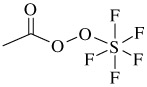
Hopkinson, M. J. et al., J. Fluorine Chem., 1976, 7, 505
The peroxyester and its homologues, like other fluoroperoxy compounds, are potentially explosive and may detonate on thermal or mechanical shock.
See related FLUORINATED PEROXIDES AND SALTS, PEROXYESTERS

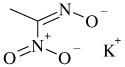
Rodd, 1965, Vol. 1B, 98
Isolated salts of 'nitrolic acids', produced by action of nitrous acid on 1-nitroalkanes, are explosive.
See related NITROALKANES, OXIMES
Juenge, E. C. et al., J. Org. Chem., 1961, 26, 564
When freshly prepared, it is violently pyrophoric but on storage it becomes less reactive and slow to ignite in air, possibly owing to polymerisation.
See related ALKYLMETALS
NSC 683, 1981; FPA H108, 1981; HCS 1980, 104
RSC Lab. Hazard Data Sheet No. 31, 1984
A moderately endothermic compound (
+53.1 kJ/mol, 1.29 kJ/g) which, though reactive, does not exhibit inherent instability under normal conditions.
See Fluorine: Acetonitrile, etc.
See NITRATING AGENTS
See Dinitrogen tetraoxide: Acetonitrile, Indium
See Trichlorosilane: Acetonitrile, etc.
Fraser, G. W. et al., Chem. Comm., 1966, 532
Nitrogen fluorine compounds are potentially explosive...