Structural Dynamics and Vibration in Practice: An Engineering Handbook
10.5: Correlation Functions and Cross-Power Spectral Density Functions

10.5 Correlation Functions and Cross-Power Spectral Density Functions

In this chapter, so far we have seen that many problems in random vibration can be solved by the use of the power spectral density function alone, together with an understanding of probability density and distribution functions. There are some problems, however, for which this will not be sufficient. Before looking at these, we must first introduce a few more topics, such as correlation functions, and how they are related to spectral density functions, including cross- power spectral density functions.

10.5.1 Statistical Correlation

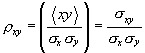
Before considering autocorrelation and cross-correlation functions, we should briefly consider correlation, a basic concept in statistics. The correlation coefficient is often applied to pairs of properties, such as the height and weight of men in a given population. The idea can be extended to include sampled values of two time histories, x( t) and y( t), say. The correlation coefficient for simultaneous pairs of samples of x and y, taken from x( t) and y( t), where the mean values are zero, is defined as:

(10.64)

where ? x and ? y are the standard deviations of x and y, respectively and ? xy = ? xy ? is known as the covariance. It can be seen from Eq. (10.64), incidentally, why ? xy is sometimes called the normalized covariance.

The correlation coefficient, ? xy, is...

UNLIMITED FREE
ACCESS
TO THE WORLD'S BEST IDEAS

SUBMIT
Already a GlobalSpec user? Log in.

This is embarrasing...

An error occurred while processing the form. Please try again in a few minutes.

Customize Your GlobalSpec Experience

Category: Color Meters and Appearance Instruments
Finish!
Privacy Policy

This is embarrasing...

An error occurred while processing the form. Please try again in a few minutes.