1.1. The N-Body Problem
The fundamental mathematical problem considered throughout this book is a non continuum problem called the N-body problem, which is described in complete generality as follows. In cgs units and for i = 1, 2,..., N, let P i of mass m i be at 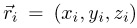 , have velocity
 = ( v i,x, v i,y, v i,z), and have acceleration
 = ( a ix, a iy, a i, Z) at time t ? 0. Let the positive distance between P i and P j, i ? j, be r ij = r ji ? 0. Let the force on P i due to P j be
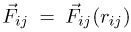 , so that the force depends only on the distance between P i and P j. Also, assume that the force
 on P j due to P i satisfies
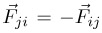 . Then, given the initial positions and velocities of all the P i,i = 1, 2, 3,..., N, the general N-body problem is to determine the motion of the system if each P i interacts with all the other P j's in the system.
The prototype N-body problem was formulated in about 1900. In it the P i were the Sun and the then known eight planets, and the force on each P i was gravitational...


 TABLE OF CONTENTS