Ted Slezak
Armstrong-Blum Mfg. Co.
Chicago, Illinois
Cutoff is a common manufacturing operation. It occurs whenever a long workpiece is divided into pieces of shorter, more useful length. Very often it is part of a multiple operation as, for example, in the functioning of an automatic screw machine or progressive-stamping die. Less frequently but still often, cutoff is employed as a separate operation. It is with this last case that this chapter is concerned.
PROCESSES FOR CUTTING TO LENGTH
The following cutoff processes are the ones most frequently employed: band-saw, hacksaw, circular-saw, abrasive-wheel, friction-saw, shear, lathe-type-machine, thin-wall-tubing cutters (shear type), flame cutting, and other methods such as electron-beam and laser-beam, EDM wire cutting, etc. (See Figs. 4.2.1 through 4.2.5.)
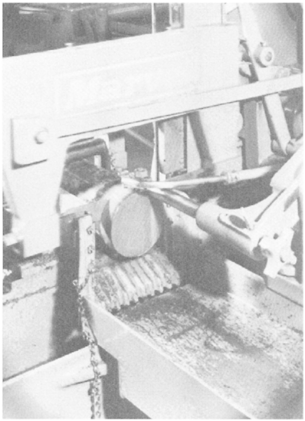 Figure 4.2.1: Hacksaw cutoff of bar stock. ( Courtesy Armstrong-Blum Mfg. Co.)
 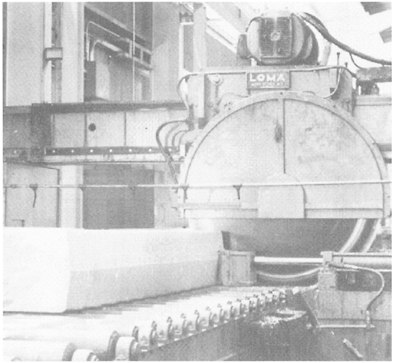 Figure 4.2.2: Circular-saw cutoff of aluminum billets. ( Courtesy Hill Acme Co.)
  Figure 4.2.3: Typical parts and shapes cut by abrasive saws. ( Courtesy W. J. Savage Co.)
 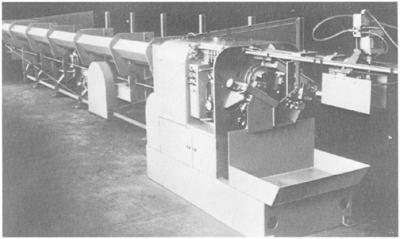 Figure 4.2.4: Lathe-type cutoff machine. ( Courtesy Modern Machine Tool Co.)
 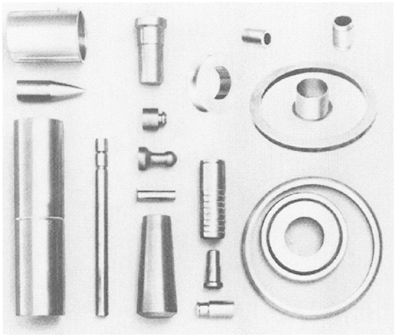 Figure 4.2.5: Typical parts cut off with lathe-type cutoff machines. ( Courte Modern Machine Tool Co.)
 Cutoff machines have three major components:
-
The stock-feeding mechanism, which manually or automatically feeds uncut lengths of stock to the cutoff tool
-
The actual cutting mechanism saw, single-point tool, abrasive wheel, etc.
-
The discharge table or chute for cut lengths
For manual cutting, the first and third components may be simple worktable...
Copyright The McGraw-Hill Companies, Inc. 1999 under license agreement with Books24x7


 TABLE OF CONTENTS