Electronic Failure Analysis Handbook: Techniques and Applications for Electronic and Electrical Packages, Components, and Assemblies
Perry L. Martin
National Technical Systems (NTS)
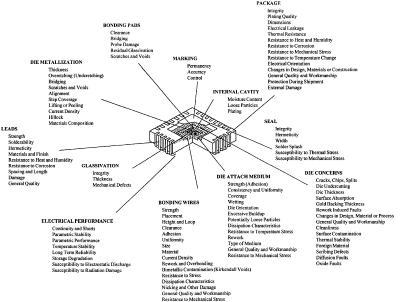
Failure analysis has played a preeminent role in the success of the semiconductor industry and has a primary responsibility for the monumental increases in semiconductor reliability. The importance of semiconductor, and especially microelectronic, failure analysis has spawned multiple conferences and symposia which have generated volumes of work pertaining to microelectronic failure analysis guidelines and case studies. In addition are many independent works on microelectronic failure analysis, some of which are noted in the references. This chapter will present an outline of the many procedures and techniques performed during semiconductor failure analysis and a few of the more prevalent failure modes that they uncover. Figure 19.1 identifies some of the primary device reliability concerns.
Semiconductor devices are almost always part of a larger, more complex piece of electronic equipment. The semiconductor device will work in concert with other circuit elements and be subject to system, subsystem, and environmental influences. It often happens that, after equipment failure, a technician will troubleshoot the unit and make a determination that a particular device is at fault. The device will be removed from the assembly, using less-than-controlled thermal, mechanical, and electrical [e.g., electrostatic discharge (ESD)] stresses and submitted to a lab for analysis. This is not the optimal failure analysis path.
For the analysis of field failures, the failure investigation initially should be directed toward gaining an acquaintance with all pertinent details relating to...