Facility Piping Systems Handbook, Second Edition
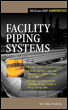
Using a total systems approach, this handbook progresses from fundamentals of system and component operation to a design procedure that allows quick and accurate component and pipe sizing.
 TABLE OF CONTENTS
 This chapter will describe the design, selection, and installation requirements for atmospheric storage, distribution, and dispensing of new or replacement systems for liquid-petroleum-based fuels used, for example, in automobiles and other internal combustion motors such as emergency generators and fire pumps. Typical systems have a volume of product storage limited to approximately 6000 gal (22,500 L). Gasoline tanks are installed for commercial purposes and at facility sites primarily intended to serve the public or company-owned vehicles. Similar installations include liquids such as kerosene, motor lubrication oil, and waste oil.
Fuel oil systems for boilers and other heat-producing apparatus and chemical storage facilities are outside the scope of this handbook. Other system aspects not discussed concern existing tanks such as investigation, closure, removal, and repairs of leaking systems.
A storage tank for liquid fuel is any stationary receptacle designed to contain an accumulation of regulated substances. Tanks can be constructed of materials such as steel, concrete, plastic, or various combinations that provide structural support.
A storage tank is considered underground if the sum of the total tank volume of single or multiple tanks, including all of the associated and interconnecting piping, is 10 percent or more below grade or covered with earth.
A regulated substance is any designated chemical that includes hydrocarbons derived from crude oil such as motor fuels, distillate fuel oils, residual fuels, lubricants, used oils, and petroleum solvents. Kerosene is also a regulated substance. Hydrocarbons are measured in parts per...