Facility Piping Systems Handbook, Second Edition
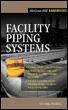
Using a total systems approach, this handbook progresses from fundamentals of system and component operation to a design procedure that allows quick and accurate component and pipe sizing.
 TABLE OF CONTENTS
 This section will describe centrally distributed oxygen, nitrous oxide, nitrogen, and compressed air systems used specifically in health care facilities. They are used variously for direct patient care, life support, as an anesthetic, or to power medical instruments. These compressed gas systems are characterized by gas purity, pipeline cleanliness, and total system reliability.
The definition of a health care facility includes hospitals, nursing homes, medical and dental offices, clinics, and ambulatory care centers. These facilities fall into two general categories: short-term acute care and long-term care. Short term is considered the typical acute care surgical-medical hospital. Long-term care includes specialty care and nursing home facilities that do not have direct surgical and other specialized capabilities normally associated with hospitals.
The overriding system concept is reliability. The central supply source and piping system shall be designed so that it shall not fail to provide the minimum amount of gas required by the facility no matter how high the demand may be during any condition, even those requiring a much higher than expected usage or experiencing equipment component failure.
The systems consist of a central gas storage or source, the distribution system, station outlets, and alarms.
Building codes that govern building construction and the design and installation of mechanical systems do not have direct provisions for regulating the design of medical gas systems. Such regulation is done by reference to standards that have been so widely accepted throughout the industry and by the...