Facility Piping Systems Handbook, Second Edition
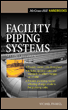
Using a total systems approach, this handbook progresses from fundamentals of system and component operation to a design procedure that allows quick and accurate component and pipe sizing.
 TABLE OF CONTENTS
 An often present threat to personnel safety in facilities is accidental exposure and possible contact with toxic gases, liquids, and solids. This chapter describes water-based emergency drench equipment and systems commonly used as a first aid measure to mitigate the effects of such an accident, and breathing air systems that supply air to personnel for escape and protection when exposed to either a toxic environment resulting from an accident or normal working conditions that make breathing the ambient air hazardous.
When toxic or corrosive chemicals come in contact with the eyes, face, and body, flushing with water for 15 min with clothing removed is the most recommended first aid action that can be taken by nonmedical personnel prior to medical treatment. Emergency drench equipment is intended to provide a volume of water sufficient to effectively reach any area of the body that has been exposed to or has come into direct contact with any injurious material. Within facilities, this is accomplished by means of specially designed emergency drench equipment, such as showers, drench hoses, and eye and face washes located adjacent to all such hazards. Although the need to protect personnel is the same for any facility, specific requirements will differ widely because of architectural, aesthetic, location, and space constraints necessary for various industrial and laboratory installations.
Emergency drench equipment consists of showers, eyewash units, facewash units, and drench hoses along with interconnecting piping and alarms if required. Each of these units is...