Handbook of Electric Power Calculations, Third Edition
A powerful calculations tool for electric power engineers and technicians, this book offers essential, step-by-step procedures and examples for solving a wide array of electric power problems.
 TABLE OF CONTENTS
 Hesham Shaalan, Ph.D.
Assistant Professor
Georgia Southern University
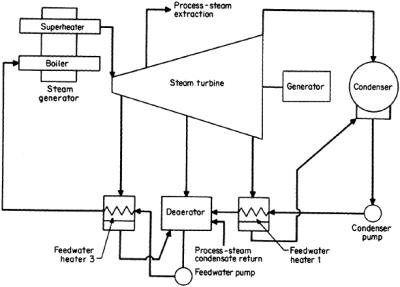
During the 1970s, energy issues became prominent, and one of those issues was to improve the efficiency of energy utilization. The major piece of legislation to focus on this issue was the 1978 Public Utilities Regulatory Act (PURPA). This act required that utilities purchase power and pay as much as the utility s avoided cost per kilowatt-hour for the cogenerated electricity. Cogeneration involves the simultaneous production of process steam and electricity. PURPA gives various legal rights to nonutility owners of cogeneration facilities meeting certain standards. The effect of these rights is to make on-site generation a viable alternative for large industrial users of steam and to open up the generation sector of the electric industry to competition.
During the 1960s and 1970s, power generated by industrial companies averaged 500 MW of additions per year. These capacity additions were very small in comparison to the 15,000 MW per year of utility additions during the same time period. After 1980, however, nonutility capacity additions rose significantly as a major source of electric capacity additions. The key incentive for a company to begin cogeneration is that it reduces overall industrial process steam and electricity costs. Cogeneration facilities use significantly less fuel to produce electricity and steam than would be needed to produce the two separately. Thus, by using fuels more efficiently, cogeneration can also make a significant contribution to the nation s efforts to conserve energy resources.