Handbook of Electric Power Calculations, Third Edition
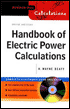
A powerful calculations tool for electric power engineers and technicians, this book offers essential, step-by-step procedures and examples for solving a wide array of electric power problems.
 TABLE OF CONTENTS
 Marco W Migliaro, P.E., Fellow IEEE
Chief Electrical and I&C Engineer
Florida Power & Light
Nuclear Division
Batteries may be classified into two broad categories, primary batteries, which are not rechargeable, and secondary batteries, which are rechargeable. Secondary batteries are also referred to as storage batteries. They too, may be classified into two broad categories. The first is SLI (starting, lighting, and ignition) batteries and the second is industrial batteries.
SLI batteries include those used in automobiles, trucks, farm equipment, small internal-combustion generators, pleasure boats, etc. These batteries provide power for cranking (i.e., starting) and/or loads such as lights, controllers, and small motors (e.g., for a bilge pump).
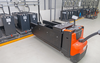
Industrial batteries include motive power (e.g., fork lifts and aircraft tugs), railcar, locomotive, electric vehicle, missile, submarine, stationary, etc. Of these types, it is the stationary battery that will be discussed in this section, and it is the calculations associated with stationary batteries that will be addressed. Stationary batteries are used in standby service and derive their name from the fact that once they are installed, they remain stationary in one location. Stationary batteries are used in many services, including telecommunications, electric power (substations and generating stations), industrial control, uninterruptible power supply (UPS) systems, emergency lighting, photovoltaic systems, and energy storage systems. Table 18.1 provides relevant data on some of the many applications in which the stationary battery is used. Photovoltaic systems may be stand-alone power systems in applications such as marine buoys, remote railway...