Introduction to Communication Systems Simulation
Probability theory is what is known as an axiomatic system. The basic idea is to define a collection of objects or sample space with each element being a sample point. A set of rules (axioms) regarding these objects is then postulated. From there, the system is expanded with additional theorems and properties. The nature of the objects and the axioms are totally at the discretion of the developer. Hopefully a useful system results.
The axioms of probability are as follows:
Axiom 1: Given an experiment, there exists a sample space {S} that represents all possible outcomes of an experiment, and a subset {A} of [S] called events.
Axiom 2: For each event {A} there is an assigned probability of that event, such that P{A}=0.
Axiom 3: The probability of the whole space is P{S}=0.
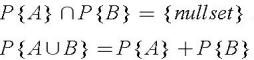
Axiom 4: If two events {A} and {B} are mutually exclusive, then
If {A} and {B} are not mutually exclusive, then the following holds:
As an example of such a sample space, consider the game of chance, which involves two dice, each with sides numbered from 1 to 6. Table B.1 is one possible sample space that involves 6*6=36 objects. In this sample space we can ask questions (experiment) regarding both dice individually (e.g., what is the probability of the event that die A is even (2, 4, 6) and die...