Lineman's and Cableman's Handbook, Eleventh Edition

Filled with over 1500 illustrations, this classic text explains the basic principles, equipment, standards, and safety regulations required for optimal on-the-job performance.
 TABLE OF CONTENTS
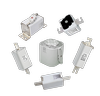
 Fuses are relatively inexpensive protection devices connected into circuits to open the circuit and de-energize the apparatus to prevent or limit damage due to an overload or short circuit. Fuses are used to protect the electric system or source from interruption or damage when a short circuit or overload occurs on a circuit beyond the fuse. A fuse is an intentionally weakened spot in an electric circuit. It utilizes an element made of silver, tin, lead, copper, or an alloy such as tin-lead, which will melt at a predetermined current maintained for a predetermined length of time. When the current through such a metal becomes excessive, the resistance offered by the metal to the flow of current develops enough heat to melt the metal, thereby opening the circuit before abnormal current can damage the electric source or any connected apparatus.
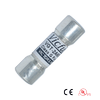
Fuses are usually enclosed to prevent the molten metal from flying and doing damage or causing a fire. Enclosing the fuse aids in quenching the arc. The melting of the fuse is often accompanied by a puff of smoke and vaporized metal. This action is sometimes referred to as the blowing of the fuse.
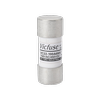
Fuses can be broadly classified into low- and high-voltage fuses. Low-voltage fuses are of the plug or cartridge type. High-voltage fuses commonly used on an electric distribution system are the expulsion, open-link, current limiting, liquid, and boric acid types.
Plug-Type Fuses. Low-voltage plug-type fuses can be used for residential services and for ordinary lighting...