Quantitative Measurements for Logistics

There are many perspectives as to what quality is and how it should be measured. One perspective is that a product or service meets or exceeds customer expectations consistently, and with minimum variation. Many quality programs use Statistical Process Control (SPC), which is a graphical, quantitative method for demonstrating that a process is operating in a controlled state, or is simply "in control."
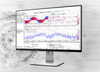
Every process produces some variation. Control Charts show clearly and graphically how a process is behaving over time. Statistical Process Control (SPC) improves quality and reduces the waste of logistics resources. Results can be used while it still matters. Control charts allow logisticians to easily separate the predictable events from the unpredictable, and to respond only when appropriate. The control chart is the fundamental tool of statistical process control, as it indicates the range of variability that is built into a system. It helps determine whether or not a process is operating consistently or if a special cause has occurred to change the process.
The bounds of the control chart are marked by upper and lower control limits that are calculated by applying statistical formulas to data from the process. Data points that fall outside these limits represent variations due to special causes, which can usually be found and eliminated.
Used properly, Statistical Process Control can:
Allow a better understanding of the process
Reduce scrap and optimize performance
Predict problems before they arise
Generate historical information
Gain customer confidence
X-BAR Chart