Semiconductor Heterojunctions and Nanostructures

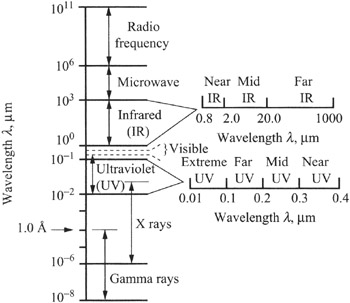
Semiconductor heterojunctions and nanostructures have been investigated for their applications in electronic and optoelectronic devices. This chapter is directed toward the optoelectronic devices, such as detectors and emitters. There is a myriad of applications for the optoelectronic devices including 1.31- and 1.55- ?m optical communications where the silica fibers exhibit the lowest losses, terahertz applications, infrared and long-wavelength infrared detectors, and multijunction solar cells. One of the mechanisms used to generate light from a semiconductor is the radiative recombination of electrons and holes across the fundamental bandgap, which gives rise to photon emission. Soon after the invention of the laser, pn-junction GaAs lasers were demonstrated with an emission in the 0.827- to 0.886- ?m spectral range, which is basically limited by the bandgap of the GaAs material. This spectral range is outside the energy spectrum visible to the human eye. Substantial research has been performed since then toward the development and production of emitters in the visible, ultraviolet, and infrared spectral regions (see Fig. 10.1 for various spectral region limits). For example, recent research efforts in III-nitride semiconductor materials lead to the production of blue and green light-emitting diodes (LEDs) and diode lasers. Further research has pushed the performance of the III-nitride materials to the ultraviolet and far ultraviolet LEDs.
The development of infrared emitters goes back to the 1960s and continues to develop as...