 | This up-to-date text/reference is designed to present the fundamental principles of robotics with a strong emphasis on engineering applications and industrial solutions based on robotic technology. It can be used by practicing engineers and scientists - or as a text in standard university courses in robotics. The book has extensive coverage of the major robotic classifications, including Wheeled Mobile Robots, Legged Robots, and the Robotic Manipulator. A central theme is the importance of kinematics to robotic principles. The book is accompanied by a CD-ROM with MATLAB simulations, photographs, tutorials, and third-party software (see About the CD-ROM section). |
 TABLE OF CONTENTS
 Robotics
Chapter 3.1 Introduction to Electronics
In This Chapter
- Introduction to Electronics
- Some Basic Elements
- Steps to Design and Create a Project
- Sensor Design
- Using the Parallel Port of the Computer
- Serial Communication: RS-232
- Using the Microcontroller
- Actuators
3.1 INTRODUCTION TO ELECTRONICS
The concept of electronics is used about electronic components, integrated circuits, and electronic systems. Thirty years ago, no one ever thought of the expansive growth of the electronics, information, and communication technology we have seen the last few decades. Our new digital life is built on the development of miniaturized electronic circuits (microchips) and broadband telephone and data transmission through optical fiber and wireless networks.
The computer has been a common tool both at work and at home. By continued miniaturization of digital electronic components and circuits, the PC and other advanced electronics have been commercially available for people in general. The capacity of computers almost doubles every year. This

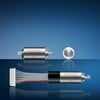
FIGURE 3.1 Introduction.
expansion is achievable because of tighter packaging of the components onto the microchip.
Modern cars have been exposed by a tremendous development where the main parts of the functions have been controlled by the electronics. The cars are equipped with electronics like airbag systems, ABS brakes, antispinning system, and burglar alarm. Within transportation, we have obtained advanced electronic navigation systems, instrument landing systems for airplanes, and anticollision systems for ships and cars. Automatic toll rings around the largest cities provide money for new roads and attempts for environmentally friendly traffic.
Furthermore, modern electronics have revolutionized medical diagnosis by introducing new techniques like CT (Computer Tomography), MR (Magnetic Resonance), and ultrasonic imaging systems.
Common for the realization of these new technical developments, besides digital circuits, are the sensors that can feel sound, light, pressure, temperature, acceleration, etc., and actuators that can act, i.e., carry out specific operations like switch on a knob, or transmit sound or light signals.
The base of all the big circuits is capacitors, resistors, and transistors. Any electronic device or equipment generally has these components as its starting point. So before going for the circuits, one needs to has some knowledge about these basic components. Some of these components are discussed below in detail.
© 2006-2026 Infinity Science Press. All rights reserved.