
Excimer Lasers Lasers
Description
Excimer lasers are a family of lasers that emit powerful pulses of ultraviolet light. These lasers are capable of producing different output wavelengths by operating with various gas mixtures. They are known for their ability to emit short bursts of electromagnetic radiation, typically lasting nanoseconds or tens of nanoseconds. The term "excimer" is derived from "excited dimer," referring to the molecular structure that exists only in an excited state.
Working Principle
Excimer lasers operate by using a gas medium composed of noble gases and halogen gases. A high voltage pulse excites the gas atoms, causing them to form dimers, which are unstable molecules that exist only in an excited state. When these dimers dissociate, they emit a burst of ultraviolet radiation. The rapid dissociation prevents reabsorption of the emitted radiation, allowing for high gain with a relatively small concentration of excimers. The emitted radiation is amplified within an optical resonator, consisting of mirrors at both ends of the gas tube, until the laser beam is emitted.
Applications
Excimer lasers are widely used in the production of semiconductor integrated circuits through photolithography, as well as in micromachining and the manufacturing of microelectronic devices. They are particularly valued for their precision and ability to produce fine features in these applications. Additionally, excimer lasers are used in marking processes, where they generate dark marks on light-colored substrates through a photochemical process.
Advantages over other Lasers
Excimer lasers are considered the most powerful lasers in the ultraviolet region. They offer exceptional precision and capability, especially in industrial applications where extreme environments and complex processes are involved. Their ability to produce high-powered ultraviolet light makes them superior for specific tasks like photolithography in semiconductor manufacturing.
Limitations
One of the primary limitations of excimer lasers is their cost. They are generally more expensive than other types of lasers, such as Nd:YAG lasers. Additionally, their application in marking plastics is limited due to their higher cost and the specific requirement of producing a dark mark on a light substrate. The technology for medical and industrial applications is still evolving, which may also pose limitations in terms of availability and development.
Considerations
When considering the use of excimer lasers, it is important to account for the initial costs, which can be high due to the complexity and specificity of the technology. Operating expenses may also be significant, given the need for precise control and maintenance of the gas mixtures and optical components. Durability and accuracy are critical factors, as the optical components must perform at the highest possible level to meet demanding industrial requirements. Replacement and maintenance costs should also be considered, as the components may require regular servicing to ensure optimal performance.

from AMS Technologies Ltd.
AMS Technologies' high power CO2 and excimer lasers offer an unbeatable combination of laser performance, reliability, customer support and value . Our breadth of experience in industrial and academic applications for these lasers is unrivalled. In addition, we provide comprehensive support... [See More]
- Laser Type: Carbon Dioxide Lasers; Excimer Lasers; Helium Cadmium Lasers; Helium Neon Lasers; Ion Lasers
- Laser Wavelength: UV; Violet; Green; Red; Infrared
- Laser Output: Pulsed
- Features: Polarized Output
from Laser 2000 GmbH
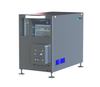
MLase Excimer LaserMLI series. These compact stand-alone UV Lasers offer the bestlife times and reliability available on the market.With a homogeneous beam profile and energystabilization, they are ideal for demanding applications. Simple connectionvia USB and control with the included software... [See More]
- Laser Type: Excimer Lasers
- Laser Wavelength: UV
- Laser Output: Pulsed
- Wavelength Range: 193 to 248