
Tungsten Electrodes and Electrode Materials
Last Updated: April 1, 2025
Description
Tungsten electrodes are components used in various welding and machining processes. They are primarily made from tungsten, a refractory metal known for its high melting point and temperature resistance. These electrodes are integral to forming an arc between the electrode and the work surface, facilitating the welding or machining process.
Working Principle
Tungsten electrodes function by creating an electric arc between the electrode and the workpiece. This arc generates the necessary heat to melt metals or other materials, allowing for welding or machining. Tungsten's high melting point and temperature resistance make it ideal for maintaining structural integrity under the intense heat and electrical conditions of these processes. The electrodes' ability to withstand high temperatures without deforming or eroding significantly enhances their utility in precision applications.
Applications
Tungsten electrodes are widely used in Gas Tungsten Arc Welding (GTAW) and Plasma Arc Welding, where they form part of the welding gun. They are also employed in Electrical Discharge Machining (EDM) for creating intricate geometries, particularly in machining carbides. Tungsten electrodes are essential in applications requiring high precision and durability, such as aerospace and automotive industries.
Advantages over other Electrodes and Electrode Materials
Tungsten electrodes offer several advantages over other materials. Their high melting point and temperature resistance make them less prone to deformation and erosion under high-temperature conditions, unlike electrodes made from softer materials. Tungsten's structural integrity allows for precise machining and welding, which is crucial in applications requiring fine surface finishes and intricate details. Additionally, tungsten electrodes are less susceptible to wear, providing longer service life compared to materials like copper or brass.
Limitations
Despite their advantages, tungsten electrodes have limitations. Their relatively low electrical conductivity compared to materials like copper can affect efficiency in certain applications. Tungsten electrodes can also be more expensive than other materials, which may impact their cost-effectiveness for some projects. Additionally, the brittleness of tungsten can pose challenges in handling and machining.
Considerations
When selecting tungsten electrodes, several factors should be considered. Initial costs can be higher due to the expense of tungsten as a raw material. However, their durability and resistance to wear can offset these costs over time by reducing the frequency of replacements. Operating expenses may also be influenced by the need for specialized equipment to handle tungsten's brittleness and low conductivity. Maintenance costs can be minimized by choosing high-quality electrodes and ensuring proper handling and storage to prevent damage.

from Plansee SE
Extrusion presses are used to form non-ferrous metals such as brass, copper-nickel and aluminum-bronze, as well as stainless steel, into rods, wires or tubes. The metal blank is first heated to its forming temperature and is then pressed through the die using a ram. This gives the metal its external... [See More]
- Material: Tungsten
- Shape / Form: Custom / Application Specific
- Type: EDM Electrode
- Applications: Erosion Electrodes

from Sunstone Engineering
10 – 1.0mm Tungsten Electrodes 2.6 inches in length. 10 – 0.5mm Tungsten Electrodes 2.6 inches in length. Pack contains a total of 20 electrodes. [See More]
- Material: Tungsten
- Applications: Welding Electrodes
- Shape / Form: Button

from Rhenium Alloys, Inc.
Tungsten Alloys provides a wide range of Wire products to serve applications in major electronics products, thermocouples, high temperature furnace parts, and welding requirements. Our Rhenium Wire is 99.99% pure and has high strength and excellent ductility. Molybdenum-47.5%-Rhenium Wire is used in... [See More]
- Material: Tungsten
- Shape / Form: Bar Stock (optional feature); Wire
- Type: Cathodic Emitters / Filaments
- OD / Width: 1.00E-3 to 6
from Plansee SE
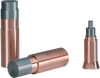
In the resistance welding process, the parts to be joined are pressed together and heated by an electric current until pools of molten material form at individual points between them. This operation requires high currents and large pressing forces. During the welding of thick sheets, the forces... [See More]
- Material: Molybdenum; Tungsten
- Length: 19.69 to 118
- Shape / Form: Custom / Application Specific; Bar Stock (optional feature); Rod Stock (optional feature)
- OD / Width: 0.1181 to 8.66

from Sunstone Engineering
0.5 mm Tungsten Electrodes 2.6 inches in length. Pack of 15. [See More]
- Material: Tungsten
- Applications: Welding Electrodes
- Shape / Form: Button

from Plansee SE
If a voltage is applied at the anode and cathode then a light-emitting arc is generated. During operation, the tips of the electrodes must withstand temperatures of 1 800 to 3 200 °C. They conduct the emitted heat to the electrode body and the support rods (stems). Tungsten is the only metal... [See More]
- Material: Tungsten
- Shape / Form: Custom / Application Specific

from Sunstone Engineering
1.0mm Tungsten Electrodes 2.6 inches in length. Pack of 15. [See More]
- Material: Tungsten
- Applications: Welding Electrodes
- Shape / Form: Button