
Digital Interface Spectrum Analyzers and Signal Analyzers
Last Updated: April 1, 2025
Description
Digital Interface Spectrum Analyzers and Signal Analyzers are sophisticated instruments designed to measure and display the frequency spectrum of electrical signals. They provide a visual representation of the magnitude of the Fourier transform of input signals, allowing users to observe and measure signal levels and distortions. These analyzers are capable of examining the amplitude versus frequency of a given signal source, antenna, or signal distribution system, offering insights into signal stability, distortion, amplitude, and modulation quality.
Working Principle
Digital Interface Spectrum Analyzers and Signal Analyzers operate by converting time-domain signals into the frequency domain using digital signal processing techniques. This conversion is typically achieved through a Fast Fourier Transform (FFT), which maps the time-domain signal into a set of sines and cosines in the frequency domain. This process allows the analyzers to provide detailed information about the frequency content of signals, making them invaluable for identifying spurious signals, interferences, and instabilities that are not apparent in time-domain displays. The ability to quickly view wide spectrum widths and zoom in on specific signals enhances their utility in research and development, manufacturing, and field service applications.
Applications
These analyzers are used in a variety of applications, including noise and signal-to-noise measurements, modulation frequency selection, and tracking down spurious signals and interferences. They are essential tools in the design and debugging of photo-measurement systems and are widely used in the R&D lab, manufacturing, and field service to ensure compliance with regulations regarding emissions.
Advantages over other Spectrum Analyzers and Signal Analyzers
Digital Interface Spectrum Analyzers and Signal Analyzers offer several advantages over traditional spectrum analyzers. The use of digital technology and digital signal processing allows for more capabilities, such as the ability to characterize single-shot phenomena and measure both phase and magnitude. These analyzers provide a more detailed frequency content picture, which is crucial for identifying high-frequency instabilities that can affect signal performance.
Limitations
Despite their advantages, these analyzers have limitations, particularly in terms of frequency range, sensitivity, and dynamic range compared to superheterodyne spectrum analyzers. Fourier analyzers, for example, are typically used in baseband signal analysis applications up to 40 MHz, which may not be sufficient for all applications.
Considerations
When considering the purchase and use of Digital Interface Spectrum Analyzers and Signal Analyzers, several factors should be taken into account. Initial costs can be significant, and operating expenses may include calibration and maintenance. Durability and accuracy are critical for ensuring reliable measurements, and users should consider the replacement and maintenance costs associated with these instruments. Additionally, the specific requirements of the application, such as frequency range and dynamic range, should guide the selection of the appropriate analyzer.
from ClampOn, Inc.
Performs frequency analysis in real-time [See More]
- Host Connection: RS232; Digital
- Analyzer Type: PC
- Special Instrument Type: Fixed
- Test Type: Frequency Analysis

from Red Pitaya, d.o.o.
SDRlab 122-16 External clock is based on the SDRlab 122-16 model that is modified to be used with an external clock oscillator, which is important especially for RF applications that operate at other frequencies, require better quality clock or clock synchronization. [See More]
- Host Connection: RS232; RS485 (optional feature); USB; Digital; Ethernet; Radio
- Analyzer Type: Instrument; PC
- Special Instrument Type: Handheld; Portable
- Test Type: Modulation; Distortion; Noise

from Red Pitaya, d.o.o.
SDRlab 122-16 was developed specifically for software-defined radio and more demanding RF applications. [See More]
- Host Connection: RS232; RS485 (optional feature); USB; Digital; Ethernet; Radio
- Analyzer Type: Instrument; PC
- Special Instrument Type: Handheld; Portable
- Test Type: Modulation; Distortion; Noise
from Red Pitaya, d.o.o.
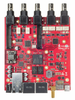
SIGNALlab 250-12 is most sophisticated Red Pitaya product, built for more demanding industrial applications and research, where robustness and performance matter more than cost. [See More]
- Host Connection: RS232; RS485 (optional feature); USB; Digital; Ethernet; Radio
- Analyzer Type: Instrument; PC
- Special Instrument Type: Handheld; Portable
- Test Type: Modulation; Distortion; Noise
from Red Pitaya, d.o.o.
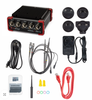
SIGNALlab 250-12 is most sophisticated Red Pitaya product, built for more demanding industrial applications and research, where robustness and performance matter more than cost. [See More]
- Host Connection: RS232; RS485 (optional feature); USB; Digital; Ethernet; Radio
- Analyzer Type: Instrument; PC
- Special Instrument Type: Handheld; Portable
- Test Type: Modulation; Distortion; Noise
from Red Pitaya, d.o.o.
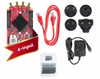
STEMlab 125-14 4 Inputs is based on STEMlab 125-14 board, but instead of 2 inputs and 2 output channels offers 4 Input channels that with improved performance. [See More]
- Host Connection: RS232; RS485 (optional feature); USB; Digital; Ethernet; Radio
- Analyzer Type: Instrument; PC
- Special Instrument Type: Handheld; Portable
- Test Type: Modulation; Distortion; Noise
from Red Pitaya, d.o.o.
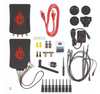
STEMlab 125-14 is our most versatile and popular product, which was introduced to the market in 2013 when Red Pitaya was established. Since then it has been used in a wide variety of contexts, from hobbyists and ham radio operators to industry, research, and space applications. [See More]
- Host Connection: RS232; RS485 (optional feature); USB; Digital; Ethernet; Radio
- Analyzer Type: Instrument; PC
- Special Instrument Type: Handheld; Portable
- Test Type: Modulation; Distortion; Noise

from Red Pitaya, d.o.o.
STEMlab 125-14 is our most versatile and popular product, which was introduced to the market in 2013 when Red Pitaya was established. Since then it has been used in wide variety of contexts, from hobbyists and ham radio operators to industry, research and space applications. [See More]
- Host Connection: RS232; RS485 (optional feature); USB; Digital; Ethernet; Radio
- Analyzer Type: Instrument; PC
- Special Instrument Type: Handheld; Portable
- Test Type: Modulation; Distortion; Noise
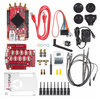
from Red Pitaya, d.o.o.
STEMlab 125-14 Edu Pack is based on Red Pitaya's best-selling DAQ platform and with the chosen accessories a perfect fit for educational purposes. [See More]
- Host Connection: RS232; RS485 (optional feature); USB; Digital; Ethernet; Radio
- Analyzer Type: Instrument; PC
- Special Instrument Type: Handheld; Portable
- Test Type: Modulation; Distortion; Noise
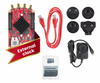
from Red Pitaya, d.o.o.
STEMlab 125-14 External clock is based on the STEMlab 125-14 model that is modified to be used with an external clock oscillator, which is important especially for RF applications that operate at other frequencies, require better quality clock or clock synchronization. With this modification, users... [See More]
- Host Connection: RS232; RS485 (optional feature); USB; Digital; Ethernet; Radio
- Analyzer Type: Instrument; PC
- Special Instrument Type: Handheld; Portable
- Test Type: Modulation; Distortion; Noise