
Analog Meter Spectrum Analyzers and Signal Analyzers
Last Updated: April 1, 2025
Description
Analog Meter Spectrum Analyzers and Signal Analyzers are instruments used to measure and display the frequency spectrum of electrical signals. They provide a visual representation of the magnitude of the Fourier transform of input signals, allowing users to observe and measure signal levels and distortions. These devices are essential for examining amplitude versus frequency of a given signal source, antenna, or signal distribution system.
Working Principle
Spectrum analyzers work by converting a time-domain signal into its frequency components using the Fourier transform. This process maps the signal into the frequency domain as a set of sines and cosines. The spectrum analyzer displays this information, providing a detailed picture of the frequency content of the signal. This is particularly useful for identifying signal stability, distortion, and modulation types. The ability to quickly view wide spectrum widths and zoom in on specific signals makes these analyzers invaluable for research and development, as well as manufacturing and field service applications .
Applications
Spectrum analyzers are widely used in various fields. In research and development, they help engineers quickly identify and analyze signal characteristics. In manufacturing, they enable fast, accurate, and repeatable measurements, which are crucial for quality control. Field technicians use them to locate and analyze interference problems in RF communication systems. They are also employed in the land-mobile radio industry as part of communication analyzers, known as service monitors .
Advantages over other Spectrum Analyzers and Signal Analyzers
Analog Meter Spectrum Analyzers offer the advantage of providing a frequency-selective, peak-responding voltmeter calibrated to display the RMS value of a sine wave. This capability allows for precise power measurements when the resistance across which the measurement is taken is known. Additionally, the use of digital technology and digital signal processing has expanded their capabilities, making them more versatile and powerful compared to traditional analyzers .
Limitations
One limitation of analog meter spectrum analyzers is their reduced capability in terms of frequency range, sensitivity, and dynamic range compared to digital analyzers. Fourier analyzers, for example, can characterize single-shot phenomena and measure both phase and magnitude, which may not be possible with traditional analog analyzers .
Considerations
When considering the purchase and use of an analog meter spectrum analyzer, several factors should be taken into account. Initial costs can be high, especially for new equipment, but used or surplus models may be available at a lower price. Operating expenses include calibration and maintenance, which are necessary to ensure accuracy and reliability. Durability and accuracy are critical, as these instruments must withstand regular use in various environments. Replacement and maintenance costs should also be considered, as they can impact the overall cost of ownership .
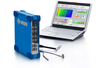
from OROS
OR35 is the portable real-time multi-analyzer that integrates the best of sound & vibration analysis technology in a truly mobile instrument. OR35 is the synthesis of the ultimate OR3x technology and OROS' wealth of experience of measurement. Designed to be the best for field operations, OR35 takes... [See More]
- Display: Analog
- Analyzer Type: Instrument; PC (optional feature)
- Special Instrument Type: Portable
- Test Type: Noise
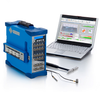
from OROS
OR36 models are intended for advanced needs in acoustic and vibration analysis measurements, for R&D as well as for testing. OR36 is a synthesis of components usually used separately for measurements. OR36 includes an acquisition front-end, with conditioning and sampling, a time domain recorder and... [See More]
- Display: Analog; Digital
- Analyzer Type: Instrument; PC (optional feature)
- Special Instrument Type: Portable
- Test Type: Noise
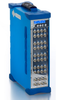
from OROS
OR38 models are intended for advanced needs in acoustic and vibration analysis measurements, for R&D as well as for testing. OR38 is a synthesis of components usually used separately for measurements. OR38 includes an acquisition front-end, with conditioning and sampling, a time domain recorder and... [See More]
- Display: Analog; Digital
- Analyzer Type: Instrument; PC (optional feature)
- Special Instrument Type: Portable
- Test Type: Noise