
Self-Calibration Routines Spectrum Analyzers and Signal Analyzers
Last Updated: April 1, 2025
Description
Self-calibration routines in spectrum analyzers and signal analyzers are designed to automatically adjust and correct the instrument's measurements to ensure accuracy. These routines generate error coefficients that the analyzer uses to correct measured data, allowing for precise amplitude measurements and greater flexibility in changing controls during measurements .
Working Principle
Self-calibration routines work by generating error coefficients that account for changes in amplitude versus resolution bandwidth. These coefficients are then used to correct the measured data, ensuring that the analyzer provides accurate readings. This process is crucial because it allows the analyzer to maintain accuracy without requiring manual recalibration, which can be time-consuming and prone to human error. By automating the calibration process, these routines enhance the reliability and precision of the measurements taken by the analyzer .
Applications
Self-calibration routines are particularly useful in scenarios where precise amplitude measurements are critical. For example, they are employed in telecommunications to measure channel power and adjacent channel power (ACP) accurately. These routines are also beneficial in RF circuit design, where they help in identifying specific frequencies or amplitude levels in the analyzed signal, thereby aiding in pinpointing potential issues and validating circuit performance .
Advantages over other Spectrum Analyzers and Signal Analyzers
One of the primary advantages of analyzers with self-calibration routines is their ability to maintain accuracy without frequent manual intervention. This feature reduces the need for external calibrators and minimizes downtime associated with manual recalibration. Additionally, these analyzers provide more freedom to change controls during measurements, which can be particularly advantageous in dynamic testing environments .
Limitations
While self-calibration routines offer significant benefits, they may not completely eliminate the need for periodic verification using known standards or calibration kits. Regular calibration and verification are still recommended to uphold the instruments' precision, especially in high-stakes applications where even minor inaccuracies can lead to significant issues .
Considerations
When considering the adoption of spectrum analyzers and signal analyzers with self-calibration routines, several factors should be taken into account. Initial costs may be higher due to the advanced technology involved, but the reduction in manual calibration efforts can lead to lower operating expenses over time. Durability and accuracy are generally enhanced with self-calibration, but it is essential to factor in the potential need for periodic verification to ensure ongoing precision. Replacement and maintenance costs should also be considered, as these can vary depending on the specific model and manufacturer .
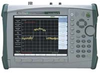
from Fiber Instrument Sales, Inc./FIS
Deploying, maintaining, troubleshooting wireless stations & Wi-Fi [See More]
- Special Instrument Type: Handheld
- Test Type: Modulation; Noise
- Analyzer Type: Instrument
- Frequency Range: 9 to 7.10E6

from Red Pitaya, d.o.o.
SDRlab 122-16 External clock is based on the SDRlab 122-16 model that is modified to be used with an external clock oscillator, which is important especially for RF applications that operate at other frequencies, require better quality clock or clock synchronization. [See More]
- Special Instrument Type: Handheld; Portable
- Test Type: Modulation; Distortion; Noise
- Analyzer Type: Instrument; PC
- Analysis Type: Fast Fourier Transform; Swept-Tuned
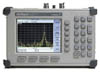
from Fiber Instrument Sales, Inc./FIS
Designed to locate & identify RF cable feed line and antenna system faults [See More]
- Special Instrument Type: Handheld
- Test Type: Modulation; Distortion; Noise
- Analyzer Type: Instrument
- Frequency Range: 25000 to 4.00E6

from Red Pitaya, d.o.o.
SDRlab 122-16 was developed specifically for software-defined radio and more demanding RF applications. [See More]
- Special Instrument Type: Handheld; Portable
- Test Type: Modulation; Distortion; Noise
- Analyzer Type: Instrument; PC
- Analysis Type: Fast Fourier Transform; Swept-Tuned
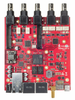
from Red Pitaya, d.o.o.
SIGNALlab 250-12 is most sophisticated Red Pitaya product, built for more demanding industrial applications and research, where robustness and performance matter more than cost. [See More]
- Special Instrument Type: Handheld; Portable
- Test Type: Modulation; Distortion; Noise
- Analyzer Type: Instrument; PC
- Analysis Type: Fast Fourier Transform; Swept-Tuned
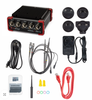
from Red Pitaya, d.o.o.
SIGNALlab 250-12 is most sophisticated Red Pitaya product, built for more demanding industrial applications and research, where robustness and performance matter more than cost. [See More]
- Special Instrument Type: Handheld; Portable
- Test Type: Modulation; Distortion; Noise
- Analyzer Type: Instrument; PC
- Analysis Type: Fast Fourier Transform; Swept-Tuned
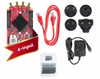
from Red Pitaya, d.o.o.
STEMlab 125-14 4 Inputs is based on STEMlab 125-14 board, but instead of 2 inputs and 2 output channels offers 4 Input channels that with improved performance. [See More]
- Special Instrument Type: Handheld; Portable
- Test Type: Modulation; Distortion; Noise
- Analyzer Type: Instrument; PC
- Analysis Type: Fast Fourier Transform; Swept-Tuned
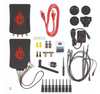
from Red Pitaya, d.o.o.
STEMlab 125-14 is our most versatile and popular product, which was introduced to the market in 2013 when Red Pitaya was established. Since then it has been used in a wide variety of contexts, from hobbyists and ham radio operators to industry, research, and space applications. [See More]
- Special Instrument Type: Handheld; Portable
- Test Type: Modulation; Distortion; Noise
- Analyzer Type: Instrument; PC
- Analysis Type: Fast Fourier Transform; Swept-Tuned

from Red Pitaya, d.o.o.
STEMlab 125-14 is our most versatile and popular product, which was introduced to the market in 2013 when Red Pitaya was established. Since then it has been used in wide variety of contexts, from hobbyists and ham radio operators to industry, research and space applications. [See More]
- Special Instrument Type: Handheld; Portable
- Test Type: Modulation; Distortion; Noise
- Analyzer Type: Instrument; PC
- Analysis Type: Fast Fourier Transform; Swept-Tuned
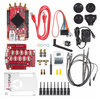
from Red Pitaya, d.o.o.
STEMlab 125-14 Edu Pack is based on Red Pitaya's best-selling DAQ platform and with the chosen accessories a perfect fit for educational purposes. [See More]
- Special Instrument Type: Handheld; Portable
- Test Type: Modulation; Distortion; Noise
- Analyzer Type: Instrument; PC
- Analysis Type: Fast Fourier Transform; Swept-Tuned
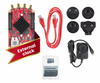
from Red Pitaya, d.o.o.
STEMlab 125-14 External clock is based on the STEMlab 125-14 model that is modified to be used with an external clock oscillator, which is important especially for RF applications that operate at other frequencies, require better quality clock or clock synchronization. With this modification, users... [See More]
- Special Instrument Type: Handheld; Portable
- Test Type: Modulation; Distortion; Noise
- Analyzer Type: Instrument; PC
- Analysis Type: Fast Fourier Transform; Swept-Tuned
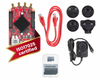
from Red Pitaya, d.o.o.
Based on the STEMlab 125-14 Starter kit and it comes with individual ISO17025 certificate. [See More]
- Special Instrument Type: Handheld; Portable
- Test Type: Modulation; Distortion; Noise
- Analyzer Type: Instrument; PC
- Analysis Type: Fast Fourier Transform; Swept-Tuned