
RS232 Spectrum Analyzers and Signal Analyzers
Last Updated: April 1, 2025
Description
RS232 Spectrum Analyzers and Signal Analyzers are electronic devices used to observe and measure signal levels and distortions. They provide a visual representation of the magnitude of the Fourier transform of input signals, mapping time domain signals into the frequency domain as a set of sines and cosines. These analyzers are capable of examining amplitude versus frequency of a given signal source, antenna, or signal distribution system, offering insights into signal stability, distortion, amplitude, and modulation types and quality.
Working Principle
Spectrum analyzers work by converting the time waveform of a given signal into its frequency components. This is achieved through the Fourier transform, which represents any time waveform by a series of sines and cosines of particular frequencies and amplitudes. The spectrum analyzer is essentially a frequency-selective, peak-responding voltmeter calibrated to display the RMS value of a sine wave. It is not a power meter, but it can display power directly if certain values are known. The ability to view wide spectrum widths and zoom in on signals of interest makes these analyzers highly useful for engineers, allowing for efficient signal analysis and troubleshooting.
Applications
Spectrum analyzers are widely used in RF communication to locate and analyze interference problems. They are essential in the design, manufacturing, and field service or repair of electrical systems or devices. For example, in communications, they help analyze modulated signals to determine performance and troubleshoot issues. They are also used in testing nonlinear devices like amplifiers or mixers to understand distortion products and in noise and signal-to-noise measurements.
Advantages over other Spectrum Analyzers and Signal Analyzers
Modern spectrum analyzers have been enhanced with digital technology, providing additional capabilities such as digital signal processing. This advancement allows for more complex measurements to be made quickly, accurately, and repeatably. The ability to access data through computers and the incorporation of spectrum analyzers into communication analyzers, known as service monitors, offer significant advantages in terms of functionality and ease of use.
Limitations
One limitation of spectrum analyzers is that they provide little information on time-variations, focusing instead on frequency content. Additionally, spectrum analyzers incorporated into other equipment are often scaled-down versions, lacking many features of standalone units. This can limit their functionality in certain applications.
Considerations
When considering the purchase and use of spectrum analyzers, factors such as initial costs, operating expenses, durability, accuracy, and maintenance costs should be evaluated. The availability of surplus and used equipment can make sophisticated spectrum analyzers more accessible to users who cannot justify the high cost of new equipment. However, users should be aware of the potential trade-offs in terms of features and capabilities when opting for these options.

from DigiKey
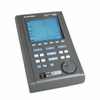
50kHz ~ 8.5GHz Spectrum Analyzer Spectrum Analyzer -60 ~ +10dBm Features Auto Tuning, RS232 Port, Save/Load Includes Battery, Power Supply, Pouch [See More]
- Host Connection: RS232
- Frequency Range: 50 to 8.50E6
- Special Instrument Type: Handheld
- Dynamic Range: -60 to 10
from DigiKey
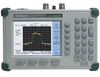
50kHz ~ 3.3GHz Spectrum Analyzer Spectrum Analyzer -60 ~ +10dBm Features Auto Tuning, RS232 Port, Save/Load Includes Battery, Power Supply, Pouch [See More]
- Host Connection: RS232
- Frequency Range: 50 to 3.30E6
- Special Instrument Type: Handheld
- Dynamic Range: -60 to 10
from Fiber Instrument Sales, Inc./FIS
Includes analysis software, carrying case, recharge/ replaceable battery [See More]
- Host Connection: RS232; USB; Modem; Radio
- Analyzer Type: Instrument
- Special Instrument Type: Handheld
- Test Type: Modulation; Distortion; Noise

from Red Pitaya, d.o.o.
SDRlab 122-16 External clock is based on the SDRlab 122-16 model that is modified to be used with an external clock oscillator, which is important especially for RF applications that operate at other frequencies, require better quality clock or clock synchronization. [See More]
- Host Connection: RS232; RS485 (optional feature); USB; Digital; Ethernet; Radio
- Analyzer Type: Instrument; PC
- Special Instrument Type: Handheld; Portable
- Test Type: Modulation; Distortion; Noise
from ClampOn, Inc.
Performs frequency analysis in real-time [See More]
- Host Connection: RS232; Digital
- Analyzer Type: PC
- Special Instrument Type: Fixed
- Test Type: Frequency Analysis
from Fiber Instrument Sales, Inc./FIS
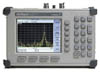
Designed to locate & identify RF cable feed line and antenna system faults [See More]
- Host Connection: RS232; USB; Radio
- Analyzer Type: Instrument
- Special Instrument Type: Handheld
- Test Type: Modulation; Distortion; Noise

from Red Pitaya, d.o.o.
SDRlab 122-16 was developed specifically for software-defined radio and more demanding RF applications. [See More]
- Host Connection: RS232; RS485 (optional feature); USB; Digital; Ethernet; Radio
- Analyzer Type: Instrument; PC
- Special Instrument Type: Handheld; Portable
- Test Type: Modulation; Distortion; Noise
from Red Pitaya, d.o.o.
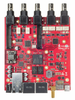
SIGNALlab 250-12 is most sophisticated Red Pitaya product, built for more demanding industrial applications and research, where robustness and performance matter more than cost. [See More]
- Host Connection: RS232; RS485 (optional feature); USB; Digital; Ethernet; Radio
- Analyzer Type: Instrument; PC
- Special Instrument Type: Handheld; Portable
- Test Type: Modulation; Distortion; Noise
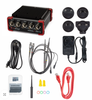
from Red Pitaya, d.o.o.
SIGNALlab 250-12 is most sophisticated Red Pitaya product, built for more demanding industrial applications and research, where robustness and performance matter more than cost. [See More]
- Host Connection: RS232; RS485 (optional feature); USB; Digital; Ethernet; Radio
- Analyzer Type: Instrument; PC
- Special Instrument Type: Handheld; Portable
- Test Type: Modulation; Distortion; Noise
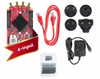
from Red Pitaya, d.o.o.
STEMlab 125-14 4 Inputs is based on STEMlab 125-14 board, but instead of 2 inputs and 2 output channels offers 4 Input channels that with improved performance. [See More]
- Host Connection: RS232; RS485 (optional feature); USB; Digital; Ethernet; Radio
- Analyzer Type: Instrument; PC
- Special Instrument Type: Handheld; Portable
- Test Type: Modulation; Distortion; Noise
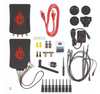
from Red Pitaya, d.o.o.
STEMlab 125-14 is our most versatile and popular product, which was introduced to the market in 2013 when Red Pitaya was established. Since then it has been used in a wide variety of contexts, from hobbyists and ham radio operators to industry, research, and space applications. [See More]
- Host Connection: RS232; RS485 (optional feature); USB; Digital; Ethernet; Radio
- Analyzer Type: Instrument; PC
- Special Instrument Type: Handheld; Portable
- Test Type: Modulation; Distortion; Noise