
Digital Readout Spectrum Analyzers and Signal Analyzers
Last Updated: April 1, 2025
Description
Digital Readout Spectrum Analyzers and Signal Analyzers are sophisticated electronic devices designed to measure and display the frequency spectrum of electrical signals. They provide a visual representation of the magnitude of the Fourier transform of input signals, allowing users to observe and measure signal levels and distortions. These analyzers are capable of displaying the amplitude versus frequency of a given signal source, antenna, or signal distribution system, offering insights into signal stability, distortion, amplitude, and modulation quality.
Working Principle
The working principle of Digital Readout Spectrum Analyzers and Signal Analyzers is based on the Fourier transform, which converts time-domain signals into their frequency components. This transformation allows the analyzers to provide a detailed picture of the frequency content of signals. By using digital technology and digital signal processing, modern spectrum analyzers can perform complex measurements quickly and accurately. They are frequency-selective, peak-responding voltmeters calibrated to display the RMS value of a sine wave, and they can also display power directly when calibrated appropriately.
Applications
Digital Readout Spectrum Analyzers and Signal Analyzers are used in a variety of applications. They are essential tools in RF communication for locating and analyzing interference problems. In the R&D lab, they are valued for their ability to quickly view wide spectrum widths and zoom in on signals of interest. In manufacturing, they enable complex measurements to be made efficiently and accurately. They are also used for noise and signal-to-noise measurements, choosing modulation frequencies, and tracking down spurious signals and interferences.
Advantages over other Spectrum Analyzers and Signal Analyzers
One of the key advantages of Digital Readout Spectrum Analyzers over other types is their ability to provide a detailed frequency-domain analysis, which is not possible with time-domain tools like oscilloscopes. They offer a large measurement range, exceeding 140 dB, which makes them versatile for various applications. The integration of digital technology enhances their capabilities, allowing for more sophisticated measurements and data processing.
Limitations
Despite their advantages, Digital Readout Spectrum Analyzers have limitations. They provide little information on time variations of signals, which can be a drawback when time-domain analysis is required. Additionally, the complexity of these devices can lead to confusion about what the spectrum analyzer actually shows, especially with the advent of digital analyzers and FFT computing oscilloscopes.
Considerations
When considering the purchase and use of Digital Readout Spectrum Analyzers, several factors should be taken into account. Initial costs can be high, especially for new, sophisticated models, although used equipment is available at lower prices. Operating expenses may include calibration and maintenance costs. The durability and accuracy of the device are crucial for reliable measurements, and users should be aware of potential replacement and maintenance costs over time. Understanding the specifications and capabilities of the analyzer is essential to ensure it meets the specific needs of the intended applications.
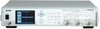
from Wayne Kerr Electronics
A frequency response analyzer measures the gain and phase response characteristics with respect to frequency of the device or system under test, by applying a frequency swept sine-wave to it and examining its response signal. The FRA5022 supports for measurement frequencies of 0.1 mHz to 100 kHz. [See More]
- Display: Digital
- Analyzer Type: Instrument
- Special Instrument Type: Portable
- Frequency Range: 1.00E-7 to 100
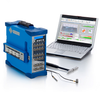
from OROS
OR36 models are intended for advanced needs in acoustic and vibration analysis measurements, for R&D as well as for testing. OR36 is a synthesis of components usually used separately for measurements. OR36 includes an acquisition front-end, with conditioning and sampling, a time domain recorder and... [See More]
- Display: Analog; Digital
- Analyzer Type: Instrument; PC (optional feature)
- Special Instrument Type: Portable
- Test Type: Noise
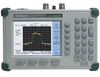
from Fiber Instrument Sales, Inc./FIS
Includes analysis software, carrying case, recharge/ replaceable battery [See More]
- Display: Digital; Video
- Analyzer Type: Instrument
- Special Instrument Type: Handheld
- Test Type: Modulation; Distortion; Noise
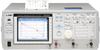
from Wayne Kerr Electronics
A frequency response analyzer measures the gain and phase response characteristics with respect to frequency of the device or system under test, by applying a frequency swept sine-wave to it and examining its response signal. The FRA5087/FRA5097 supports for measurement frequencies of 0.1 mHz to... [See More]
- Display: Digital
- Analyzer Type: Instrument
- Special Instrument Type: Portable
- Frequency Range: 1.00E-7 to 15000
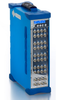
from OROS
OR38 models are intended for advanced needs in acoustic and vibration analysis measurements, for R&D as well as for testing. OR38 is a synthesis of components usually used separately for measurements. OR38 includes an acquisition front-end, with conditioning and sampling, a time domain recorder and... [See More]
- Display: Analog; Digital
- Analyzer Type: Instrument; PC (optional feature)
- Special Instrument Type: Portable
- Test Type: Noise
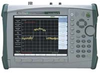
from Fiber Instrument Sales, Inc./FIS
Deploying, maintaining, troubleshooting wireless stations & Wi-Fi [See More]
- Display: Digital; Video
- Analyzer Type: Instrument
- Special Instrument Type: Handheld
- Test Type: Modulation; Noise