
GPIB (IEEE 488, HPIB) Spectrum Analyzers and Signal Analyzers
Last Updated: April 1, 2025
Description
GPIB (IEEE 488, HPIB) Spectrum Analyzers and Signal Analyzers are instruments designed to observe and measure signal levels and distortions. They provide a visual representation of the magnitude of the Fourier transform of input signals, mapping time domain signals into the frequency domain as a set of sines and cosines. These analyzers are capable of examining amplitude versus frequency of a given signal source, antenna, or signal distribution system, offering insights into signal stability, distortion, amplitude, and modulation quality.
Working Principle
The working principle of GPIB Spectrum Analyzers and Signal Analyzers involves the use of the Fourier transform to convert time domain signals into the frequency domain. This conversion allows for the examination of signal characteristics such as amplitude and frequency. The GPIB interface, also known as IEEE 488 or HPIB, facilitates communication between the analyzer and other instruments or computers, enabling automated measurement processes. The interface supports two-way communication, allowing for the integration of multiple instruments under the control of a master unit or controller, typically a computer or dedicated bus controller. This setup allows for efficient data transfer and control, making these analyzers highly useful in various testing and measurement scenarios.
Applications
GPIB Spectrum Analyzers and Signal Analyzers are used in a variety of applications. In research and development (R&D) labs, they are valued for their ability to quickly view wide spectrum widths and closely examine signals of interest. In manufacturing, their speed and accuracy in measurements, combined with computer access to data, enable complex measurements to be made efficiently. These analyzers are also used in field service to ensure compliance with regulations regarding emissions.
Advantages over other Spectrum Analyzers and Signal Analyzers
One of the key advantages of GPIB Spectrum Analyzers and Signal Analyzers is their ability to integrate with multiple instruments through the GPIB interface, allowing for automated and efficient measurement processes. The GPIB interface supports up to 15 devices, providing flexibility in test setups. Additionally, the rugged design of GPIB cables and connectors makes them suitable for demanding physical environments, offering durability and reliability in various applications.
Limitations
A limitation of GPIB Spectrum Analyzers and Signal Analyzers is the relatively lower bandwidth compared to other interfaces like USB and Ethernet. The GPIB interface does not support autodetection or autoconfiguration of connected instruments, which may require additional setup time and effort. Furthermore, the maximum data transfer rate of the standard GPIB interface is limited to 1 MBps, although newer standards like HS488 can achieve higher rates.
Considerations
When considering GPIB Spectrum Analyzers and Signal Analyzers, it is important to evaluate initial costs, operating expenses, and maintenance requirements. The durability of GPIB cables and connectors can contribute to lower replacement costs over time. However, the need for manual configuration and the limitations in data transfer rates may impact operational efficiency. It is also essential to consider the compatibility of the GPIB interface with existing equipment and the potential need for additional components like GPIB controllers or expanders to accommodate larger test setups.

from Siglent Technologies NA, Inc.
SIGLENT SHA850A, a handheld portable spectrum analyzer and cable-and-antenna analyzer, is a powerful and flexible tool for those field and outdoor RF applications. With a frequency range up to 7.5 GHz, the analyzer delivers reliable automatic measurements and multiple modes of operation. A spectrum... [See More]
- Host Connection: USB; GPIB (IEEE 488, HPIB)
- Analyzer Type: Instrument
- Special Instrument Type: Portable
- Test Type: Modulation
from Siglent Technologies NA, Inc.
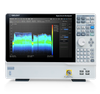
The SIGLENT SSA5000A spectrum analyzers are powerful and flexible tools for complex RF spectrum and signal analysis. With the capability of real-time spectrum analysis, the analyzer can provide multi-dimensions data displays, and advanced triggering to solve modern RF spectrum challenges, like... [See More]
- Host Connection: USB; GPIB (IEEE 488, HPIB)
- Analyzer Type: Instrument
- Special Instrument Type: Portable
- Test Type: Modulation