
PC-Based Spectrum Analyzers and Signal Analyzers
Last Updated: April 1, 2025
Description
PC-Based Spectrum Analyzers and Signal Analyzers are instruments that display signal amplitude on the vertical axis and frequency on the horizontal axis. They are designed to measure radio frequency signal intensity, frequency, and power density. These analyzers are integrated with computer systems, allowing for enhanced data processing and visualization capabilities.
Working Principle
PC-Based Spectrum Analyzers work by converting time-domain signals into frequency-domain representations using techniques such as the Fast Fourier Transform (FFT). This conversion allows for the detailed analysis of the frequency content of signals, which is crucial for identifying signal distortions, stability, and modulation types. The integration with computers enables the use of digital signal processing (DSP) techniques, enhancing the analyzer's capabilities to measure both magnitude and phase of signals. These analyzers are particularly useful for their ability to quickly and accurately analyze wide spectrum widths and zoom into specific frequencies of interest.
Applications
PC-Based Spectrum Analyzers are used in a variety of applications, including:
- Measuring radio frequency signal intensity and ensuring compliance with federally defined standards for wireless transmitters.
- Educational and research settings where budget constraints make low-cost, computer-based instruments ideal.
- Debugging and designing photo-measurement systems by providing detailed frequency content analysis.
- Locating and analyzing interference problems in RF communication systems.
Advantages over other Spectrum Analyzers and Signal Analyzers
PC-Based Spectrum Analyzers offer several advantages:
- Cost-Effectiveness: They are generally more affordable due to the low cost of computers, making them accessible for educational and budget-conscious environments.
- Portability: When used with a laptop, they are highly portable and easy to handle.
- Storage Capability: They come equipped with storage capabilities, allowing for extensive data logging and analysis.
- Flexibility: The integration with computers allows for easy updates and enhancements through software, providing flexibility in adapting to new measurement requirements.
Limitations
Some limitations of PC-Based Spectrum Analyzers include:
- Frequency Range and Sensitivity: Compared to traditional superheterodyne spectrum analyzers, PC-based versions may have limitations in frequency range and sensitivity.
- Dynamic Range: They might not offer the same dynamic range as more advanced standalone analyzers, which can affect the accuracy of measurements in certain applications.
Considerations
When considering PC-Based Spectrum Analyzers, several factors should be taken into account:
- Initial Costs: While generally lower than standalone units, the initial cost can vary depending on the required specifications and features.
- Operating Expense: Operating costs are typically low, but considerations should be made for software updates and potential hardware upgrades.
- Durability and Maintenance: The durability of the system depends on the quality of the computer hardware used. Maintenance costs are generally low, but regular updates and calibration may be necessary to ensure accuracy.
- Accuracy: While they provide good accuracy for many applications, the limitations in dynamic range and sensitivity should be considered for high-precision requirements.
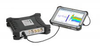
from Tektronix, Inc.
From USB spectrum analyzers to benchtop real time spectrum analyzers, Tektronix has a suite of powerful RF analysis tools for many applications. Comprehensive spectrum analysis is included for free with SignalVu software, and options are available for vector signal analysis, pulsed measurements,... [See More]
- Analyzer Type: PC
- Special Instrument Type: Portable

from Red Pitaya, d.o.o.
SDRlab 122-16 External clock is based on the SDRlab 122-16 model that is modified to be used with an external clock oscillator, which is important especially for RF applications that operate at other frequencies, require better quality clock or clock synchronization. [See More]
- Analyzer Type: Instrument; PC
- Test Type: Modulation; Distortion; Noise
- Special Instrument Type: Handheld; Portable
- Analysis Type: Fast Fourier Transform; Swept-Tuned
from ClampOn, Inc.
Performs frequency analysis in real-time [See More]
- Analyzer Type: PC
- Test Type: Frequency Analysis
- Special Instrument Type: Fixed
- Analysis Type: Application Specific Algorithms
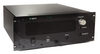
from Kaelus
Passive Intermodulation (PIM) occurs when multiple RF signals encounter defects in materials or workmanship in an RF path. These defects behave like a mixer causing noise to be generated at mathematical combinations of the original carrier frequencies. PIM interference that falls in the receive band... [See More]
- Analyzer Type: PC
- Test Type: Modulation; Noise
- Special Instrument Type: Fixed
- Frequency Range: 698000 to 2.69E6
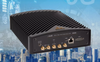
from thinkRF
RELIABLE, HIGH SPEED, UNINTERRUPTED WIRELESS NETWORKS WITH thinkRF R5550. The thinkRF R5550 Real-Time Spectrum Analyzer is built on innovative and highly optimizable software-defined radio technologies that provide more flexibility, greater coverage, and increased functionality. Designed and built... [See More]
- Analyzer Type: PC
- Test Type: Noise
- Special Instrument Type: Portable
- Analysis Type: Swept-Tuned

from Red Pitaya, d.o.o.
SDRlab 122-16 was developed specifically for software-defined radio and more demanding RF applications. [See More]
- Analyzer Type: Instrument; PC
- Test Type: Modulation; Distortion; Noise
- Special Instrument Type: Handheld; Portable
- Analysis Type: Fast Fourier Transform; Swept-Tuned
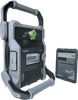
from Kaelus
Kaelus introduced the first commercial PIM testing analyzer in 1996 and continues to lead the industry today. Kaelus offers 2 series of portable PIM analyzers and a full line of PIM testing accessories. The iPA PIM Analyzer, a light weight, battery-powered unit, is the most popular PIM testing... [See More]
- Analyzer Type: PC
- Test Type: Modulation; Noise
- Special Instrument Type: Portable
- Frequency Range: 698000 to 2.69E6
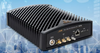
from thinkRF
MOBILE RF APPLICATIONS FOR WIRELESS SITUATIONAL AWARENESS WITH thinkRF R5750. The thinkRF R5750 Real-Time Spectrum Analyzer with GPS is built for mobile wireless situational awareness applications such as RF drive testing, coverage mapping, propagation analysis, direction finding & transmitter... [See More]
- Analyzer Type: PC
- Test Type: Noise
- Special Instrument Type: Portable
- Analysis Type: Swept-Tuned
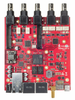
from Red Pitaya, d.o.o.
SIGNALlab 250-12 is most sophisticated Red Pitaya product, built for more demanding industrial applications and research, where robustness and performance matter more than cost. [See More]
- Analyzer Type: Instrument; PC
- Test Type: Modulation; Distortion; Noise
- Special Instrument Type: Handheld; Portable
- Analysis Type: Fast Fourier Transform; Swept-Tuned
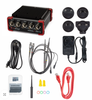
from Red Pitaya, d.o.o.
SIGNALlab 250-12 is most sophisticated Red Pitaya product, built for more demanding industrial applications and research, where robustness and performance matter more than cost. [See More]
- Analyzer Type: Instrument; PC
- Test Type: Modulation; Distortion; Noise
- Special Instrument Type: Handheld; Portable
- Analysis Type: Fast Fourier Transform; Swept-Tuned