
Refractive Index Detector High Performance Liquid Chromatographs (HPLC)
Description
Refractive Index Detector High Performance Liquid Chromatographs (HPLC) are analytical instruments used to measure the refractive index of a liquid as it passes through a flow cell. These detectors are integral components of HPLC systems, which are used to separate, identify, and quantify components in a mixture. The refractive index detector specifically measures changes in the refractive index of the column effluent, providing valuable data for the analysis of various substances.
Working Principle
Refractive Index Detectors in HPLC systems operate by passing a beam of light through the column effluent as it flows through a low-volume flow cell. The detector measures the change in light intensity as it passes through the sample, which corresponds to changes in the refractive index. This change is recorded and used to generate a chromatograph. The refractive index is a fundamental property that varies with the composition of the sample, making these detectors useful for identifying and quantifying components in a mixture. They are particularly beneficial for detecting compounds that do not absorb UV light, providing a broader range of detection capabilities in HPLC systems.
Applications
Refractive Index Detectors are used in various applications, including the analysis of complex mixtures and the identification of pure substances. For example, they are employed in the beverage industry to determine the maturation degree of grapes by measuring the refractive index of grape juice. They are also used to assess the alcoholic content of beverages and in environmental monitoring for water quality control. In pharmaceutical drug manufacturing, refractive index measurements help monitor blending operations and determine the supersaturation point in crystallization processes.
Advantages over other High Performance Liquid Chromatographs (HPLC)
Refractive Index Detectors offer specific advantages over other types of HPLC detectors, particularly in their ability to detect compounds that do not absorb UV light. This makes them suitable for a wider range of applications, including the analysis of sugars, lipids, and polymers. They provide a non-destructive method of detection, preserving the sample for further analysis if needed.
Limitations
One limitation of Refractive Index Detectors is their sensitivity to temperature and pressure changes, which can affect the accuracy of the refractive index measurement. They are also less sensitive compared to other detectors like UV or mass spectrometry detectors, making them less suitable for detecting low concentrations of analytes. Additionally, they require a stable baseline and are not ideal for gradient elution methods, which can cause baseline drift.
Considerations
When considering the use of Refractive Index Detectors in HPLC systems, it is important to evaluate factors such as initial costs, operating expenses, and maintenance requirements. These detectors may have higher initial costs due to their specialized components. Operating expenses can be influenced by the need for precise temperature control to maintain measurement accuracy. Durability and accuracy are generally high, but regular maintenance is required to ensure optimal performance. Replacement and maintenance costs should be factored into the overall cost of ownership, as these can vary depending on the specific model and usage conditions.
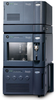
from Waters Corporation
UPLC transforms the expectations of laboratories worldwide. UPLC Technology, which has been adopted successfully in laboratories around the world for the most demanding separations, is highly robust, dependable, and reproducible. Work at higher efficiencies with a much wider range of linear... [See More]
- Detector Type: Ultraviolet/Visible Light Detector; Refractive Index; Fluorescence; Light Scattering; Mass Spectroscopy
- Analysis Method: Analytical
- Instrument Type: Fixtured
- Remote Interface: Computer Interface

from Shimadzu Scientific Instruments, Inc.
Shimadzu's Discovery VP Analytical System enables characterization of microgram to milligram quantities of lead candidates generated from Drug Discovery, Medicinal Chemistry, Natural Product Isolation, or Organic Synthesis efforts. Up to ten columns and four solvent pairs can be configured, making... [See More]
- Detector Type: Ultraviolet/Visible Light Detector; Refractive Index; Light Scattering; Mass Spectroscopy; PDA
- Analysis Method: Analytical
- Instrument Type: Fixtured
- Injection Method: Auto-sampler Injection

from Hitachi High-Tech America
Outstanding Performance. Two performance capabilities supporting data reliability: excellent reproducibility made possible by the pump and autosampler and excellent stability of the column oven and detector. Easy-to-use. Along with simple operation and ease of use, Chromaster offers ease of... [See More]
- Detector Type: Ultraviolet/Visible Light Detector; Refractive Index; Fluorescence; Mass Spectroscopy
- Analysis Method: Analytical
- Instrument Type: Fixtured
- Injection Method: Auto-sampler Injection

from Waters Corporation
Defined by dependability - today, and in the future. Time-tested, flexible, and reliable workhorse for your HPLC separations. Integrated solvent and sample management with consistent system-to-system performance and high reproducibility. A history of continued system improvements ensures the... [See More]
- Detector Type: Ultraviolet/Visible Light Detector; Refractive Index; Fluorescence; Electrochemical; Light Scattering; Mass Spectroscopy
- Analysis Method: Analytical
- Instrument Type: Fixtured
- User Interface: Digital

from Shimadzu Scientific Instruments, Inc.
The Discovery VP preparative system enables purification and collection of milligram to gram quantities of compounds generated from Drug Discovery, Medicinal Chemistry, Natural Product Isolation, and Organic Synthesis efforts. Multiple fraction collectors increase throughput and facilitate high... [See More]
- Detector Type: Ultraviolet/Visible Light Detector; Refractive Index; Light Scattering
- Analysis Method: Preparative
- Instrument Type: Fixtured
- Injection Method: Auto-sampler Injection
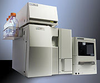
from Waters Corporation
The Breeze ™ 2 HPLC System delivers technology and performance in an affordable, compact, and user-friendly system platform. Complete with software, pump, detector and injector, the system comes pre-configured for different levels of HPLC operational needs. From teaching purposes to daily... [See More]
- Detector Type: Ultraviolet/Visible Light Detector; Refractive Index; Fluorescence; Light Scattering
- Analysis Method: Analytical
- Instrument Type: Fixtured
- Remote Interface: Computer Interface

from Shimadzu Scientific Instruments, Inc.
HPLC systems are currently used in a wide variety of fields. Higher reliability in analysis data and higher efficiency in total analysis workflow are required for faster development of new drugs, for better food safety, and for meeting higher standards in environmental regulations. Many analysis... [See More]
- Detector Type: Ultraviolet/Visible Light Detector; Refractive Index; Fluorescence; Light Scattering; Optional PDA
- Analysis Method: Analytical; Preparative
- Instrument Type: Fixtured
- Injection Method: Auto-sampler Injection