
Programmable High Performance Liquid Chromatographs (HPLC)
Description
Programmable High Performance Liquid Chromatographs (HPLC) are sophisticated analytical instruments designed to separate, identify, and quantify components in a mixture. They are equipped with features such as self-calibration, self-test diagnostics, data storage, and programmability, allowing for precise control and automation of the chromatographic process .
Working Principle
The working principle of programmable HPLC involves the use of a mobile phase that is pumped through a column packed with a stationary phase. The sample is injected into the mobile phase stream and carried through the column, where different components of the sample are separated based on their interactions with the stationary phase. Detectors then measure changes in the composition of the eluate, generating a chromatogram . These systems are useful because they offer high resolution, high flow rates, and high reproducibility, making them ideal for complex sample analysis .
Applications
Programmable HPLCs are used in a variety of applications, including the separation of aromatic amines and phenolic antioxidants. They are also employed in the quantitative determination of compounds in complex mixtures, such as extracts of polyacetals .
Advantages over other High Performance Liquid Chromatographs (HPLC)
Programmable HPLCs offer several advantages over other HPLC systems. They provide high automation and flexibility, allowing for compatibility with a wide range of consumables and detectors. This flexibility, combined with their high reproducibility and stable conditions, makes them superior for many analytical tasks .
Limitations
Despite their advantages, programmable HPLCs have limitations, including high instrument and maintenance costs. Additionally, the cost of consumables can be significant, which may impact their overall cost-effectiveness .
Considerations
When considering programmable HPLCs, it is important to evaluate initial costs, which can be high due to the complexity of the equipment. Operating expenses, including consumables and maintenance, should also be considered. The durability and accuracy of these systems are generally high, but regular maintenance is necessary to ensure optimal performance. Replacement and maintenance costs should be factored into the total cost of ownership .

from Shimadzu Scientific Instruments, Inc.
Analysis of drugs using HPLC in pharmacokinetics studies and clinical tests is an effective means of elucidating the behavior of drugs and their metabolites in living organisms. Efficient sample pretreatment, for example, deproteinization, is critical to achieving reliable results. These procedures... [See More]
- Instrument Type: Fixtured
- Injection Method: Auto-sampler Injection
- Analysis Method: Analytical
- User Interface: Digital

from Waters Corporation
HPLC and UHPLC method compatibility at the flip of a switch. The ACQUITY Arc System is a quaternary-based, modern LC system for scientists working with established methods who are looking for the versatility and robustness required to bridge the gap between HPLC and UPLC while continuing to support... [See More]
- Instrument Type: Fixtured
- Remote Interface: Computer Interface
- Analysis Method: Analytical
- General Features: Programmable
from Shimadzu Scientific Instruments, Inc.
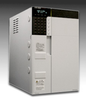
A forced-air circulation-type column oven, the CTO-20A can regulate the temperature from 10ºC above room temperature to 85ºC. Rapid temperature equilibration allows complex temperature programs incorporating linear and/or step-wise increases and decreases in temperature. [See More]
- Instrument Type: Fixtured
- Display: Digital
- User Interface: Digital
- General Features: Programmable; Built-in or Self Calibration

from Waters Corporation
Highest resolution of any quaternary LC system. Improve your laboratory ’s efficiency by scaling your methods to UPLC Technology. Use UPLC ’s unmatched resolution to get better characterization of your complex samples. Take advantage of tools that simplify and streamline your method... [See More]
- Instrument Type: Fixtured
- Injection Method: Auto-sampler Injection
- Analysis Method: Analytical
- Remote Interface: Computer Interface
from Shimadzu Scientific Instruments, Inc.
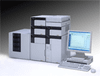
In order to investigate minute quantities of impurities in such areas as pharmaceuticals and pesticide residues in food products, both the ability to separate and detect trace compounds more reliably and increased analysis efficiency are required.Utilizing features of the Prominence UFLC, which... [See More]
- Instrument Type: Fixtured
- Injection Method: Auto-sampler Injection
- Analysis Method: Analytical
- Flow Rate: 0.9000 to 1