
Digital Front Panel High Performance Liquid Chromatographs (HPLC)
Description
Digital Front Panel High Performance Liquid Chromatographs (HPLC) are sophisticated analytical instruments designed to separate, identify, and quantify components in a mixture. These devices feature a digital interface, often including a video display and computer connectivity, which allows for enhanced user interaction and data management. They are equipped with self-calibration, self-test diagnostics, data storage, and programmability, making them versatile tools in analytical chemistry.
Working Principle
HPLCs operate by passing a liquid sample through a column packed with a stationary phase. The mobile phase, which carries the sample, is pumped through the column at high pressure. As the sample interacts with the stationary phase, different components are separated based on their chemical properties. Detectors, such as UV, light scattering, or mass spectrometry, then analyze the separated components by measuring changes in light intensity, ion current, or other properties. The digital front panel allows for precise control and monitoring of the process, making HPLCs highly useful for obtaining accurate and reproducible results.
Applications
HPLCs are widely used in various fields for specific applications. In pharmaceuticals, they are employed for quality control and to ensure the purity of drugs. In environmental analysis, HPLCs help in detecting pollutants in water and soil samples. In the food industry, they are used to analyze additives, vitamins, and preservatives. Additionally, HPLCs play a crucial role in biochemical research for the separation and analysis of proteins and nucleic acids.
Advantages over other High Performance Liquid Chromatographs (HPLC)
Digital Front Panel HPLCs offer several advantages over traditional models. The digital interface provides enhanced data management capabilities and ease of use. The programmability feature allows for automated processes, reducing the need for manual intervention and minimizing human error. These devices also support a wide range of detection methods, increasing their versatility in different analytical scenarios.
Limitations
Despite their advantages, Digital Front Panel HPLCs have limitations. They can be expensive to purchase and maintain, with high initial costs and ongoing expenses for consumables and maintenance. The complexity of the system may require specialized training for operators. Additionally, while they offer high precision, they may not be suitable for all types of samples, particularly those that require non-standard detection methods.
Considerations
When considering the purchase of a Digital Front Panel HPLC, it is important to evaluate the initial costs, which can be significant. Operating expenses, including consumables and maintenance, should also be factored into the budget. The durability and accuracy of the device are crucial for long-term use, and potential buyers should assess the availability of replacement parts and the cost of maintenance services. Training for personnel is another consideration, as the complexity of these systems may require specialized knowledge for effective operation.

from Waters Corporation
Defined by dependability - today, and in the future. Time-tested, flexible, and reliable workhorse for your HPLC separations. Integrated solvent and sample management with consistent system-to-system performance and high reproducibility. A history of continued system improvements ensures the... [See More]
- User Interface: Digital
- Analysis Method: Analytical
- Instrument Type: Fixtured
- Detector Type: Ultraviolet/Visible Light Detector; Refractive Index; Fluorescence; Electrochemical; Light Scattering; Mass Spectroscopy

from Shimadzu Scientific Instruments, Inc.
The high performance 2D micro-HPLC system can perform separation of complex peptide mixtures with a level of sensitivity and resolution that meets or exceeds present-day requirements.This high-performance 2D capillary-to-microflow HPLC system co-developed by Shimadzu and the NIH (National Institutes... [See More]
- User Interface: Digital
- Analysis Method: Analytical
- Instrument Type: Fixtured
- Detector Type: Ultraviolet/Visible Light Detector (optional feature); Refractive Index (optional feature)

from Hitachi High-Tech America
Outstanding Performance. Two performance capabilities supporting data reliability: excellent reproducibility made possible by the pump and autosampler and excellent stability of the column oven and detector. Easy-to-use. Along with simple operation and ease of use, Chromaster offers ease of... [See More]
- User Interface: Digital
- Analysis Method: Analytical
- Instrument Type: Fixtured
- Detector Type: Ultraviolet/Visible Light Detector; Refractive Index; Fluorescence; Mass Spectroscopy

from Shimadzu Scientific Instruments, Inc.
The comprehensive 2D-LC methodology is a paradigm shift in liquid chromatography separation analysis. By combining two independent separation modes orthogonally in combination with a dual-loop/dual-valve alternate switching design, the highest possible peak capacity is achieved for LC chromatography... [See More]
- User Interface: Digital
- Analysis Method: Analytical
- Instrument Type: Fixtured
- Injection Method: Auto-sampler Injection
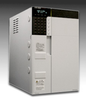
from Shimadzu Scientific Instruments, Inc.
A forced-air circulation-type column oven, the CTO-20A can regulate the temperature from 10ºC above room temperature to 85ºC. Rapid temperature equilibration allows complex temperature programs incorporating linear and/or step-wise increases and decreases in temperature. [See More]
- User Interface: Digital
- Display: Digital
- Instrument Type: Fixtured
- General Features: Programmable; Built-in or Self Calibration

from Shimadzu Scientific Instruments, Inc.
Shimadzu's Discovery VP Analytical System enables characterization of microgram to milligram quantities of lead candidates generated from Drug Discovery, Medicinal Chemistry, Natural Product Isolation, or Organic Synthesis efforts. Up to ten columns and four solvent pairs can be configured, making... [See More]
- User Interface: Digital
- Analysis Method: Analytical
- Instrument Type: Fixtured
- Detector Type: Ultraviolet/Visible Light Detector; Refractive Index; Light Scattering; Mass Spectroscopy; PDA

from Shimadzu Scientific Instruments, Inc.
The Discovery VP preparative system enables purification and collection of milligram to gram quantities of compounds generated from Drug Discovery, Medicinal Chemistry, Natural Product Isolation, and Organic Synthesis efforts. Multiple fraction collectors increase throughput and facilitate high... [See More]
- User Interface: Digital
- Analysis Method: Preparative
- Instrument Type: Fixtured
- Detector Type: Ultraviolet/Visible Light Detector; Refractive Index; Light Scattering

from Shimadzu Scientific Instruments, Inc.
An economical option for gradient analysis is a quaternary HPLC system with a single pump and valve to mix up to four solvents. The Nexera quaternary system operates at analytical to semi-prep flows (max. 10 mL/min) and throughout the HPLC and UHPLC pressure range, up to 19,000 psi, with no... [See More]
- User Interface: Digital
- Analysis Method: Analytical
- Instrument Type: Fixtured
- Detector Type: Ultraviolet/Visible Light Detector; Fluorescence

from Shimadzu Scientific Instruments, Inc.
Realization of Advanced Laboratory. From setting vial to starting analysis, all the procedures are performed via the equipment. The operations in the laboratory are minimized and free of errors. The system status can be supervised even from outside the laboratory. More efficient use of laboratory... [See More]
- User Interface: Digital
- Analysis Method: Analytical
- Instrument Type: Fixtured
- Injection Method: Auto-sampler Injection