
Specialty / Other Thread Lockers and Retainers
Description
Specialty thread lockers and retainers are adhesive products designed to secure threaded fasteners in place. They work by filling the gaps between threads, preventing loosening due to vibration or other forces. These products are available in various formulations, including liquids and semi-solid sticks, to accommodate different strength requirements and environmental conditions.
Working Principle
Thread lockers and retainers operate by curing in the absence of air (anaerobic conditions) when confined between metal surfaces. This curing process creates a strong bond that locks the threads in place, effectively sealing them against leaks and contamination. The primary utility of these products lies in their ability to enhance the reliability of threaded assemblies by resisting loosening from vibration and impacts, as well as preventing corrosion by blocking out fluids and contaminants .
Applications
Thread lockers and retainers are used in a wide range of applications. Specific examples include securing bolts in automotive engines to prevent loosening due to engine vibrations, and in industrial machinery where they help maintain the integrity of equipment under constant motion or stress. They are also used in electronics to secure components that may be subject to thermal expansion and contraction.
Advantages over other Thread Lockers and Retainers
Compared to mechanical locking devices, specialty thread lockers offer several advantages. For instance, they completely fill the gaps between threads, unlike ribbed flange bolts or spring washers, which only increase resistance to loosening but do not eliminate gaps. This complete gap filling provides superior locking against vibrational loosening. Additionally, thread lockers can prevent fastener loss more effectively than castellated nuts with split pins, which do not address the issue of gaps .
Limitations
One limitation of thread lockers is that they require a clean and dry surface for optimal adhesion, which may not always be feasible in certain environments. Additionally, once cured, they can make disassembly more challenging, potentially requiring the application of heat or special tools to break the bond.
Considerations
When selecting thread lockers and retainers, consider the initial cost, which can vary based on the formulation and strength required. Operating expenses are generally low, as these products do not require additional maintenance once applied. Durability is a key advantage, as they provide long-lasting protection against loosening and corrosion. However, accuracy in application is crucial to ensure proper curing and effectiveness. Replacement and maintenance costs are minimal, but disassembly may incur additional labor costs if the bond needs to be broken for maintenance or repairs.
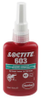
from RS Components, Ltd.
Loctite 135280 Retaining Compound [See More]
- Chemical System: Urethane methacrylate
- Type / Form: Liquid
- Cure / Technology: Anaerobic
- Industry: Bonding, retaining
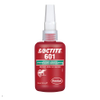
from RS Components, Ltd.
RETAINING COMPOUND 601 50ML [See More]
- Chemical System: Dimethacrylate
- Type / Form: Liquid
- Cure / Technology: Anaerobic
- Industry: Bonding, retaining
from RS Components, Ltd.
RETAINING COMPOUND 601 10ML [See More]
- Chemical System: Dimethacrylate
- Type / Form: Liquid
- Cure / Technology: Anaerobic
- Industry: Bonding, retaining
from RS Components, Ltd.
Loctite LOCTITE ® 648 Retaining Compound [See More]
- Chemical System: Urethane methacrylate
- Type / Form: Liquid
- Cure / Technology: Anaerobic
- Industry: Bonding, retaining
from RS Components, Ltd.
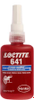
Loctite 135522 Retaining Compound [See More]
- Chemical System: Methacrylate
- Type / Form: Liquid
- Cure / Technology: Anaerobic
- Industry: Bonding, retaining
from RS Components, Ltd.
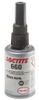
Loctite 229232 Retaining Compound [See More]
- Chemical System: Urethane methacrylate
- Type / Form: Gel
- Cure / Technology: Anaerobic
- Industry: Bonding, retaining
from RS Components, Ltd.
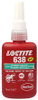
Loctite 234795 Retaining Compound [See More]
- Chemical System: Urethane methacrylate
- Type / Form: Liquid
- Cure / Technology: Anaerobic
- Industry: Bonding, retaining
from RS Components, Ltd.
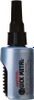
Loctite 660, 50ML Retaining Compound [See More]
- Chemical System: Urethane methacrylate
- Type / Form: Gel
- Cure / Technology: Anaerobic
- Industry: Bonding, retaining
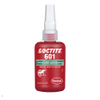
from RS Components, Ltd.
Loctite 601 Retaining Compound [See More]
- Chemical System: Methacrylate
- Type / Form: Liquid
- Cure / Technology: Anaerobic
- Industry: Retaining
from RS Components, Ltd.
Loctite 620 Retaining Compound [See More]
- Chemical System: Methacrylate
- Type / Form: Liquid
- Cure / Technology: Anaerobic
- Industry: Retaining
from RS Components, Ltd.
Loctite 640 Retaining Compound [See More]
- Chemical System: Methacrylate
- Type / Form: Liquid
- Cure / Technology: Anaerobic
- Industry: Bonding
from RS Components, Ltd.
RS PRO 83613 Retaining Compound [See More]
- Chemical System: Bis(isopropyl)naphthalene, cumene hydroperoxide, hydroxyalkyl methacrylate, polyglycol dimethacrylate
- Type / Form: Liquid
- Cure / Technology: Anaerobic
- Industry: Retaining
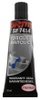
from RS Components, Ltd.
Loctite LOCTITE SF 7414 Thread Lock [See More]
- Chemical System: Solvent
- Industry: Tamper proofing
- Cure / Technology: Anaerobic
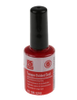
from RS Components, Ltd.
RS Pro Thread Locking [See More]
- Chemical System: Butyl acetate, ethyl acetate
- Industry: Threadlocking
- Type / Form: Liquid
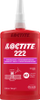
from RS Components, Ltd.
Loctite 267359 Threadlocking Adhesive [See More]
- Chemical System: Methacrylate
- Type / Form: Liquid
- Cure / Technology: Anaerobic
- Industry: Threadlocking
from DME Company
Resists Corrosion, Leakage and Loosening From Vibration and Moisture. Anaerobic Sealant Chemically Cures In The Absence of Air. Use From -65 ˚F To +350 ˚F. Allows Final Adjustments Up To 24 Hours After Application. Use For Hydraulics, Pneumatics, Process Piping or Steam. Locks And Seals... [See More]
- Chemical System: PTFE
- Substrate Compatibility: Metal; Dissimilar Substrates
- Compound Type: Sealant
- Cure / Technology: Anaerobic
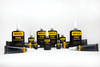
from Chemence Inc.
KS675 is a single component, low-medium strength, anaerobic pipe sealant. KS675 is a very high viscosity, thixotropic pipe sealing paste possessing high lubricity. KS675 cures when confined in the absence of air between close-fitting metal surfaces. KS675 is formulated to lock and seal medium to... [See More]
- Chemical System: Dimethacrylate
- Substrate Compatibility: Metal
- Compound Type: Adhesive; Sealant
- Cure / Technology: Anaerobic; Two Component (optional feature); Single Component
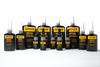
from Chemence Inc.
Krylex KT722 is a high strength, high viscosity, high service temperature, anaerobic thread locker. KT722 cures when confined in the absence of air between close-fitting metal surfaces. KT722 is formulated to lock all metric and imperial nuts and bolts, preventing vibration loosening and leakage... [See More]
- Chemical System: Dimethacrylate
- Substrate Compatibility: Metal
- Compound Type: Adhesive; Sealant
- Cure / Technology: Anaerobic; Two Component (optional feature); Single Component