
Display Type: None Oxidation Reduction Potential (ORP) Instruments
Last Updated: February 12, 2025
Description
Display Type: None Oxidation Reduction Potential (ORP) Instruments are specialized devices used to measure the oxidation-reduction potential of a solution. These instruments consist of a metal half-cell and a reference cell, which together generate a voltage that indicates the solution's ability to oxidize or reduce substances. The absence of a display means that these instruments do not have user controls or visual output interfaces, making them suitable for integration into systems where direct human interaction is not required.
Working Principle
ORP instruments operate by using a sensing electrode, typically made of platinum, gold, or graphite, and a reference electrode, often composed of silver chloride or saturated calomel. When exposed to oxidizing or reducing agents, electrons are transferred across the measuring surface of the sensing electrode, generating a voltage. This voltage is measured in millivolts and indicates the solution's oxidation-reduction potential. A positive voltage suggests a strong oxidizing agent, while a negative voltage indicates a strong reducing agent. These instruments are useful because they provide a consistent and reliable measure of a solution's chemical reactivity across a wide pH range .
Applications
ORP instruments are widely used in various applications, including:
- Measuring the oxidizing ability of chlorine in swimming pools and spas.
- Determining the equivalence point in oxidation-reduction reactions.
- Disinfection processes in cooling towers.
- Groundwater remediation.
- Bleaching and cyanide destruction.
- Chrome reductions and metal etching.
- Disinfection of fruits and vegetables.
- Dechlorination processes .
Advantages over other Oxidation Reduction Potential (ORP) Instruments
Display Type: None ORP instruments offer the advantage of being integrated into automated systems without the need for manual operation or monitoring. This can be particularly beneficial in industrial settings where continuous monitoring is required without human intervention. Additionally, the lack of a display reduces the complexity and potential points of failure in the device, potentially increasing its reliability and lifespan in harsh environments .
Limitations
One limitation of ORP instruments is the potential for diminished response speed when the ORP of the sample is similar to that of the electrode. This can affect the accuracy and timeliness of measurements. Additionally, carryover can be an issue when measuring strong oxidizers or reducers, necessitating thorough rinsing between tests to maintain accuracy .
Considerations
When selecting Display Type: None ORP instruments, several factors should be considered:
- Initial Costs: These instruments may have lower initial costs due to the absence of display components.
- Operating Expense: Operating expenses can be minimized as these devices require less maintenance related to display components.
- Durability: The lack of a display can enhance durability, especially in environments where exposure to harsh conditions is common.
- Accuracy: Accuracy is influenced by the electrode size and the stability of the reference electrode. Larger detection areas generally provide better accuracy.
- Replacement and Maintenance Costs: Maintenance costs may be lower due to fewer components that can fail, but regular calibration and electrode maintenance are still necessary to ensure accurate readings .
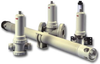
from ABB Measurement & Analytics
The pH / redox (ORP) sensing system 7600 is the result of over fifty years experience of continuous on-line pH measurement. Flow-through and immersion versions are available. Both types can be supplied in glass-coupled polypropylene. A stainless steel version is available as a flow system that... [See More]
- Display Type: None
- pH range: 0.0 to 10
- Measures pH: Yes
- Form Factor: Wall

from ABB Measurement & Analytics
A well deserved reputation for ruggedness, longevity and accuracy hallmark the TBX564 series industrial hot-tap retractable pH / redox sensors. The sensors are easily applied to most industrial measurement needs. They are renowned for their ability to outperform conventional sensors in the... [See More]
- Display Type: None
- Measures pH: Yes
- ORP Range: 0 to 2000
- pH range: 0.0 to 14

from ABB Measurement & Analytics
A well deserved reputation for ruggedness, longevity and accuracy hallmark the TBX557 series industrial hot-tap retractable pH / redox sensors. The sensors are easily applied to most industrial measurement needs. They are renowned for their ability to outperform conventional sensors in the... [See More]
- Display Type: None
- Measures pH: Yes
- ORP Range: 0 to 2000
- pH range: 0.0 to 14
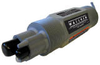
from Iwaki America and Walchem, IWAKI America Inc
Walchem ’s WDS Series differential pH and ORP sensors are designed for industrial applications to be long-lasting and reliable. The differential measurement technique uses two electrodes, one for the process measurement and the other for the reference measurement. Each electrode is measured... [See More]
- Display Type: None
- Features: ORP Reference Electrode Input
- ORP Range: -2000 to 2000
- Measures pH: Yes

from Burkert Fluid Control Systems
The Type 8202 is a compact measuring device designed for the measurement of the pH value or redox potential (ORP): - pH value: in clean or contaminated liquids or liquids containing solids, sulphides or proteins. - the redox potential: in clean or contaminated liquids or liquids containing solids,... [See More]
- Display Type: None
- Measures pH: Yes
- ORP Range: -2 to 16
- Process Temp: 32 to 122