
-
Supplier: Hottinger Brüel & Kjær A/S
Description: The Dytran series 7531 is a single axis DC response accelerometer designed to offer a simple and cost effective solution for low level, low frequency vibration measurements. It is offered in various lengths. Tailored for zero-to-medium frequency applications, the isolated Dytran series 7531
- Acceleration: 2 g
- Frequency Range: 0 to 1,600 Hz
- Operating Temperature: -40 to 185 F
- Sensor Technology: MEMS
-
Supplier: Hottinger Brüel & Kjær A/S
Description: The Dytran series 7533 is a triaxial DC response accelerometer designed to offer a simple and cost effective solution for low level, low frequency vibration measurements. It is offered with an integral cable in various lengths ranging from 1ft- 50ft. Tailored for zero-to-medium frequency
- Acceleration: 40 g
- Frequency Range: 0 to 1,500 Hz
- Operating Temperature: -40 to 257 F
- Sensor Technology: MEMS
-
Supplier: Hottinger Brüel & Kjær A/S
Description: The Dytran series 7506A is a high precision single axis variable capacitance (VC) accelerometer available with measurement ranges of 400g and 50g. This high precision accelerometer combines an integrated VC accelerometer chip with high drive, low impedance buffer for low level
- Acceleration: 50 g
- Frequency Range: 0 to 300 Hz
- Operating Temperature: -58 to 257 F
- Sensor Mounting: Adhesive Base
-
-
Supplier: Hottinger Brüel & Kjær A/S
Description: The Dytran 7583 series provides VC-MEMS triaxial measurements in a rugged hermetically sealed package. This high-performance triaxial variable capacitance (VC) accelerometer is offered in multiple ranges to cover your acceleration measurement needs. It features outstanding thermal
- Acceleration: 100 g
- Frequency Range: 0 to 2,800 Hz
- Operating Temperature: -67 to 257 F
- Sensor Technology: MEMS
-
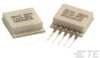
Supplier: TE Connectivity
Description: Attachment Plug & Play Accelerometer Mounting Type : Screw Other Acceleration Range (±) (GFORCE) : 200 Nonlinearity (PCTFSO) : ±.1 Sensitivity : 10 mV/g Product Type Features Accelerometer Type : MEMS DC Plug & Play Accelerometer Sensor Type : DC Response Plug & Play
- Acceleration: 200 g
- Frequency Range: 0 to 2,000 Hz
- Operating Temperature: -67 to 257 F
- Sensor Technology: MEMS
-
Supplier: TE Connectivity
Description: Accelerometer Type : MEMS DC Sensor Package : Plug & Play Vibration Sensor Product Type : MEMS Accelerometer Signal Characteristics Frequency Response (HZ) : 0-1900 to 0-7000 Usage Conditions Operating Temperature Range : -40 - 121 DEGC [-40 - 250 DEGF ]
- Acceleration: 6,000 g
- Frequency Range: 0 to 7,000 Hz
- Operating Temperature: -40 to 249.8 F
- Sensor Technology: MEMS
-
Supplier: TE Connectivity
Description: (±) (GFORCE) : 2 Nonlinearity (PCTFSO) : ±1 Overall Acceleration Range (±) (GFORCE) : 2 - 200 Sensitivity (MVG) : 6, 20 Sensitivity Range (MVG) : .15 - 20 Product Type Features Accelerometer Type : MEMS DC Embedded Accelerometer Sensor Type : DC Response Embedded
- Acceleration: 2 g
- Frequency Range: 0 to 150 Hz
- Operating Temperature: -40 to 257 F
- Sensor Technology: MEMS
-
Supplier: Silicon Designs, Inc.
Description: The Model 1531 is an industrial-grade surface mount MEMS DC accelerometer that is specifically designed for use in higher-temperature applications. Its performance specifications are virtually identical to those of the SDI Model 1521, yet with the further incorporation of
- Acceleration: 5 to 400 g
- Frequency Range: 0 to 2,000 Hz
- Maximum Shock: 2,000 to 5,000 g
- Operating Temperature: -67 to 347 F
-
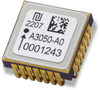
Supplier: Tronics Microsystems
Description: AXO305 redefines navigation accuracy with its exceptional stability and repeatability, directly challenging the performance of traditional quartz accelerometers. This single-axis, closed-loop digital MEMS accelerometer, boasting a ±5 g input range, delivers unparalleled 1-year
- Acceleration: 5 g
- Frequency Range: 120 Hz
- Maximum Shock: 50 g
- Maximum Vibration: 4.12 g
-
Supplier: ifm efector inc.
Description: For the reliable vibration detection of machines and equipment For connection to a diagnostic electronics for vibration sensors Large operating temperature range and high protection rating for the requirements of harsh industrial environments Compact and robust stainless steel housing with high
- Acceleration: -25 to 25 g
- Frequency Range: 1 to 10,000 Hz
- Minimum Accuracy: 0.2 +/-% FS
- Maximum Shock: 50 g
-
Supplier: Tronics Microsystems
Description: AXO315 redefines precision navigation in extreme environments. This single-axis, closed-loop digital MEMS accelerometer delivers exceptional stability and repeatability, crucial for accurate navigation under severe temperature fluctuations and intense vibrations. Offering a ±14 g input
- Acceleration: 14 g
- Frequency Range: 300 Hz
- Maximum Shock: 50 g
- Maximum Vibration: 4.12 g
-
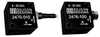
Supplier: Silicon Designs, Inc.
Description: SDI's Premium Models 2470 and 2476 High-Performance Three-Axis MEMS DC Accelerometers are rugged plug-and-play measurement devices that provide enhanced performance over temperature for use in zero to medium frequency applications experiencing large or rapid temperature variations or
- Acceleration: 2 to 400 g
- Frequency Range: 0 to 4,200 Hz
- Maximum Shock: 2,000 to 5,000 g
- Operating Temperature: -67 to 257 F
-
Supplier: Silicon Designs, Inc.
Description: SDI's 1-axis Model 2012 and 3-axis Model 2422 MEMS DC Test & Measurement Accelerometer Modules are designed for applications in which the power supply may be limited, or if only a steady +5V DC excitation is available or preferred.
- Acceleration: 2 to 400 g
- Frequency Range: 0 to 4,200 Hz
- Maximum Shock: 2,000 to 5,000 g
- Operating Temperature: -67 to 257 F
-
Supplier: Marposs Corp
Description: DESCRIPTION All sensors are based on a piezoelectric or MEMS (Micro-Electro-Mechanical Systems) measuring principle, equipped with a standard IEPE interface and are adapted to different applications together with Artis systems. All sensors can be connected to the Artis monitoring systems CTM,
- Measurement Axes: Biaxial, Single Axis, Triaxial
- Sensor Technology: MEMS, Piezoelectric
- Device Category: Sensor / Transducer
-
Supplier: Silicon Designs, Inc.
Description: The SDI Model 2290 Single-Axis MEMS DC Precision Reference Calibration Accelerometer offers a precise, reliable, and accurate means of determining the sensitivity and frequency response characteristics of unknown MEMS DC accelerometers during end-to-end calibrations and
- Acceleration: 5 to 50 g
- Frequency Range: 0 to 1,800 Hz
- Maximum Shock: 2,000 to 5,000 g
- Operating Temperature: -67 to 257 F
-
Supplier: Tronics Microsystems
Description: AXO314 redefines precision inertial sensing, delivering exceptional stability and repeatability for navigation systems operating under severe vibration conditions. This digital MEMS accelerometer, with a ±14 g input range, offers performance comparable to traditional quartz
- Acceleration: 14 g
- Frequency Range: 300 Hz
- Maximum Shock: 50 g
- Maximum Vibration: 4.12 g
-
Supplier: LORD MicroStrain Sensing Systems
Description: Wireless Accelerometer Node Overview The G-Link® -LXRS™ Wireless Accelerometer Node features on-board triaxial ±2 g or ±10 g MEMS accelerometers and an internal temperature sensor. G-Link® -LXRS™ can be employed to measure vibration or acceleration, or as a tilt sensor or
- Acceleration: -10 to 10 g
- Frequency Range: 1 to 512 Hz
- Operating Temperature: -4 to 140 F
- Sensor Outputs: Acceleration, Temperature
-
Supplier: Micromega Dynamics
Description: RECOVIB Feel has been designed for performing an immediate vibratory analysis. It is connected to an Android device or tablet PC via a USB connection. The supplied application enables the streaming of real-time vibration data on a chart in the time domain and in the frequency domain. Once the data
- Acceleration: 2 to 15 g
- Frequency Range: 0 to 250 Hz
- Minimum Accuracy: 0.3 to 0.5 +/-% FS
- Operating Temperature: 14 to 122 F
-
Supplier: Kionix, Inc.
Description: These high-performance silicon micromachined linear accelerometers and inclinometers consist of a sensor element and an ASIC packaged in a 3x3x0.9mm Land Grid Array (LGA). The sensor element is fabricated from single-crystal silicon with proprietary Deep Reactive Ion Etching (DRIE) processes,
- Acceleration: 2 to 8 g
- Frequency Range: 6.25 to 400 Hz
- Maximum Shock: 10,000 g
- Operating Temperature: -40 to 185 F
-
Supplier: Jewell Instruments, LLC
Description: information. Our recently CENELEC and AREMA qualified JMA-165 series MEMS accelerometers are now a cost effective and viable alternative to the traditional forced balanced designs. Features: ±0.5G & ±1.0G full ranges CENELEC/AREMA certified Low-cost MEMS technology Internal
- Acceleration: 0.5 to 1 g
- Frequency Range: 100 Hz
- Maximum Shock: 10 g
- Operating Temperature: -40 to 158 F
-
Supplier: PCB Piezotronics, Inc.
Description: Triaxial MEMS DC accelerometer, 135 mV/g, 10 g, 10 ft integral cable
- Acceleration: 10 g
- Frequency Range: 0 to 1,500 Hz
- Maximum Shock: 3,000 g
- Operating Temperature: -65 to 250 F
-
Supplier: Shenzhen Rion Technology Co., Ltd
Description: AKE390B voltage type accelerometer sensor series products is RION company imported the Switzerland patented technology to produce for using widely, suitable for vibration testing, impact testing and more fields. This series products with firm structure,low power consumption, excellent
- Acceleration: 1 to 40 g
- Operating Temperature: -40 to 185 F
- Sensor Technology: MEMS
- Device Category: Sensor / Transducer
-
Supplier: Kionix, Inc.
Description: These high-performance silicon micromachined linear accelerometers and inclinometers consist of a sensor element and an ASIC packaged in a 5x5x1.2mm Dual Flat No-lead (DFN). The sensor element is fabricated from single-crystal silicon with proprietary Deep Reactive Ion Etching (DRIE)
- Acceleration: 2 g
- Frequency Range: 800 Hz
- Maximum Shock: 5,000 g
- Operating Temperature: -40 to 185 F
-
Supplier: Jewell Instruments, LLC
Description: Jewell Instruments AKA Series Accelerometers are an excellent choice for cost to performance trade-off. The AKA is based on silicon micro-machined MEMS Capacitive Accelerometer technology and designed for low power and high stability. • Triaxial Configuration • Measuring ranges
- Acceleration: 2 to 40 g
- Frequency Range: 500 Hz
- Maximum Shock: 100 g
- Maximum Vibration: 20 g
-
Supplier: PCB Piezotronics, Inc.
Description: MEMS ACCEL, TRIAXIAL, 3503A1120KG/010LY
- Acceleration: 20,000 g
- Maximum Shock: 60,000 g
- Operating Temperature: -65 to 250 F
- Sensor Technology: MEMS, Piezoresistive
-
Supplier: Shenzhen Rion Technology Co., Ltd
Description: AKE398B current type accelerometer sensor series products is RION company imported the Switzerland patented technology to produce for using widely, suitable for vibration testing, impact testing and more fields. This series products with firm structure,low power consumption, excellent
- Acceleration: 1 to 40 g
- Operating Temperature: -40 to 185 F
- Sensor Technology: MEMS
- Device Category: Sensor / Transducer
-
Supplier: Kistler Group
Description: Type 8396A... triaxial capacitive accelerometer family utilizes a silicon Micro-Electro-Mechanical System (MEMS) variable capacitance sensing element. The sensing element of each axis consists of a very small inertial mass and a flexure element cantilever positioned between two plates.
- Acceleration: 2 to 200 g
- Frequency Range: 0 to 7,000 Hz
- Maximum Shock: 6,000 g
- Maximum Vibration: 20 g
-
Supplier: SignalQuest, Inc.
Description: processing, the SQ-XLD series accelerometer makes an ideal platform for real time monitoring or prototyping accelerometer systems. Function Miniature, low-cost, serial accelerometer Real-time data acquisition performance using a low cost serial cable Simple menu-driven PC
- Acceleration: 1.7 to 70 g
- Frequency Range: 10,000 to 1,000 Hz
- Minimum Accuracy: 2.5 +/-% FS
- Maximum Shock: 500 g
-
Supplier: Imego
Description: IQA10 is a micromachined three-axis accelerometer. It uses Imego's patented Quad Slanted Beam principle to obtain symmetric sensitivity for all three axes with near-zero cross coupling. Its compact single-chip design completely avoids any risk for axis misalignment and allows for a
- Maximum Shock: 1,500 g
- Operating Temperature: -40 to 185 F
- Sensor Outputs: Acceleration
- Sensor Technology: MEMS
-
Supplier: Sherborne Sensors
Description: The A700 range of Solid State Accelerometers measure acceleration in single or dual axes. The accelerometer utilises MEM technology having positive mechanical stops conferring excellent shock resistance. The -0101 version incorporates a temperature sensor enabling each sensor to
- Acceleration: -5 to 5 g
- Maximum Shock: 3,500 g
- Operating Temperature: -13 to 185 F
- Sensor Outputs: Acceleration
-
Supplier: Sherborne Sensors
Description: The A600 range of Solid State Accelerometers measure vector acceleration with high accuracy using a micromachined (MEMS) silicon sensor incorporating an air damping feature. Unlike fluid damped devices the air damping employed is essentially independent of temperature. The transducer
- Acceleration: -20 to 20 g
- Frequency Range: 0 to 600 Hz
- Maximum Shock: 200 g
- Operating Temperature: -40 to 185 F
-
Supplier: Kionix, Inc.
Description: The KXTG9 series adds a flexible programmable motion-interrupt chip with fast SPI interface into the Kionix suite of products. These sensors can accept supply voltages between 1.8V and 3.6V. Sensitivity is factory programmable allowing customization for applications requiring from 1.5g to 6.0g
- Acceleration: 3 g
- Maximum Shock: 5,000 to 10,000 g
- Operating Temperature: -40 to 185 F
- Sensor Outputs: Acceleration
-
Supplier: Kistler Group
Description: The Type 8316A... capacitive accelerometer family utilizes a silicon Micro-Electro Mechanical System (MEMS) variable capacitance sensing element. Each axis consists of a very small inertial mass and a flexure element cantilever positioned between two plates. As the mass deflects under
- Acceleration: 2 to 200 g
- Frequency Range: 0 to 7,000 Hz
- Maximum Shock: 6,000 g
- Maximum Vibration: 20 g
-
Supplier: Jewell Instruments, LLC
Description: Jewell Instruments DKA Series Accelerometers are an excellent choice for cost to performance trade off. The DKA is based on silicon micro-machined MEMS Capacitive Accelerometer technology and designed for low power and high stability. • Triaxial Configuration • Measuring ranges
- Acceleration: 2 to 40 g
- Frequency Range: 500 Hz
- Maximum Shock: 100 g
- Maximum Vibration: 20 g
-
Supplier: Columbia Research Labs, Inc.
Description: The Columbia Series SSA-1000 Solid State Silicon Accelerometers utilize military-grade assembly line construction techniques with the production controls and inspection associated with a Military Certified Quality System. These sensors offer improved performance, smaller size and added
- Acceleration: -2 to 2 g
- Frequency Range: 0 to 100 Hz
- Minimum Accuracy: 0.12 +/-% FS
- Maximum Shock: 1,200 g















Find Suppliers by Category Top
Featured Products Top
-
 low-noise, high resolution, closed-loop digital MEMS accelerometer with ± 1 g input range that offers a performance-equivalent, low-SWaP and cost-effective alternative to force balance inclinometers. It demonstrates an ultra-low noise density of 9 μg/√Hz with an (read more)
Browse Accelerometers Datasheets for Tronics Microsystems -
MEMS accelerometer with ±1 g input range that offers a performance-equivalent, low-SWaP (Size, Weight and Power) and cost-effective alternative to force balance inclinometers and servo-accelerometers. It demonstrates an ultra-low noise (read more)
Browse Accelerometers Datasheets for Tronics Microsystems -
motion control, as well as test instrumentation. Force-rebalance closed-loop MEMS accelerometer with quartz sensors -equivalent performances at a fraction of their size (<0.8 cm3 vs <10 cm3), weight (<1.4 g vs 50 g) and price (2-3 times cheaper (read more)
Browse Accelerometers Datasheets for Tronics Microsystems -
-assisted train localization and e-VTOL AHRS.. Force-rebalance closed-loop MEMS accelerometer with quartz sensors -equivalent performances at a fraction of their size (<0.8 cm3vs <10 cm3), weight (<1.4 g vs 50 g) and price (2-3 times cheaper (read more)
Browse Accelerometers Datasheets for Tronics Microsystems -
Product Overview As wearable devices, IoT endpoints, and battery-powered systems continue to advance, low-power sensors have become critical to system design. LIS2DW12TR is a widely adopted MEMS accelerometer designed for low-power, always-on sensing, where power (read more)
Browse Accelerometers Datasheets for Win Source Electronics -
Tronics is the only provider of both closed-loop MEMS Accelerometers and Gyros, taking MEMS inertial sensors to an unrivalled level of performance. Closed-loop electronics, also called force-feedback, brings several key advantages to inertial sensors, including superior (read more)
Browse Datasheets for Tronics Microsystems
More Information Top
 Indicates content that may require registration and/or purchase.

-
MEMSlab: A Practical MEMS Course for the Fabrication, Packaging, and Testing of a Single-Axis Accelerometer
[8] A. Alabqari and B. Majlis, “Electrostatic pull-in behavior in 50 g force balanced MEMS accelerometer ,” in Proc. IEEE Int. Conf.
-
Non-Crossing Differential Capacitive MEMS Accelerometer with Electrostatic Spring Tuning
Figure 2: Schematic of non-crossing force balanced MEMS accelerometer with electrostatic spring .
-
Dependence of error sensitivity of frequency on bias voltage in force-balanced micro accelerometer
Zhang Y F, Liu X W, Chen W P. System-level modeling and simulation of force - balance MEMS accelerometers .
-
Encyclopedia of Structural Health Monitoring Complete Document
A force - balanced MEMS accelerometer based on a capacitive design has also been proposed by Lemkin et al. [19] (Figure 3e).
-
System-level simulation of microbolometer and read-out integrated circuit
A system-level Simulation of Force - Balance MEMS Accelerometers by VHDL_AMS.
-
Front Matter: Volume 7130
A system-level simulation of force - balance MEMS accelerometers by VHDL_AMS [7130-26] .
-
A sensitive three-axis micromachined accelerometer based on an electrostatically suspended proof mass
Compared with conventional force - balanced MEMS accelerometers , which typically have a proof mass connected to the substrate by a set of mechanical spring, the effective spring constant or suspension stiffness of the MESA depends only on design of the suspension servo loop.
-
Research on nonlinearity of closed-loop capacitive accelerometer resulting from time-division force feedback
[5] Zhang Yufeng, Liu Xiaowei, Chen Weiping, “System-Level Modeling and Simulation of Force - Balance MEMS Accelerometer , ” Journal of Semiconductors, Vol.29, No.5, May 2008.
-
Transportation of hard disk media using electrostatic levitation and tilt control
These limitations can give problems in object handling systems or even in a MEMS force balance electrostatic accelerometer [6].
-
Feature Detection, Characterization and Confirmation Methodology: Final Report
MEMS -based force balance accelerometers , magnetometers, light-sensitive detectors, and high-quality MEMS-based temperature and humidity sensors are currently available.