
Products & Services
See also: Categories | Featured Products | Technical Articles | More Information-
Supplier: Accuris
Description: STANDARD TEST METHOD FOR VISCOSITY OF SILICONE FLUIDS
-
Supplier: ASTM International
Description: 1.1 This test method covers the measurement of the kine- matic viscosity of silicone fluids for polish applications. 1.2 This standard does not purport to address all of the safety problems, if any, associated with its use. It is the responsibility of the
-
Supplier: Accuris
Description: Standard Classification of Industrial Fluid Lubricants by Viscosity System
-
-
Supplier: Accuris
Description: FLUIDS FOR ELECTROTECHNICAL APPLICATIONS. CALCULATION OF VISCOSITY INDEX FROM KINEMATIC VISCOSITY.
-
Supplier: Accuris
Description: Standard Practice for Defining the Viscosity Characteristics of Hydraulic Fluids
-
Supplier: SantoLubes LLC
Description: SANTOTRAC 50 Traction Fluid is a low viscosity synthetic hydrocarbon-based traction fluid that is especially designed for applications where low to medium film strength is desired. This product has high coefficient of traction and is fortified with a proprietary additive
- Kinematic Viscosity: 30 cSt
- Operating / Use Temperature: -30 to 300 F
- Type / Function: Lubricating, Transmission / Drive Fluid
- Composition / Chemistry: Specialty / Other, Straight Oil (Non-soluble), Synthetic
-
Description: Viscosity of the writing fluid
-
Supplier: ASTM International
Description: This classification is applicable to all petroleum-base fluid lubricants and to those nonpetroleum materials which may be readily blended to produce fluid lubricants of a desired viscosity, that is, lubricants for bearings, gears, compressor cylinders, hydraulic
-
Supplier: ASTM International
Description: applicable to fluids ranging in kinematic viscosity from about 4 to 150 mm2/s as measured at a reference temperature of 40°C and to temperatures from −50 to +16°C for a fluid viscosity of 750 mPa·s. Note 1-Fluids of lesser or greater
-
Supplier: SantoLubes LLC
Description: SANTOTRAC 70 Traction Fluid is a medium viscosity synthetic hydrocarbon-based traction fluid that is especially designed for applications where medium to high film strength is desired. This product has high coefficient of traction and is fortified with a proprietary
- Kinematic Viscosity: 120 cSt
- Type / Function: Lubricating, Transmission / Drive Fluid
- Composition / Chemistry: Specialty / Other, Straight Oil (Non-soluble), Synthetic
-
Supplier: SAE International
Description: This SAE AIR provides a description of a reference method for viscosity tests of thickened (AMS 1428) anti-icing fluids.
-
Supplier: SAE International
Description: This SAE Aerospace Information Report (AIR) provides a description of a reference method for field viscosity tests of thickened (AMS 1428) anti-icing fluids.
-
Description: ISO 23181:2007 specifies a method for determining the resistance of a hydraulic filter element to flow fatigue when subjected to high viscosity fluid, using a uniformly varying flow rate up to a predetermined terminal differential pressure and a controlled waveform. It
-
Supplier: CSA Group
Description: ISO 23181:2007 specifies a method for determining the resistance of a hydraulic filter element to flow fatigue when subjected to high viscosity fluid, using a uniformly varying flow rate up to a predetermined terminal differential pressure and a controlled waveform. It
-
Supplier: SAE International
Description: In this paper we contrast the glaze chemistry arising from conventional fluids (traditional ATF viscosity) with that of the newer, lower viscosity fluids. We provide data suggesting that the failure mode is not only related to the accumulated loss of surface
-
Supplier: SAE International
Description: This AS describes a standard method for viscosity measurements of thickened (AMS1428) anti-icing fluids. Fluid manufacturers may publish alternate methods for their fluids. In case of conflicting results between the two methods, the manufacturer method takes
-
Supplier: ASTM International
Description: 1.1 This test method automates the determination of low temperature, low-shear-rate viscosity of driveline and hydraulic fluids, such as automatic transmission fluids, gear oils, hydraulic fluids, and other lubricants. It utilizes a thermoelectrically
-
Supplier: CANNON Instrument Company
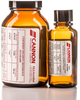
Description: ASTM D2170, ASTM D2171 CANNON high viscosity standards cover a range of viscosities that are of particular interest for asphalt and polymer viscosity determinations. See ASTM D2170, Kinematic Viscosity of Asphalts (Bitumens) and D2171, Viscosity
-
Supplier: ZwickRoell LP
Description: The term viscosity describes the flow behavior of fluid systems. By moving two fluid layers against each other the fluid movements create a resistance (stiffness and internal friction), referred to as flow resistance. Viscous forces are created by moving several
- Test Media: Food / Drugs
- Mounting / Loading Options: Laboratory / Batch
- Properties Analyzed: Texture Analysis
-
Supplier: CANNON Instrument Company
Description: CANNON SimpleVis viscosity standards verify the performance of the CANNON SimpleVIS automated viscometer. Lot specific kinematic viscosity data is provided at 20 °C, 25 °C, 40 °C, and 100 °C.
-
Supplier: CITGO Petroleum Corporation
Description: performance in Detroit Diesel Two Stroke Cycle diesel engines calling for API CF-2. These monograde products also meet the performance requirements of API CF. SAE 10W and SAE 30 viscosity grades have also passed the requirements of the Allison C-4 specification. These lower
- Industry Applications: Combustion Engines / Motor Oil
- Type: Fluid / Oil
-
Description: drilling fluid balances; permeability plugging apparatus with set-screw secured end cap; permeability plugging apparatus with threaded end cap; elastomer compatibility; sand content of oil-based fluid; identification and monitoring of weight-material sag; oil-based
-
Supplier: CSA Group
Description: ISO 10414-1:2008 provides standard procedures for determining the following characteristics of water-based drilling fluids: drilling fluid density (mud weight), viscosity and gel strength, filtration, water, oil and solids contents, sand content, methylene blue capacity,
-
Supplier: CANNON Instrument Company
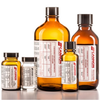
Description: ASTM D445, ASTM D446, ISO 3104, ISO 3105 All CANNON general purpose viscosity standards meet the precision specifications of ASTM D445/446 and ISO 3104/3105. Lot specific data is provided with each standard.
-
Supplier: Jergens, Inc.
Description: Food Grade Hydraulic Oil is a blend of food grade lubricants designed for use as a hydraulic media in food packaging and other similar equipment. It is composed of 100% chemically produced synthetic lubricants and contains no petroleum hydrocarbons. Its viscosity is 140 SUS at
- Type / Function: Hydraulic Oil / Fluid
-
Supplier: CITGO Petroleum Corporation
Description: CITGO TRANSGARD Heavy-Duty Transmission Fluids are new generation Allison C-4 and CAT TO-4 transmission and drivetrain fluids. They are designed for heavy-duty construction equipment powershift transmissions, final drives and wet brakes. Compared to engine oil, TRANSGARD Heavy-Duty
- Kinematic Viscosity: 38.1 to 330 cSt
- Viscosity Index: 100 to 112
- Type / Function: Lubricating, Transmission / Drive Fluid
- Composition / Chemistry: Petroleum / Mineral Oil, Straight Oil (Non-soluble)
-
Supplier: BARTEC
Description: fulfil the conditions of Newton’s friction law are referred to as Newtonian fluids. Their viscosity is a material constant, which is only dependent on pressure and temperature. The viscosity for incompressible and Newtonian fluids can be derived from the so called
-
Supplier: Cammda Corporation
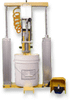
Description: Want to dispense repeatable shots of silicone RTV or other high viscosity materials directly from the pail!? The PDT Pump is a proven performer with accurate repeatability. Easy to set-up. Simple to operate. Available with either foot pedal or remote actuation.
- Application: Adhesive / Silicone, High Viscosity
- Dispensed From: Can / Pail / Drum
- Dispensing Equipment Type: Dispense Only
- Dispensing Type: Fill ("Potting")
-
Supplier: AMETEK Brookfield
Description: High Temperature Silicone Fluids are Newtonian fluids calibrated at 25°C, 93.3°C and 149°C. These fluids are accurate to ±1% of viscosity value and are recommended for use with the Brookfield Thermosel accessory. High Temperature Silicone Fluids are
-
Supplier: Phillips 66 Lubricants
Description: Phillips 66® X/C 5606H and X/C 5606A Aviation Hydraulic Fluids are mineral oil-based, high viscosity index, ashless (zinc-free) antiwear hydraulic fluids designed to meet the severe demands of aerospace and industrial applications. They have excellent oxidation resistance
- Type / Function: Hydraulic Oil / Fluid
- Composition / Chemistry: Petroleum / Mineral Oil
-
Supplier: BP Lubricants North America
Description: BP Dialectric Fluids are designed for use in electro-discharge machines (EDM) of most power ratings. These hydrocarbon oils, made of the highest purity, and are designed for use in electro-discharge machines (EDM) of most power ratings. BP® Dielectric fluids
- Features: Dielectric (Transformer / EDM), Metal Working Fluid, Specialty / Other
-
Supplier: IHS ESDU
Description: ESDU 93006 introduces a computer program that implements the calculation methods of ESDU 84031, 85028 and 86008 for laminar or turbulent flow in a bearing with one or two grooves. The program predicts the minimum film thickness (taking any misalignment into account), the eccentricity ratio,
-
Supplier: Phillips 66 Lubricants
Description: Phillips 66 offers a wide range of product properties and viscosity grades to cover every application in trucking hydraulics. We keep the power flowing in any vehicle with a dedicated reservoir, no matter what you’re using to get the job done—dump truck, garbage truck, snow plow or
- Type / Function: Hydraulic Oil / Fluid
-
Supplier: Saint Clair Systems, Inc.
Description: Norcross Viscosity Measurement and Control Instruments are sensitive enough to detect changes in the viscosity of water, based upon temperature, and are capable of improving the blending, mixing, and color quality of virtually any fluid. Providing the
-
Supplier: Edwards Vacuum
Description: Edwards now offers an extended range of Krytox® perfluoropolyether oils for use in rotary vacuum pumps. Krytox 1506 is recommended for Edwards oil sealed rotary pumps and are practically a direct replacement for mineral oil in terms of viscosity and vapor pressure. Krytox 1525
- Viscosity Index: 22 to 70
- Pour Point: -49 F
- Density / Specific Gravity (@15.6°C, 60°F): 1.88 specific gravity
- Functions: Corrosion Inhibitor / Rust Preventative, Sealing / Barrier













Find Suppliers by Category Top
Featured Products Top
-
 XTREME GRIND TS is one of QualiChem’s premium Gas-to-Liquid (GTL) grinding oils, providing an ideal combination of viscosity, flash point, and grinding performance. XTREME GRIND TS meets the critical specifications for Transor’s OMF systems and is suited for a wide variety of grinding applications where low viscosity and fine filtration are required. (read more)
Browse Metalworking Lubricants, Coolants, and Fluids Datasheets for QualiChem, Inc. -
Available in 40 and 100 cSt at 100°C viscosities, SpectraSyn Hi Vis PAO base stocks are particularly well-suited for industrial oils requiring high stability under extreme operating conditions. They are frequently used with lower-viscosity fluids (PAO, mineral oils) as a viscosity booster to (read more)
Browse Synthetic Oils, Greases, and Lubricants Datasheets for ExxonMobil Chemical Company - Synthetic Base Stocks -
in the process directly. All fluids that fulfil the conditions of Newton’s friction law are referred to as Newtonian fluids. Their viscosity is a material constant, which is only dependent on pressure and temperature. The viscosity for incompressible and Newtonian fluids can be derived from the so called Hagen-Poiseuille law. The fluid is assumed to flow under laminar conditions. (read more)
Browse Oil Sensors and Analyzers Datasheets for BARTEC -
in the belt-and-pulley system while also minimizing friction for energy efficiency. Like other types of transmission oils, CVT fluids are moving to lower viscosity – lower than 6 cSt kinematic viscosity at 100°C – despite high pump pressures that increase shear and raise (read more)
Browse Synthetic Oils, Greases, and Lubricants Datasheets for ExxonMobil Chemical Company - Synthetic Base Stocks -
fluids are moving toward lower viscosity – currently 10-14 cSt kinematic viscosity (KV) @ 100°C but trending lower – while striving to maintain, and even improve, wear protection and durability. Achieving these lubrication goals is especially difficult for heavy (read more)
Browse Synthetic Oils, Greases, and Lubricants Datasheets for ExxonMobil Chemical Company - Synthetic Base Stocks -
In today’s market, successful light-duty automatic transmission fluids (ATFs) must satisfy high expectations. Despite increasingly severe conditions of temperature and load, your ATF products must provide wear protection while fulfilling fuel economy and emissions regulations. To meet fill (read more)
Browse Synthetic Oils, Greases, and Lubricants Datasheets for ExxonMobil Chemical Company - Synthetic Base Stocks -
?The QCRC sensor from EBE sensors + motion is a high-precision, non-contact quality sensor for determining fluid properties. Developed for OEM applications, the QCRC combines compact design with advanced measurement technology and enables reliable analysis of liquids without direct contact with (read more)
Browse Sensor Chips Datasheets for EBE Elektro-Bau-Elemente GmbH -
viscosity is the resistance of a fluid to flow under gravity. Viscosity is the most important lubricant physical property. Lubricants must have suitable flow characteristics to insure that an adequate supply reaches lubricated parts at different operating temperatures. The viscosities of lubricants (read more)
Browse Oil Sensors and Analyzers Datasheets for AMETEK Spectro Scientific -
out as a thin liquid that gradually becomes more viscous with the addition of solid raw materials and/or lowering of temperature. Some applications will reach a viscosity peak mid-processing and finish as a low-viscosity fluid. In all these stages, the mixer must be capable of delivering good turnover (read more)
Browse Industrial Mixers Datasheets for Charles Ross & Son Company -
maintenance required by the mechanical seal of a typical gear pump reducing the overall cost of operation. These seal-less gear pumps offer flows up to 32 m3/hr (140 gpm) and an operating pressure of 12 bar (174 psi). GML/GMB pumps can handle viscosities as high as 15,000 to 20,000 cps and (read more)
Browse Gear Pumps Datasheets for Dickow Pump Company, Inc.
Conduct Research Top
-
Capillary Rheometry: Analysis of Low-Viscosity Fluids, and Viscous Liquids and Melts at High Shear Rates
Rheology is defined as the study of the. flow and deformation of fluids. Based. on the need to quickly and accurately. set and control processing conditions, optimize. product performance, and/or ensure. product acceptance, accurate rheological. measurements have become essential
-
Viscosity & Rheology Classroom
The viscosity of a fluid is a measure of its resistance to gradual deformation by shear stress or tensile stress. It is a measure of the resistance of flow due to internal friction when one layer of fluid is caused to move in relationship to another layer.
-
Viscosity Measurment Application Notes
Most laboratory viscometers employ the well-known principle of rotational viscometers to measure viscosity by sensing the torque required to rotate a spindle at a constant speed while it is immersed in the sample fluid. This is because the torque, generally measured using the reaction torque
-
Universal Viscosity Curve Theory
Like any transducer, a turbine flow meter is sensitive to physical parameters other than the one which is of interest. While designed to measure flow, a turbine meter responds to the viscosity of a fluid as well as its velocity. Following is a brief discussion of the viscosity sensitivity
-
A New Way to Handle Changing Fluid Viscosity and the "Full-to-empty" Effect
This paper explains how the Ultimus( TM) V High Precision Dispenser and Optimeter (TM) maintain consistent shot size in time-pressure dispensing processes as the fluid viscosity and volume of fluid remaining in the syringe change.
-
Viscosity of Ionic Liquids
Ionic liquids are employed as powerful, environmentally neutral. solvents and as electrically conducting fluids. Due to exact viscosity. determination with the Lovis 2000 M/ME microviscometer essential. information on their chemical structure, composition and purity can. be gained.
-
Ask the Expert: Measuring the Viscosity of an Oil
Viscosity is the measurement of an oil's resistance to flow. Typically, we can expect viscosity to decrease with a temperature increase, and increase with a temperature decrease. Viscosity and temperature are considered to be inversely proportional. In oil analysis, viscosity is commonly measured
-
Why Should You Measure Viscosity?
Viscosity is the measure of a substance's resistance to motion under an applied force. Are you working with Newtonian or Non-Newtonian Fluids? From adhesives to paint and food to petroleum - viscosity is important.
More Information Top
 Indicates content that may require registration and/or purchase.

-
ASTM MNL37 - FUELS AND LUBRICANTS HANDBOOK: Technology, Properties, Performance, and Testing
It is considered to be a very low viscosity fluid at typical ambient temperatures with a typical viscosity of about 0.5 cSt at room temperature, which is only slightly lower than water (0.9 cSt) at the same temperature.
-
Encyclopedia of Lubricants and Lubrication
Many mate- rials, when exposed to rapidly (in time) varying forces behave as nearly perfect elastic materials, while they behave as (high viscosity ) fluids when exposed to slowly varying forces.
-
ASTM MNL59 - A Comprehensive Review of Lubricant Chemistry, Technology, Selection, and Design
This can be achieved for both low-viscosity and high- viscosity fluids , by simply adjusting the circulation flow rate.
-
Encyclopedia of Microfluidics and Nanofluidics
For higher viscosity fluids a viscosity- dependent expression has to be added to this crucial Weber number known as the critical Weber number Wecritical.
-
ELECTRORHEOLOGICAL FLUIDS AND MAGNETORHEOLOGICAL SUSPENSIONS - PROCEEDINGS OF THE 10TH INTERNATIONAL CONFERENCE ON ERMR 2006
To be utilized in deterministic high precision finishing, a stable, relatively high- speed, low- viscosity fluid jet, which remains collimated and coherent before it impinges upon the surface is required.
-
Introduction to Fluid Mechanics: includes CD
Without going into all the details, we can write the continuity and Navier–Stokes equations for the im- portant case of a constant density, constant viscosity fluid as (Eq. 11.4a) ∂ u /∂ x + .
-
Handbook of Fluid Dynamics and Fluid Machinery Volume 1 Fundamentals of Fluid Dynamics Complete Document
Most fluids engineering problems involve low viscosity fluids such as air and water, plus human-scale velocities (a few m/s) and sizes (a meter or so).
-
http://theses.ucalgary.ca/bitstream/11023/566/2/ucalgary_2013_motahhari_hamed%20reza.pdf
A high viscosity fluid will experience a lower velocity gradient at a given shear stress.