
Products & Services
See also: Categories | Featured Products | Technical Articles | More Information-
Supplier: Accuris
Description: ASSEMBLY, AFT CLOSURE, SILICONE RUBBER, ROOM TEMPERATURE VULCANIZING, IN-PROCESS REQUIREMENTS FOR
-
Supplier: Phelps Industrial Products
Description: Large gaskets can be die cut segmented, then vulcanized into a one piece construction utilizing a matching polymer and a heat/pressure curing process (elastomeric material only).
- Operating Temperature: -80 to 400 F
- Gasket Type: Custom Gasket, Sheet / Die-cut
- Material: Ethylene Propylene (EPDM), Fluoroelastomer (FKM - Viton®, Fluorel®, etc.), Graphite, Neoprene, Nitrile (NBR - Buna-N), Silicone Rubber
- Features: Other
-
Supplier: Vlier
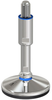
Description: Vlier vulcanized leveler devices are hygienic leveling mounts constructed from AISI 304 stainless steel with a vulcanized NBR 85 rubber pad. The vulcanized pad, attached to the bottom of the leveling feet, is abrasion resistant and highly elastic—protecting the floor surface and providing a seal
- Height or Thickness (Before loading): 0.9055123 inch
- Features: Stainless Steel Construction
-
-
Supplier: CSA Group
Description: ISO/TS 16097:2013 specifies physical and chemical tests, standard test formulations, equipment and processing methods for the vulcanization-characteristics evaluation and the mechanical properties of vulcanized crumb rubber. It is not aimed to provide specifications or limitations, or whether
-
Supplier: Vlier
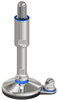
Description: Vlier vulcanized boltdown leveler devices are hygienic leveling mounts constructed from AISI 304 stainless steel with a vulcanized NBR 85 rubber pad. They have similar features as our Vulcanized Leveler but have a boltdown feature. This allows to firmly lock your equipment in place to better secure
- Maximum Load Capacity (Per mount): 5,620 lbs
- Height or Thickness (Before loading): 1.1 inch
- Features: Stainless Steel Construction
-
Supplier: Vlier
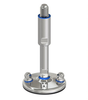
Description: Vlier solid boltdown vulcanized leveler devices are hygienic leveling mounts constructed from AISI 304 stainless steel. They feature a hygienic solid foot with a vulcanized FDA NBR 85 rubber pad with a boltdown feature. This allows to firmly lock your equipment in place to better secure in dynamic
- Maximum Load Capacity (Per mount): 10,116 lbs
- Height or Thickness (Before loading): 1.06 inch
- Features: Stainless Steel Construction
-
Description: ISO 5603:2011 specifies two methods for determining the adhesion strength of vulcanized rubber to wire cord which is embedded in the rubber. The two methods do not necessarily give the same results. They are applicable primarily to test pieces prepared in the laboratory under standard conditions
-
Supplier: CSA Group
Description: ISO 5603:2017 specifies two methods for determining the adhesion strength of vulcanized rubber to wire cord which is embedded in the rubber. The two methods do not necessarily give the same results. They are applicable primarily to test pieces prepared in the laboratory under standard conditions
-
Supplier: CSA Group
Description: ISO 6943:2017 specifies a method for the determination of the resistance of vulcanized rubbers to fatigue under repeated tensile deformations, the test piece size and frequency of cycling being such that there is little or no temperature rise. Under these conditions, failure results from the growth
-
Supplier: ASTM International
Description: 1.1 This classification covers vulcanization accelerators and defines their important chemical and physical characteristics. The properties outlined herein are useful for quality control; they can frequently be directly or indirectly related to the performance characteristics in rubber
-
Supplier: CSA Group
Description: ISO 289-2:2016 specifies a method for determining the pre-vulcanization characteristics of compounded rubber. The pre-vulcanization characteristics determined by this method provide a means of estimating how long compounded rubber can be maintained at high temperatures and remain
-
Description: The test consists of determining how the Mooney viscosity of the rubber compound changes with running time at a specified temperature relevant to the process for which the compound is to be used. The time at which the Mooney viscosity has increased by a specified number of units is recorded.
-
Description: ISO 813:2010 specifies a method for the determination of the adhesive strength of a vulcanized or thermoplastic rubber bonded to a rigid substrate, using a test piece comprising a strip of rubber bonded to a single plate of rigid material. The test is carried out at a peel angle of 90°. The method
-
Supplier: UL Standards & Engagement
Description: printed wiring board should provide safeguards not less than that generally afforded by this document and the principles of safety contained herein. This includes printed wiring boards with technologies, materials, or methods of construction, including the manufacturing process, not
-
Supplier: 3M Advanced Materials Division
Description: at low use levels (100–1000 ppm), so just a small amount can reduce common processing issues like die build-up and melt fracture. That results in better surface quality, less waste, increased productivity, and a smoother extrusion process from start to finish. Dynamar PPAs have been widely
- Function: Anti-caking / Free Flow, Catalyst, Crosslinker / Vulcanizer, Curing Agent ( Hardener / Curative), Lubricity / Slip Agent, Reaction Accelerator, Release Agent (Anti-blocking / Anti-stick), Rheology Modifier (Flow Agent)
- Form & Features: Bulk Solid / Granules, Liquid / Solution, Powder
- Applications: Elastomers / Rubbers, Plastics / Composites
-
Supplier: Watts
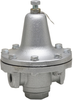
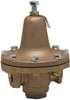
Description: Series 152A Process Steam Pressure Regulators are used in commercial, industrial, and institutional applications to regulate steam pressure in autoclaves, steam tables/irons, vulcanizers and large capacity process services. It is highly sensitive to reduced pressure changes. It
- Valve Size: 0.5 to 2 inch
- Port Size: 0.5 to 2 inch
- Features: Regulators
- Media: Steam, Water
-
Supplier: Watts
Description: Series 252A Process Steam Pressure Regulators are used in commercial, industrial, and institutional applications to regulate steam pressure in autoclaves, steam tables/irons, vulcanizers and large capacity process services. It is highly sensitive to reduced pressure changes. It
- Valve Size: 0.5 to 0.75 inch
- Port Size: 0.5 to 0.75 inch
- Primary Material: Brass / Bronze
- Features: Regulators
-
Supplier: Despatch - ITW EAE
Description: Despatch’s LCC and LCD Clean Process Benchtop Ovens have a stainless steel interior and exterior, rugged, programmable process controls and provide a variety of tailored options for your specific needs. For production environment processes where minimal contamination is essential, the
- Temperature Range: 104 to 662 F
- Capacity: 13.999999999999998 cubic feet
- Atmosphere: Air / Oxidizing, Inert
- Features: Air Filtration, Alarms, Cooling System, Curing / Vulcanizing, Front Panel & Display, Laboratory, Logging / Recorder Options, Other, Shelving / Racks / Carts, Timers
-
Supplier: Watts
Description: Series 152SS Stainless Steel Process Steam Pressure Regulators are used in commercial, industrial, and institutional applications to regulate steam pressure in autoclaves, steam tables/irons, vulcanizers and large capacity process services. It is highly sensitive to reduced pressure
- Valve Size: 0.5 to 1 inch
- Port Size: 0.5 to 1 inch
- Features: Regulators
- Primary Material: Stainless Steel
-
Description: ISO 2476:2009 specifies: physical and chemical tests on raw rubbers; standard materials, standard test formulations, equipment and processing methods for evaluating the vulcanization characteristics of solution-polymerized butadiene rubbers (BR), including oil-extended types (OEBR), and the
-
Description: ARDL's experienced staff can effectively and cost efficiently provide you with the formulations that meet your unique objectives. Services Available at ARDL Include: • Calendering • Compound & Process Development • Compounding & Mixing (Instrumented Banbury®) • Curing • Evaluative Testing •
- Capacity (Mass Basis): 0.11025 to 3.3075 lbs
- Capacity (Volume Basis): 0.001059440119136103 to 0.035314670637870096 cubic feet
- Materials Processed: Abrasives, Adhesives / Sealants, Carbon / Graphite, Coatings / Paint, Elastomers / Rubber, Plastics, Textiles
- Form: Bulk Solids / Granules, Liquids, Nanomaterials, Powders
-
Supplier: AVK International A/S
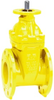
Description: original shape, the double bonding vulcanization process and the sturdy wedge design. The triple safety stem sealing system replaceable under pressure, the high strength stem and the thorough corrosion protection safeguard the unmatched reliability.
- Valve Size: 2 to 36 inch
- Media Temperature: 158 F
- Features: Bolt Flange, Butt Weld, Metal Seated
- Primary Material: Ductile Iron
-
Supplier: Henkel Corporation - Electronics
Description: (Known as Hysol TRA-DUCT 2958 ) LOCTITE ABLESTIK 2958 is a two-part, smooth paste of specially refined and processed epoxy and silver components recommended for electronic, microelectronic and die-attach bonding and sealing applications that require superior electrical and mechanical properties. It
- Viscosity: 40,000 cP
- Industry: Electronics
- Cure / Technology: Room Temp. Cure / Vulcanizing, Two Component System
-
Supplier: AVK International A/S
Description: The wedge is the heart of a gate valve and the quality of the wedge rubber is crucial for the valve function and durability. AVK wedges are fully vulcanized with AVK’s rubber compound with outstanding characteristics. The double bonding vulcanization process ensures maximum adhesion of
- Valve Size: 1.5 to 24 inch
- Media Temperature: 158 F
- Features: Bolt Flange
- Primary Material: Ductile Iron
-
Supplier: Dynatect Manufacturing, Inc.
Description: Vulca-Seal covers are a proprietary process developed by Dynatect (formerly A&A) under the Gortite brand of protective bellows. Vulca-Seal bellows are made from separate sections of material and joined by vulcanizing, resulting in a completely sealed cover. No stitch holes, seams or breaks
- End Configuration: Collar, Inside Flange
- Application: Cylinder Protection, Rod / Screw Cover, Way Cover
- Shape: Square / Rectangular (Open)
-
Supplier: ASTM International
Description: 1.1 This terminology is a compilation of abbreviations for accelerators, vulcanizing agents, activators, antidegradants, plasticizers, softeners, processing aids, blowing agents, retarders, isocyanates, peroxides, and antireversion agents used in the compounding of rubber products. Abbreviations
-
Supplier: Elasto Proxy Inc.
Description: Vulcanization methods are either static or continuous, and typically involve hot air, an autoclave or microwave, or a salt tank. Static vulcanization conveys the extrusion to a station where products are cut-to-length and then placed on a metal pan for autoclaving. Continuous
- Size Capabilities: 0.063 to 6 inch
- Services: Assembly Services, Design Assistance / Review, Die / Tool Fabrication, High Volume Production, Prototype / Short Run, Specialty Packaging
- Secondary Operations: Bending/Forming, Cutting, Drilling/Punching, Printing / Labeling, Tape/Adhesive Application, Water / Abrasive Jet Cutting, Welding
- Features: Canada Only, East Asia / Pacific Only, North America, Other, Southern US Only, United States Only
-
Supplier: Chi Mei Corporation
Description: Chimei's thermoplastic rubber is a copolymerization of Styrene, butadiene, and styrene. Its segmented and radial molecular structure allows it to have the same flexible and physical properties of general rubber without the vulcanization process. Its middle segment is similar to rubber
- Melt Flow Index (MFI): 8 g / 10 minutes
- Features: Elastomer / Rubber, Styrene Copolymer (SBR, etc.), Thermoplastic / TPE
- Type: Molding Resin
- Chemical System: Polybutadiene
-
Supplier: Wacker Chemical Corp.
Description: Silicone Rubber Compound ,ELASTOSIL® C1006 BLU is a low cost, 60 durometer material. The material can be used in molding, calendering and extursion process. ELASTOSIL® C1006 BLU material can be used in automotive radiator hose applications. Special features Good processing properties Good
- Tensile Strength (Break): 970 psi
- Elongation: 380 %
- Industry: Automotive
- Features: Elastomer / Rubber, Gel, Thermoset (Crosslinked / Vulcanized)
-
Supplier: OMEGA Engineering, Inc.
Description: OMEGALUX® silicone rubber laminated heating blankets are low watt density electrical resistance heaters in blanket form. They are designed for freeze protection as well as process temperature control applications. The rugged heater element is made from multi-strand braided and knitted wire.
- Maximum Operating (Sheath) Temperature: 450 F
- AC Voltage Required: 120 to 480 volts
- kWatts: 0.18 to 1.44 kW
- Watt Density: 2.5 W/in²
-
Supplier: Suzhou Niumag Corporation
Description: Curing and aging process Degradation process Material moisture absorption and drying process Particle-polymer compatibility Particle surface modification degree Material adsorption performance evaluation Competitive polymer adsorption Hydrophobic characterization Dispersion
-
Supplier: Wacker Chemical Corp.
Description: LUMISIL® 815 A/B is a low viscous, addition-curing, two-part silicone that cures to a transparent rubber. Especially suited for LED fabrication. Special features two-part, 1 : 1 mixing ratio low viscous rapid heat curing forms a rubber on vulcanization almost constant properties between -40
- Index of Refraction: 1.41 #
- Transmission: 85 %
- Material Density (Theoretical): 1.0400000000000003 g/cc
- Features: Dielectric, Specialty / Other
-
Supplier: Mitsui Chemicals America, Inc.
Description: such as RIM urethane. Unlike conventional rubber, this elastomer does not need compounding or vulcanization once it has reached the end user. Additionally, all grades of the Thermoplastic Olefinic Elastomer can be molded or extruded similar to polyethylene and polypropylene and, like PVC,
- Type: Thermoplastic
-
Supplier: Wacker Chemical Corp.
Description: Pourable, condensation-curing, two-component silicone rubber that vulcanizes at room temperature. Special features very good flowability and self-deaeration low Shore A hardness (approx. 20) excellent tear strength very high elongation and flexibility outstanding chemical resistance to attack by
- Tensile Strength (Break): 507.628937750189 psi
- Elongation: 500 %
- Features: Casting Resin, Unfilled
- Type: Elastomer / Rubber














Find Suppliers by Category Top
Featured Products Top
-
 industries ranging from aerospace, automotive, transportation, and construction to electronics, power generation, medical, and food processing. In this blog, you’ll learn more about how manufacturers create and use vulcanized O-rings and why they’re so beneficial to applications in diverse industries. (read more)
Browse O-rings Datasheets for Arizona Sealing Devices, Inc. -
. We’re providing a breakdown of the common heaters used in each sector, along with their general functions. General Overview of Heater Use Plastics: Heaters maintain process temperature for forming and molding (read more)
Browse Industrial Heaters Datasheets for Backer Marathon, Inc. -
Milastomer™, a thermoplastic olefinic elastomer, is available in various grades, ranging from soft grades like vulcanized rubber to semi-hard grades such as RIM urethane. Unlike conventional rubber, Milastomer does not need compounding or vulcanization once it has reached the end user (read more)
Browse Specialty Polymers and Resins Datasheets for Mitsui Chemicals America, Inc. -
A company engaged in the manufacturing of synthetic resins, plastics materials, and non vulcanizable elastomers, faced a danger of an explosion from the buildup of solvent vapors in the oven dryer atmosphere. This buildup could occur by a malfunction in the production process such as: a (read more)
Browse Gas Instruments Datasheets for Control Instruments Corp. -
9001 certified modern facility, covering the entire process from wire drawing, spiral winding, vulcanization to final crimping. Each assembly is assigned a unique traceability code, enabling full query of raw material certificates and in-process inspection records for the specific batch of wire, tube (read more)
Browse Hydraulic Hose Datasheets for Ningbo TIP Fluid Technology Co., Ltd. -
facility with full process control from wire drawing, braiding, vulcanization, to final crimping. Each assembly is assigned an individual traceability code, enabling complete material lot tracking and inspection record retrieval. Backed by comprehensive factory test reports for quality verification, ensuring consistent, zero-defect delivery across all production batches worldwide. (read more)
Browse Industrial Hose Datasheets for Ningbo TIP Fluid Technology Co., Ltd. -
– Collaborative Finite Element Analysis to fine tune the best seal for a customer’s needs. Methods Of Bonding DTi employs four methods to create one-piece seals and endless gaskets with EPDM and Silicone materials. Hot Splicing Vulcanization (read more)
Browse Edge Trims and Trim Seals Datasheets for Device Technologies, Inc. -
tolerances. These O-Rings can be cut to any length and are vulcanized to provide a strong, uniform thickness with a durable joint. Heavy duty static applications have used O-Rings of this construction type successfully for decades. We also offer the secondary processes of assembly, deflashing, preservation, sorting, marking and painting. (read more)
Browse Rubber and Elastomer Molding Services Datasheets for Atlantic Rubber Company, Inc. -
Industrial: The versatility of o-rings allows them to be used in hydraulic, pneumatic, static, and dynamic industrial processes to keep them functioning efficiently. With our range of materials and custom solutions, Arizona (read more)
Browse O-rings Datasheets for Arizona Sealing Devices, Inc. -
growth and job creation around the world, also contribute to their industries through the standards they help develop. The ASTM–SME synergy benefits its participants at the standards development table and in the marketplace. SMEs — from fuel processors to additive manufacturers (read more)
Browse Standards and Technical Documents Datasheets for ASTM International
Conduct Research Top
-
Vulcanization in theory and practice
This paper concern the theory and practice of vulcanization - the process of adding crosslinks to long-chain molecules.
-
How White Rubber is Made
Additives and pigments are important, but producing white rubber involves more than just mixing chemicals. Choosing a curing process and selecting rubber compounds are also important. Curing, or crosslinking as chemists call it, is a process that alters the properties of polymers. Henry Ford
-
Styrene-Butadiene Rubber Content Test by Low-Field NMR
SBR is also known as polystyrene butadiene copolymer. Its physical mechanism performance, processing performance and product performance are close to natural rubber. Some properties such as wear resistance, heat resistance, aging resistance and vulcanization speed are better than natural rubber
-
Molecular Dynamics Study by Low Field NMR
Low-field magnetic resonance devices have wide applications in the field of polymer materials. They primarily detect the crosslinking density and relaxation time of materials, analyze and study processes such as vulcanization, aging, and modification, as well as changes during water immersion
-
Transformer Basics (.pdf)
ingredients for Fish Provencale. But to those in the know, these terms simply define the type of sheet insulation used in the transformer manufacturing process. Kraft paper, fish paper (vulcanized fiber), Nomex (R), and Mylar (R). are some of the sheet film insulation materials commonly used
More Information Top
 Indicates content that may require registration and/or purchase.

-
Advances in Elastomers I
Finally, details are added on the advantages and disadvantages of the compounding and vulcanization process .
-
Study on peroxide vulcanization thermodynamics of ethylene–vinyl acetate copolymer rubber using 2,2,6,6,‐tetramethylpiperidinyloxyl nitroxide
to these considerations, the study of optimum vulcanization conditionstominimizesidereactionsandpromotethecrosslinking reactions as the unique pathway during the vulcanization process seems to be a central topic to achieve the marked objectives.
-
Rubber as a Construction Material for Corrosion Protection: A Comprehensive Guide for Process Equipment Designers
The antioxidants play no significant role in the vulcanization process .
-
Handbook of Plastics Technologies: The Complete Guide to Properties and Performance > ELASTOMERS
The preponderant (vulcanizable) rubbers and elastomers are thermoset materials, requiring heat for the vulcanization process , which develops a molecular network of crosslinks between polymer backbone chains.
-
Effect of 2‐mercaptobenzothiazole level on kinetics of natural rubber vulcanization
The vulcanization process before tdis (the time when the accelerators and/or intermediates react to depletion) was expressed in an equation as ln(MH − Mt) = ln A − k1(t − t0)α, which is different from the famous equation of Vut …
-
Advances in Elastomers II
They would therefore be dumped from the mixer, often without sulfur and definitely without any acceler- ators (called a first stage mix or masterbatch), as otherwise the vulcanization process could commence in the mixer.
-
Nanocomposites based on thermoplastic polyurethane, millable polyurethane and organoclay: Effect of matrix composition and dynamic vulcanization
Interfacial interactions between the organoclay and polyurethanes were examined by Fourier transform infrared spectroscopy, X‐ray diffraction, and transmission electron microscope analysis, which revealed that the dispersion of organoclays significantly improved with increasing TPU content in the TPU/MPU blends and dynamic vulcanization process .
-
Polymers for Electricity and Electronics: Materials Properties and Applications
Additional details about vulcanization process are shown in Section 2.14.3.2.
-
Advanced Rubber Composites
It is well known that the presence of an amine compound in the curing recipe provides curing acceleration during the vulcanization process .
-
Vulcanization influence on TSD currents and wettability of room temperature vulcanized silicone rubber hv insulator coatings
… Depolarization (TSD) current spectra and surface wettabilities, represented by contact angles, i. e. the advancing angle and the receding angle, were measured on two types of high voltage room temperature vulcanized silicone rubber coatings during their vulcanization processes at room (25°C, 80 …