
Products & Services
See also: Categories | Featured Products | Technical Articles | More Information-
Supplier: PI (Physik Instrumente) L.P.
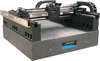
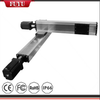
Description: service offering The X-365 precision XY gantry system is a modular linear-motor gantry platform designed for advanced manufacturing, robotics, and laser processing. It delivers precise, repeatable motion with broad integration capabilities and a standardized, configurable
- Stroke or X-Axis Travel: 7.87402 to 31.49608 inch
- Y-Axis Travel: 200 to 600 inch
- Rated Speed: 98.4251968503937 in/sec
- Carriage Load: 22.05 to 33.075 lbs
-
Supplier: PI (Physik Instrumente) L.P.
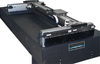
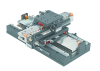
Description: The MGS gantry system has been designed to maximize throughput for applications requiring overhead motion. This stage is ideal for 3D printing, assembly, pick-and-place, alignment, inspection, and industrial automation applications. The MGS uses preloaded linear mechanical bearings which are
- Stroke or X-Axis Travel: 11.81103 to 19.68505 inch
- Y-Axis Travel: 11.81103 to 39.3701 inch
- Rated Speed: 78.74015748031496 in/sec
- Carriage Load: 44.1 lbs
-
Supplier: IntelLiDrives, Inc.
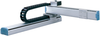
Description: Gantry style cartesian robots with large working areas. All moving axes located above work area. - Synchronized XY Gantry - 1500 x 1500 mm stroke - Stepper or servo motor drive - On-axis repeatability 50 microns - Motorized belt mechanism
-
-
Supplier: IntelLiDrives, Inc.
Description: Gantry style cartesian robots with large working areas. All moving axes located above work area. - Synchronized XY Gantry - 300 x 300 mm stroke - Stepper or servo motor drive - On-axis repeatability 50 microns - Motorized belt mechanism
-
Supplier: IntelLiDrives, Inc.
Description: Gantry style cartesian robots with large working areas. All moving axes located above work area. - Synchronized XY Gantry - 1000 x 1000 mm stroke - Stepper or servo motor drive - On-axis repeatability 50 microns - Motorized belt mechanism
-
Supplier: IntelLiDrives, Inc.
Description: Gantry style cartesian robots with large working areas. All moving axes located above work area. - Synchronized XY Gantry - 600 x 600 mm stroke - Stepper or servo motor drive - On-axis repeatability 50 microns - Motorized belt mechanism Cross Y axis mounted horizontally Cross Y
-
Supplier: igus® inc.
Description: For loads up to 8.0 [kg] For precision requirements up to approx. 0.5 [mm] At speeds up to max. 1.5 [m/s] XY Gantry igus offers cartesian robots as XY Actuator (Single Rail), XY Gantries and XYZ Gantry robots for the most varied tasks. igus gantries include
- Number of Axes: 2 #
- Load Capacity: 8 kg
- X-axis Travel: 500.00000000000006 mm
- Y-axis Travel: 500.00000000000006 mm
-
Supplier: igus® inc.
Description: For loads up to 8.0 [kg] For precision requirements up to approx. 0.5 [mm] At speeds up to max. 1.5 [m/s] XY Gantry | Workspace 300 x 300 mm igus offers cartesian robots as XY Actuator (Single Rail), XY Gantries and XYZ Gantry robots for the most varied tasks. igus
- Number of Axes: 2 #
- Load Capacity: 8 kg
- X-axis Travel: 300.00000000000006 mm
- Y-axis Travel: 300.00000000000006 mm
-
Supplier: H2W Technologies
Description: This is a custom open framed XY gantry. The bottom axis is powered by a 34 frame stepper motor with belt and pulley system while the top axis is driven by a high speed brushless linear motor. This stage was designed for a step and repeat scanning application. Features: - Closed loop
- Stroke or X-Axis Travel: 25 inch
- Y-Axis Travel: 25 inch
- Drive Type: Belt Drive
- Motor Type: DC Brushless, Linear Motor
-
Supplier: Isotech, Inc.
Description: Notes: Gantry systems do not include T-slot sensors, Gearboxes or Motor mounting adaptors. By checking the Give Me Options for boxes you may specify your requirements in the request for quote entry fields. Gantry systems include cable track. Please refer to the Product Specification
-
Supplier: igus® inc.
Description: Workspace 650 x 650mm Payload up to 10kg Repeatability ±0.5mm Speed: up to 1m/s with proximity switches and connecting cables XY Gantry | Workspace 650 x 650mm igus offers cartesian robots as XY Actuator (Single Rail), XY Gantries and XYZ Gantry robots for the most
- Number of Axes: 2 #
- Load Capacity: 10 kg
- X-axis Travel: 650.0000000000001 mm
- Y-axis Travel: 650.0000000000001 mm
-
Supplier: igus® inc.
Description: For loads up to 8.0[kg] for precision requirements up to approx. 0.5mm for speeds up to max. 1.5m/s XY Gantry | Workspace 300 x 300mm | Encoder version igus offers cartesian robots as XY Actuator (Single Rail), XY Gantries and XYZ Gantry robots for the most varied
- Number of Axes: 2 #
- Load Capacity: 8 kg
- X-axis Travel: 300.00000000000006 mm
- Y-axis Travel: 300.00000000000006 mm
-
Supplier: H2W Technologies
Description: This revolutionary new series of single axis linear stepper stages, integrates a linear encoder into the single-axis linear stepper motor stage to operate the linear stepper motor as a 2 phase brushless linear motor, when coupled with state-of-the-art motion control electronics package provided by
- Stroke or X-Axis Travel: 12.25 inch
- Drive Type: Direct Drive
- Features: Electrical
- Orientation: Gantry
-
Supplier: H2W Technologies
Description: This is a small foot print, low profile, brushless linear motor driven, XY positioning stage gantry. The stages are driven by brushless linear motors, guided by precision recirculating linear ball bearing blocks and rails. Each axis incorporates 1 micron resolution linear encoders for
- Stroke or X-Axis Travel: 1.75 inch
- Y-Axis Travel: 2.75 inch
- Bearing Type: Ball/Roller Bearing
- Motor Type: DC Brushless
-
Supplier: H2W Technologies
Description: Features: - High Force - Heavy payload capability (250lbs) - Four axis of coordinated motion (combined linear and rotary displacement)
- Stroke or X-Axis Travel: 24 inch
- Y-Axis Travel: 24 inch
- Motor Type: DC Brushless, Linear Motor
- Drive Type: Direct Drive
-
Supplier: Yamaha Corporation
Description: An electric actuator composed of 2 to 6 slide axes that are orthogonal to one another. Enhanced arm variations and functionalities ranging from a compact and low price arm to an arm applicable to the heavy object transfer and long distance transfer are available to respond to a wide variety of the
- Robot Type: Cartesian Robot, Gantry Robot
-
Supplier: PI (Physik Instrumente) L.P.
Description: 300x300 to 500x1000mm XY travel 10kg load Absolute encoders, 1nm resolution Z-Stage options: linear motors or ball screws Dynamic error mapping 2m/sec max velocity (cross axis)
- Stroke or X-Axis Travel: 11.81103 inch
- Y-Axis Travel: 19.68505 inch
- Z-Axis Travel: 29.527575 to 39.3701 inch
- Rated Speed: 78.74015748031496 in/sec
-
Supplier: Jet Edge
Description: The Jet Edge Mid Rail Gantry waterjet system produces complex parts out of virtually any material. Designed to easily accommodate overhead loading, the Mid Rail Gantry waterjet table is available in multiple sizes. It comes standard with one abrasivejet cutting head. A second abrasive
- Jet Pressure: 90,000 psi
- Power: 200 HP
- Blast / Jet Pressure: 90,000 psi
- Blast / Jet Machine Type: Abrasive Water Jet Cutter
-
Supplier: Aerotech, Inc.
Description: Design Features Optimized design for precise contouring Velocity to 3 m/s and acceleration to 5 g High power brushless linear servomotors for smooth motion Travels up to 1.3 m X 1.3 m Customizable Z and theta axes for flexible configurations Noncontact linear encoders Configurable cable management
- Stroke or X-Axis Travel: 19.68505 to 49.212625 inch
- Y-Axis Travel: 19.68505 to 49.212625 inch
- Rated Speed: 118.110236220472 in/sec
- Carriage Load: 88.2 lbs
-
Supplier: Aerotech, Inc.
Description: Design Features Air bearings for ultra-smooth motion All axes are fully preloaded Dual linear-motor-driven lower axis Travel to 1 m x 1 m Options include Z axis, vibration isolation, machine base and control enclosure
- Stroke or X-Axis Travel: 9.842525 to 39.3701 inch
- Y-Axis Travel: 9.842525 to 39.3701 inch
- Rated Speed: 39.3700787401575 in/sec
- Carriage Load: 19.845 to 185.22 lbs
-
Supplier: JAPAN UNIX Co., Ltd.
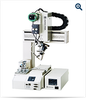
Description: Compact type ・Working area: 200mm×210mm ・New and improved heater ・LAN (Ethernet), COM port ・X,Y axis: 600mm/sec ・Z axis: 250mm/sec ・Separated soldering controller Features ・New heater improves heating and soldering mechanism. ・Productivity is highly improved by increasing rigidity and process
- Number of Axes: 3 #
- Robot Type: Cartesian Robot, Gantry Robot
- Features: Other / Specialty
-
Supplier: PI (Physik Instrumente) L.P.
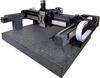
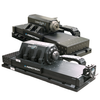
Description: The A-341 PIglide HGS hybrid gantry system was developed for applications that require overhead motion and long travel ranges. The A-341 hybrid gantry has a unique hybrid guide design. The bridge axis is equipped with a friction-free guide with air bearings that allow exact control of
- Stroke or X-Axis Travel: 11.81103 to 19.68505 inch
- Y-Axis Travel: 11.81103 to 39.3701 inch
- Carriage Load: 22.05 lbs
- Drive Type: Direct Drive
-
Supplier: Chengdu Fuyu Technology Co., Ltd
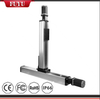
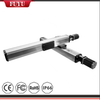
Description: [Technical Feature] FSL80 linear guide, fully sealed structure, body width 80mm, it is designed for dustproof usage in hard environment, avoid dust or miscellaneous debris fall into body structure to affect working, large stretch,small compression,hard object collision without deformation, oleic
- Number of Axes: 3 to 1 #
- Load Capacity: 20 to 40 kg
- Reach: 50 to 1,200.0000000000002 mm
- X-axis Travel: 50 to 1,200.0000000000002 mm
-
Supplier: Chengdu Fuyu Technology Co., Ltd
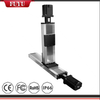
Description: [Technical Feature] FSL120 linear module, fully enclosed structure, body width 120mm, two guides and four sliders, with high precision, multi-segment repeat positioning, compact structure, strong versatility, suitable for use in special environments. [Range of Application] It can be used in
- Number of Axes: 3 to 1 #
- Load Capacity: 50 to 100 kg
- Reach: 50 to 1,500 mm
- X-axis Travel: 50 to 1,500 mm
-
Supplier: ETEL S.A.
Description: VULCANO2 is our gantry stacked-axes architecture combining our renowned ironcore motors, mechanical bearing and high-end optical encoders to deliver great geometrical performance at high dynamics. When compared to our stacked CHARON2 family, the VULCANO2 mainly comes with higher duty cycle
- Stroke or X-Axis Travel: 0 to 14.3700865 inch
- Y-Axis Travel: 0 to 13.9763855 inch
- Rated Speed: 47.24409448818898 in/sec
- Carriage Load: 176.4 lbs
-
Supplier: Chengdu Fuyu Technology Co., Ltd
Description: [Technical Feature] FSL80 linear guide, fully sealed structure, body width 80mm, it is designed for dustproof usage in hard environment, avoid dust or miscellaneous debris fall into body structure to affect working, large stretch,small compression,hard object collision without deformation, oleic
- Number of Axes: 3 to 1 #
- Load Capacity: 20 to 40 kg
- Reach: 50 to 1,200.0000000000002 mm
- X-axis Travel: 50 to 1,200.0000000000002 mm
-
Supplier: Yamaha Motor- Robot Division
Description: An electric actuator composed of 2 to 6 slide axes that are orthogonal to one another. Enhanced arm variations and functionalities ranging from a compact and low price arm to an arm applicable to the heavy object transfer and long distance transfer are available to respond to a wide variety of the
- Number of Axes: 2 to 4 #
- Load Capacity: 10 to 30 kg
- X-axis Travel: 850 to 1,250.0000000000002 mm
- Y-axis Travel: 550 to 850 mm
-
Supplier: Chengdu Fuyu Technology Co., Ltd
Description: [Technical Feature] FSL120 linear module, fully enclosed structure, body width 120mm, two guides and four sliders, with high precision, multi-segment repeat positioning, compact structure, strong versatility, suitable for use in special environments. [Range of Application] It can be used in
- Number of Axes: 3 to 1 #
- Load Capacity: 50 to 100 kg
- Reach: 50 to 1,500 mm
- X-axis Travel: 50 to 1,500 mm
-
Supplier: HIWIN Corporation
Description: linear motors, these stages can be combined together to form cross tables or even gantry systems.
-
Supplier: Zaber Technologies, Inc.
Description: A Zaber gantry kit comes with everything you need to build a customized XY gantry system or XYZ gantry system. These gantry systems feature coordinated multi-axis motion, plug-and-play operation, easy integration with end-effector options, and built-in IO and
- Orientation: Gantry
-
Supplier: Zaber Technologies, Inc.
Description: A Zaber gantry kit comes with everything you need to build a customized XY gantry system or XYZ gantry system. These gantry systems feature coordinated multi-axis motion, plug-and-play operation, easy integration with end-effector options, and built-in IO and
- Orientation: Gantry
-
Supplier: MotiCont
Description: Two-axis Servo Motor Driven Positioning Gantry Stage Zero Backlash Long System Life High Speed Positioning Compact Package Integrated Position Feedback Sensor High Force Generation High Accuracy Cog Free High Repeatability 1 Micron Resolution
- Stroke or X-Axis Travel: 10 inch
- Y-Axis Travel: 10 inch
- Axis Configuration: X-Y Axes
-
Supplier: MultiCam, Inc.
Description: linear bearing rails, and top of the line high precision planetary gearboxes. Your investment is protected with armoloy rail coatings, labyrinth seals, bellows, and built in self test routines. If that wasn't enough, the MultiCam gantry and X beams are welded, stressed relieved, and machined
- Power: 50 HP
- Blast / Jet Machine Type: Abrasive Water Jet Cutter
- Features: Automatic / CNC Controlled
- Part Loading: Gantry / XY Table Loaded
-
Supplier: AccuStream, Inc.
Description: WARDJet Inc., Tallmadge, Ohio is a leading manufacturer of waterjet and abrasive waterjet cutting machines in the USA. Our focus is on setting business owners’ imaginations free when it comes to the automation of almost anything. Our goal has been to design and build a CNC waterjet gantry
- Jet Pressure: 40,000 to 55,000 psi
- Power: 30 to 50 HP
- Blast / Jet Pressure: 40,000 to 55,000 psi
- Water Flow: 0 to 240 GPH
-
Supplier: Aerotech, Inc.
Description: Design Features High integration linear/rotary motion platform Pneumatically actuated 3-jaw gripper or ER collet Clear aperture for product feedthrough Optional front and rear tooling platforms Direct-drive linear and rotary motor technology Configure for wet or dry cutting
- Thickness Capacity: 1.181103 inch
- X-axis Travel / Length Capacity: 11.81103 inch
- Y-axis Travel / Width Capacity: 11.81103 inch
- Type: Complete / Turnkey System







Find Suppliers by Category Top
Featured Products Top
-
 Gantry System Benefits: Gantry robots can utilize an entire cubic work envelope of 96% of their space and size. A Cartesian robot has three axes. Like their namesake and more recognizable giant cousins, the gantry crane, they are commonly suspended from an X or X/Y axis beam on a (read more)
Browse Robots Datasheets for Isotech, Inc. -
wrappers, case packers, pick-and-place robotics Backstop Gauging – Gantry systems, automated palletizers X-Y Positioning – Pick-and-place robotics, palletizers, case packers (read more)
Browse Linear Encoders Datasheets for Encoder Products Company -
, ceramics, sapphire, quartz, and other advanced materials. Equipped with a four-axis control system, including X/Y linear axes and dual rotary axes, the SGR15 enables complex geometric cutting, multi-angle processing, and programmable contour machining for small and medium-sized components (read more)
Browse Wire Cutting Machines Datasheets for Vimfun Diamond Wire Saw -
photonic devices alignment, such as fiber array units (FAU). 6-Axis Alignment System with three Goniometers The compact design enables easy integration into multi-axis systems, including combinations with linear, vertical, and XY stages, such as the (read more)
Browse Rotary Stages Datasheets for PI (Physik Instrumente) L.P. -
with minimal velocity fluctuations. The laterally opposed bearing design also allows flexible mounting orientations, and options include encoder configurations, air preparation kits, single- and multi-axis controllers, pneumatic locks, XY (read more)
Browse Linear Slides and Linear Stages Datasheets for PI (Physik Instrumente) L.P.
Conduct Research Top
-
XY Tables: How Do They Differ from Cartesian and Gantry Systems?
was designed for. In many industrial applications, Cartesian and gantry-style robots are prevalent, but in precision applications, XY tables are often the better choice, due to their compact, rigid structure and very high travel and positioning accuracy.
-
What is Racking in Gantry Systems?
Gantries differ from other types of multi-axis systems (such as Cartesian robots and XY tables) by using two base (X) axes in parallel, with a perpendicular (Y) axis connecting them. While this dual X-axis arrangement provides a wide, stable footprint and allows gantry systems to deliver high load
-
What Is a Gantry Stage / Cartesian Robot?
A precision gantry stage or gantry system is sometimes called a linear robot or Cartesian robot. Gantry robots typically provide overhead motion in 2 or 3 linear degrees of freedom (X-Y and X-Y-Z) and are often used for pick and place applications, 3D printing or laser machining, precision handling
-
What is Racking in Gantry Systems, And How Can it be Avoided?
Gantries differ from other types of multi-axis systems (such as Cartesian robots and XY tables) by using two base (X) axes in parallel, with a perpendicular (Y) axis connecting them. While this dual X-axis arrangement provides a wide, stable footprint and allows gantry systems to deliver high load
-
Part 1 - What is Racking in Gantry Systems, and How Can it be Avoided?
Gantries differ from other types of multi-axis systems (such as Cartesian robots and XY tables) by using two base (X) axes in parallel, with a perpendicular (Y) axis connecting them. While this dual X-axis arrangement provides a wide, stable footprint and allows gantry systems to deliver high load
-
What is a Split Bridge System and How Does it Differ from a Gantry?
Multi-axis linear systems come in a variety of designs, with Cartesian, gantry, and XY tables being some of the most common types. While these designs simplify construction and can provide space savings, they also introduce "stacking " errors -- the compounding of errors from each axis, which
-
What You Should Know About Cartesian Robots
are boxy, open, and their primary X-Y directional motion is regulated from above by a rectangular gantry. A lead screw or other linear actuator controls movement in the vertical, Z-direction. All Cartesian robots have this rectangular configuration, and as a result, they are sometimes called
-
What Types of Motion Can You Create with Multi-Axis Linear Systems?
For many tasks, multi-axis linear systems - Cartesian robots, X-Y tables, and gantry systems - travel in straight lines to achieve quick point-to-point movements. But some applications, such as dispensing and cutting, require the system to follow a circular path or a complex shape that can't
More Information Top
 Indicates content that may require registration and/or purchase.

-
The Anglo-Australian Observatory's 2dF Facility
All movements of the XY gantry are balanced by coun- terweights that move in the opposite direction to the gantry, resulting in zero net momentum at the prime focus when the positioner is operational.
-
Performance of Echidna fiber positioner for FMOS on Subaru
The positions of the tips of the fibers are measured with the fiber camera of the Focal Plane Imager (FPI) on the XY gantry .
-
Coupled crust‐mantle dynamics and intraplate tectonics: Two‐dimensional numerical and three‐dimensional analogue modeling
Individual topographic measurements are made with a spacing of 1 mm along each scan line and the positional accuracy of the XY gantry is ±0.1 mm.
-
Area Array Packaging Handbook: Manufacturing and Assembly > CRITERIA FOR PLACEMENT AND PROCESSING OF ADVANCED PACKAGES
• Mechanical stiffness of the xy gantry system .
-
Environmental Analysis by Electrochemical Sensors and Biosensors
Figure 6.8 shows a prototype of the CHEMSENS beaker where there is room for 15 sensors per beaker wall and the actuator assembly and delivery is accomplished by the XY gantry above the beaker.
-
Optimization algorithm for PCB assembly of modular mounters
The gantry-type mounter has XY gantries with multiple heads and stationary feeder lanes, which need many heads and feeder lanes to cover various sized components.
-
Waterjet Cutting and Routing for the Automotive and Aerospace
LARGE SYSTEM WITH ROBOT ON XY GANTRY This system is specially designed to cut very large parts such as tubes, vessels and large composite components.
-
Anglo-Australian Observatory 2dF project: a status report after the first year of scientific operation
Between the optical corrector and the focal plane is located a Peltier cooled camera system on a XY gantry (the focal plane imager system or FPI) which may be used for astrometric calibration and target acquisition.