Principles of Planar Near-Field Antenna Measurements

The application of generalized angular alignment corrections to far-field vector-pattern functions is a subject that is of significance to this text and is often avoided both in practice and in the literature. The application of isometric rotations via the use of bespoke non-rectangular coordinate systems is introduced by illustrating the effect of applying scalar, vector and finally polarisation rotations.
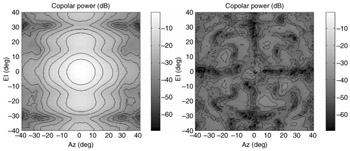
A scalar rotation constitutes an isometric rotation of the antenna pattern in which the reference polarisation is rotated with the pattern. Figure 5.29 contains the copolar and cross-polar far-field vector-pattern function of an AUT, this is nominally aligned to the equator of the azimuth over elevation grid on which it has been tabulated.
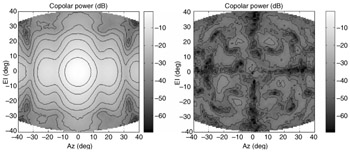
Figure 5.30 contains the same far-field vector-pattern function as that shown above only here, a scalar rotation of 90 in roll has been applied.
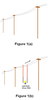
Clearly, although the antenna pattern has been rotated the field vectors have not changed. Physically, this is equivalent to applying a rotation to the antenna whilst holding still the coordinate system in which the pattern is tabulated. Furthermore, an identical rotation has been applied to the polarisation basis onto which the pattern has been resolved. This situation is illustrated schematically in Figure...