Principles of Planar Near-Field Antenna Measurements

Color Figures


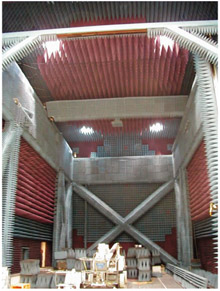
Figure 3.21: A 14 7.9 m horizontal planar scanner (courtesy of NSI)

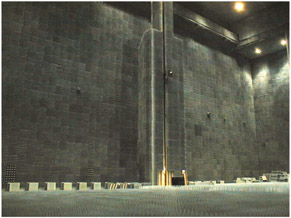
Figure 3.23: A 33 16m, 50 GHz, planar scanner (courtesy of NSI)

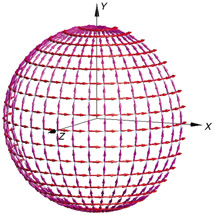
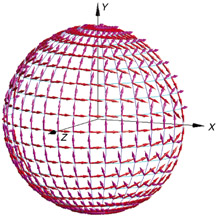
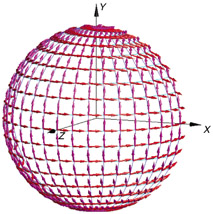
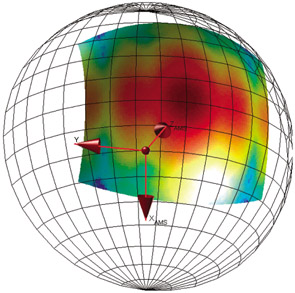
Figure 5.21: Ludwig I polarisation basis superimposed on a spherical coordinate system

Figure 5.22: Spherical polarisation basis

Figure 5.23: Azimuth over elevation polarisation basis - Ludwig II

Figure 5.24: Elevation over azimuth polarisation basis - Ludwig II

Figure 5.25: Ludwig III x-copolar polarisation basis

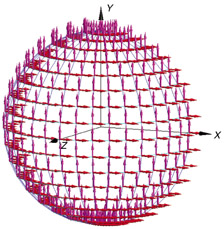
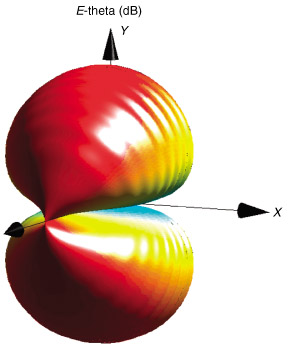
Figure 5.32: 3D plot of a scalar rotation of a far-field vector-pattern function, Roll = 0

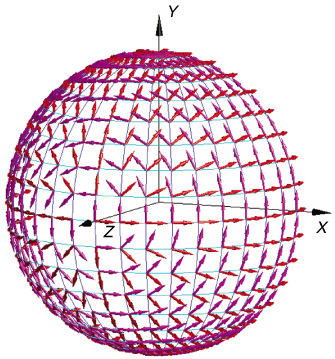
Figure 5.33: 3D plot of a scalar rotation of a far-field vector-pattern function, Roll = 90

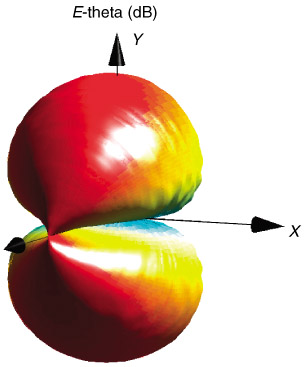
Figure 6.6: E ? field component at 9 GHz

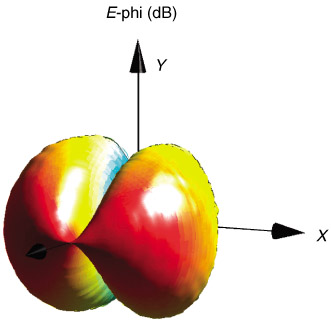
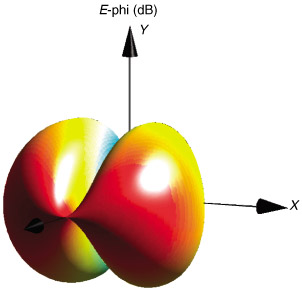
Figure 6.7: E ? field component at 9 GHz

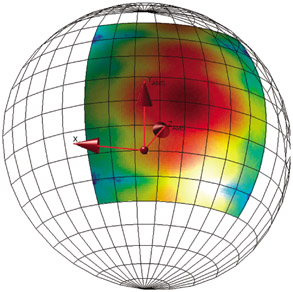
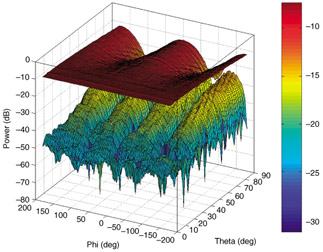
Figure 6.10: Pseudo-colour mesh-plot of measured far-field power pattern of waveguide probe at 9 GHz plotted using a Ludwig III polarisation basis

Figure 6.16: E ? probe pattern at 9 GHz

Figure 6.17: E ? probe pattern at 9 GHz

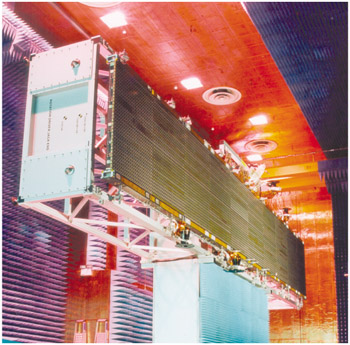
Figure 9.2: The Astrium limited ASAR antenna developed for the European Space Agency Envisat Program shown under test in the large PNFS (courtesy of Astrium)

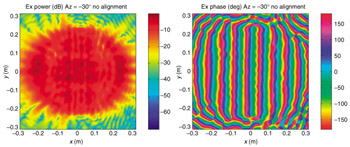
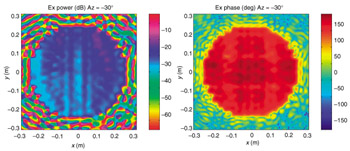
Figure 9.9: Reconstructed amplitude and phase function

Figure 9.10: Reconstructed amplitude and phase function with active alignment correction applied

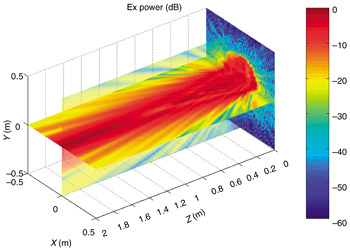
Figure 9.13: Power propagating in the near zone of an antenna

UNLIMITED FREE
ACCESS
TO THE WORLD'S BEST IDEAS

SUBMIT
Already a GlobalSpec user? Log in.

This is embarrasing...

An error occurred while processing the form. Please try again in a few minutes.

Customize Your GlobalSpec Experience

Category: Antennas
Finish!
Privacy Policy

This is embarrasing...

An error occurred while processing the form. Please try again in a few minutes.