Introduction to Knowledge Management: KM in Business

People in conflict tend to focus on their positions, instead of focusing on their needs. These positions often come into conflict because of the differences in personal abstractions. The more diverse two parties' backgrounds are, the more they need to be able to communicate effectively. Sadly, the paradox is that their abstractions are so different that effective communication can be almost impossible. Exploring the significant language terms that hold different meanings for the parties involved in a conflict can often defuse a situation before it explodes. A larger abstraction of reality can sometimes accommodate the individual's threatened needs that are energizing the dispute.
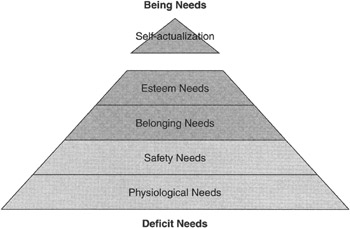
According to the classic theory of Abraham Maslow, there are four types of needs that must be satisfied before a person can act unselfishly. Maslow called this the Hierarchy of Needs. In his theory, an individual's needs are arranged into a pyramid. Satisfying one set of needs at a time ascends the pyramid. Our most basic drives are physiologic. After that comes the need for safety, then the desire for love, and then for esteem. This was not exactly a shocking revelation.
What made Maslow's idea unique is its concept of pre-potency. A pre-potent need is the one that has the greatest power or influence over our actions. It was Maslow's theory that everyone has a pre-potent need, but the need differs among individuals. In addition, an individual is not ready to express...