Introduction to Optics
Including the tools and methods currently used by researchers and engineers, this book covers the essential concepts of comprehension and reports the great progress of the current knowledge in optics.
 TABLE OF CONTENTS
 Geometrical optics is that part of Optics where the formation of an image starting from an object is mostly studied. The notion of a light ray is used extensively, allowing an intuitive and efficient understanding of the way optical instruments are working. In any optical experiment some light energy propagates from a source toward a detector, or toward infinity if the medium of propagation is perfectly transparent and if no detector is present.
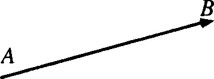
From a mathematical point of view a light ray is just a curve, which means a vectorial space having only one dimension. From a physical point of view, a light ray is a trajectory followed by the electromagnetic (EM) energy. The impossibility of isolating a light ray considerably weakens any physical interpretation, a ray will be considered as nothing other than a useful mathematical tool.
In this chapter we will only deal with isotropic mediums of propagation, having identical properties, whatever the direction of propagation. These mediums will be considered as perfectly transparent, the light intensity, as defined in formula (2.23), remains constant along a given ray.
Chapter 3 has been reviewed by Dr. Olivier Dell a from Teemphotonics.
The mediums of propagation can be either homogeneous or inhomogeneous: their optical properties will be, or will not be, the same whatever the point under consideration. Here we propose a classification of the different transparent mediums.
|
 | Homogeneous medium. Same properties at any... |