Approximate Boundary Conditions in Electromagnetics

5.5: Diffraction by Half-Plane Junctions

5.5 Diffraction by Half-Plane Junctions

A simple problem involving second order conditions is a plane wave incident on a conductive sheet lying in the plane y = 0 and subject to different second order transition conditions in x < 0 and x > 0. If the plane wave is incident in the xy plane, the problem is a two-dimensional scalar one which can be solved using the dual integral equation technique of Clemmow (1951). The method is based on the representation of the fields in terms of angular spectra. The solution is developed in the next section and we then show how the solutions of other related problems can be deduced from it.

5.5.1 Conductive Sheet Junction

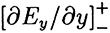
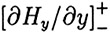
For a planar surface it is natural to employ the transition conditions (5.25) and (5.26) involving the normal field components E y and H y, but there are mathematical difficulties associated with these, and the difficulties occur even in the case of first order conditions. At an edge or other line discontinuity in the surface, and may be as singular as x -3/2 where x is the distance from the edge, and their Fourier transforms do not exist in the classical sense. One way to avoid this is to use the x-integrals of E y and H y, i.e.

and to solve the problem for them. It can be shown (Senior, 1987) that the arbitrary constants that are introduced into...

UNLIMITED FREE
ACCESS
TO THE WORLD'S BEST IDEAS

SUBMIT
Already a GlobalSpec user? Log in.

This is embarrasing...

An error occurred while processing the form. Please try again in a few minutes.

Customize Your GlobalSpec Experience

Category: Optical Manufacturing Services
Finish!
Privacy Policy

This is embarrasing...

An error occurred while processing the form. Please try again in a few minutes.