Thermal Analysis of Polymeric Materials

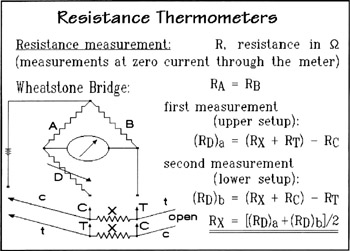
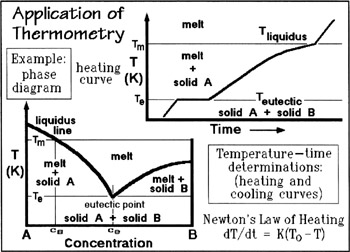
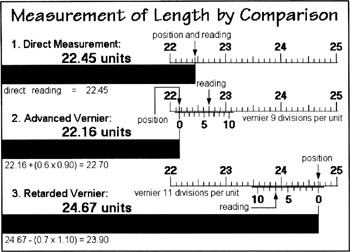
All basic techniques of thermal analysis treated in this chapter are already mentioned in Sect. 2.1.3, together with a number of further, less basic techniques. The thermal analysis tools are grouped according to the variables they are designed to determine, as is summarized in Fig. 2.4. The International Confederation for Thermal Analysis and Calorimetry, ICTAC, and the regional North American Thermal Analysis Society, NATAS, are the scientific organizations concerned with this field of science (see Figs. 2.5 and 6) and their proceedings contain a continuous record of thermal analysis [1] , [2]. Thermometry and dilatometry are treated in Sect. 4.1. They are the techniques most prominently represented by the mercury-in-glass thermometer, shown in Fig. 2.7 and the measurement of length, shown in Fig. 4.12, below. Section 4.2 contains a general description of calorimetry. Thermometry can be coupled, next, with the measurement of time by taking heating and cooling curves as seen, for example, in Fig. 4.9, below, and Fig. 1.67. These simple thermal analyses are the forerunners of DTA and DSC, popular techniques of thermal analysis, treated in Sects. 4.3 and 4.4. The measurement of length leads in Sect. 4.5 under conditions of changing temperature and a fixed force is thermomechanical analysis, TMA, which on adding force modulation leads to dynamic mechanical analysis, DMA. Also treated in Sect. 4.5 is DETA. Section 4.6 deals, finally, with measurement of mass with changing temperature and time.
[2]Proceedings of the annual NATAS Conferences, changing...