Fundamentals of Electromagnetic Fields
Including numerous examples with complete, worked-out solutions, this book is designed to present the fundamental concepts of electromagnetic field theory as they relate to modern engineering applications.
 TABLE OF CONTENTS
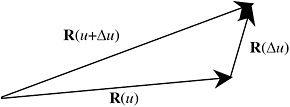
 Let R (u) be a vector depending upon a scalar variable u=u(x,y,z). Then,

where D u represents increments in u. The ordinary derivative of the vector R (u) with respect to the scalar u is given as 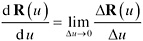 , if the limit exists. Since [ d R (u)/du] is itself a vector depending upon variable u in the direction of ? R it is considered to be derivative of R (u) with respect to u if this limit exists, then we call such a vector field as differentiable.
A vector function R=R x a x + R y a y+R z a z is said to be continuous if R x , R y , and R z scalar functions are continuous i.e.,

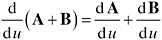


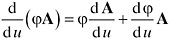
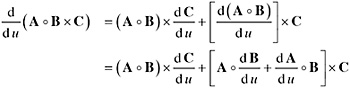
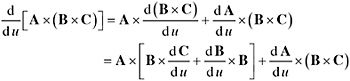
If A is a vector function of more than one scalar variable, say, x, y, z, then we write A= A (x,y,z). The partial derivative with respect to x is defined as:

Similarly, we can extend this concept to partial differentiation with respect to y and z.

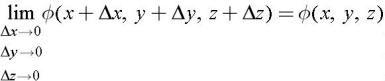
?(x,y,z) is called as continuous at (x,y,z) if,
Higher derivatives and mixed partial derivatives can be defined in vector calculus as: