Fundamentals of Electromagnetic Fields
Including numerous examples with complete, worked-out solutions, this book is designed to present the fundamental concepts of electromagnetic field theory as they relate to modern engineering applications.
 TABLE OF CONTENTS
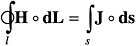
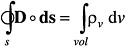
 The Maxwell equations for a static electric field and steady state magnetic field, which are time-independent field s are as follows:
| Point/Differential form | Integral form | |
|---|---|---|
| ? H=J | | (7 1) |
| ? E=0 | | (7 2) |
| ? ? D= ? v | | (7.3) |
| V ? B=0 | | (7 4) |
| The associated relations are: D= ? E, B= ? H, and Ohm s law J= ? E. | (7 5) |
In this chapter, two new concepts are introduced:
An electric field produced by a changing magnetic field.
A magnetic field produced by a changing electric field.
The first concept resulted from the experimental research of M. Faraday and the second resulted from the theoretical efforts of James Clerk Maxwell.
In 1820, Oersted demonstrated that an electric current affected a compass needle. Faraday professed his belief that if a current could produce a magnetic field, then the magnetic field should be able to produce a current. Faraday worked on this problem for 10 years until he was finally successful in 1831. He wound two separate windings on iron toroid and placed a galvanometer in one circuit and a battery in the other. Upon closing the battery circuit, he noted a momentary deflection in the galvanometer. A similar deflection in the opposite direction occurred when the battery disconnected. This was the first experiment he made involving a changing magnetic field.
In terms of fields, we now say that a time-varying magnetic field produces electromotive force which may...