In order to make a model of a piece of equipment and to subsequently develop a simulation based on that model, it is necessary to first understand how the equipment actually works, then to understand the relationships between the controls, inputs, and outputs of that equipment. In this chapter, we will look at antennas, transmitters, receivers, processors, and direction-finding subsystems. In each case, we will first discuss the roll of that element in EW, and the different types or approaches used in EW. Then we will discuss the input requirements, operator or automatic controls, and output from that element. The object is to end with what is required to model the performance of that element.
5.1 Antennas
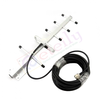
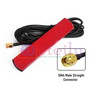
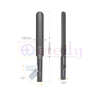
An antenna is characterized by both gain and directivity. If the receiving antenna is pointed in the direction of an emitter, the signal received from that emitter is increased by the antenna gain (which varies from about ?20 dB to +55 dB, depending on the type and size of the antenna and the signal frequency). The antenna's directivity is provided by its gain pattern.
There are two basic classes of antennas used in EW and threat systems; one type covers 360 degrees of azimuth and the second covers a smaller angular area. Sometimes the 360-degree antennas are called omnidirectional antennas, but the name is misleading. A true omnidirectional antenna, or isotropic antenna, would transmit energy or receive signals equally over a full sphere. There are no truly isotropic antennas because of...
Copyright SciTech Publishing, Inc. 2006 under license agreement with Books24x7

 TABLE OF CONTENTS