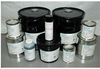
Mechanical Engineering License Review, Fifth Edition

In 20 chapters, this volume covers the content of the national Mechanical Engineering License Review examination used in all 50 states.
 TABLE OF CONTENTS
The source of heat which is used to produce steam in a boiler is the fuel. The cost of fuel is by far the greatest single item of expense in the production of power. Fuels may be solid, liquid, or gaseous. The principal solid fuels are wood, peat, lignite, and coal. For liquid fuels we have fuel oil (Bunker C for industrial use and No. 2 oil for commercial use), tar, and other unrefined petroleum oils. The gaseous fuels consist of natural gas, refinery and betterment gases, coke-oven gas, and blast-furnace gas. Sawdust, bagasse (sugar-cane pulp), and garbage and sewer disposal wastes may be included among others. The principal ingredients of all these fuels are carbon and hydrogen.
In atomic power plants the one natural fuel is U 235, making up 0.7 per cent of natural uranium with the balance U 238. U 235 is the only naturally occurring, readily fissionable nuclear fuel. Enriched uranium fuels may also be used.
| Q7-1 | A coal has the following composition by weight: carbon, 74.79 per cent; hydrogen, 4.98 per cent; oxygen, 6.42 per cent; nitrogen, 1.20 per cent; sulfur, 3.42 per cent; water, 1.55 per cent; ash, 7.82 per cent. Calculate its heating value, using the Dulong formula. |
|
Answers
| Q7-1 | The formula does not apply when the fuel contains carbon monoxide.  A calorimeter test showed this fuel to have 13,480 Btu per lb, showing a remarkable degree of accuracy for this formula. |