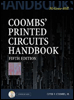
Printed Circuits Handbook, Fifth Edition
Joyce M. Avery
Avery Environmental Services, Saratoga, California
Peter G. Moleux, P.E
Peter Moleux and Associates, Newton Centre, Massachusetts
In the past, manufacturers of printed circuit boards have relied on end-of-pipe treatment and disposal for hazardous wastes generated in the fabrication process. These technologies are no longer optimal strategies for managing waste for two reasons. First, the potential liabilities involved with the handling and disposal of waste have increased and will continue to increase, and second, waste disposal costs have gone up significantly due to restrictions placed on land disposal. As a result, the industry is faced with the challenge of finding alternative methods for managing hazardous waste. This chapter presents a brief overview of some of the alternatives available to address this challenge, as well as a summary of some of the issues involved in implementation.
[*] This chapter is reprinted from the 4th edition. The basic issues, regulations, and processes are considered accurately stated and relevant to the 5th edition. For specific actions, however, it is recommended that waste treatment engineering and legal professionals be consulted to ensure that latest government expectations are understood at all levels of jurisdiction and that appropriate technology is applied to the resolution of specific issues.
Fabricators of printed circuit boards today are faced with a complex set of environmental requirements. In the United States there are three basic environmental statutes impacting the fabrication and assembly of printed circuit boards.