Spread Spectrum CDMA: IS-95 and IS-2000 for RF Communications
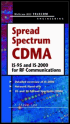
Provides a user-friendly explanation of the concepts, issues, and techniques behind the IS-95 and IS-2000 CDMA standards.
 TABLE OF CONTENTS
 Most books on the topic of CDMA (Code Division Multiple Access) Spread Spectrum technology typically either treat the subject in rather general terms, or focus intensely on a few isolated theoretical aspects, such as random number generation, and assume the "interested" reader will fill in the rather large gaps between the RF side of the link and the digital aspects of the commercial implementation of CDMA. The intent of this work is to offer elements that help to bridge the divide between these two seemingly unrelated worlds, by developing a general foundation of basic concepts, including some general RF and digital communications principles to help flesh out CDMA in general, while providing more rigorous details in the appendices for those seeking greater depth. The scope of the material presented here is aimed at the reader with basic math skills and an interest in communications, such as an electronics technician or mid-level engineering student. The presentation of the material gradually develops each concept in a progressive sequence, in order to foster an appreciation and understanding of many of the underlying mechanisms that make "direct sequence" spread spectrum CDMA possible.
Although the commercial mass communications implementation of CDMA is a relatively new phenomenon that began in the mid 1990s with the IS-95A standard, in its young career, CDMA has profoundly altered the commercial communications landscape unlike any other technology that has preceded it. Prior to the implementation of CDMA, previous improvements in RF communications were rather modest refinements on the existing art variations...