In technical shop mathematics, as well as in every day activities, we encounter all real numbers, positive and negative, rational and irrational. Quantities less than zero are everyday occurrences a temperature of extreme cold, for example, or a negative reading on a voltmeter.
Positive and negative numbers are often referred to as signed numbers. When learning how to work with signed numbers it is best to look at examples of integer operations and to sketch the problem on a number line. Be aware that anything said about numbers or integers in this chapter applies to all real numbers, but for simplicity, integers alone will be used to explain the rules of real number operations. Also notice that a sign precedes only negative numbers. Positive signs are implied on positive numbers.
2.1 Addition and Subtraction on the Number Line
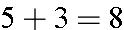
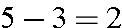
Addition of a positive number to another number is shown on the number line by an arrow pointing to the right of the starting number. Starting number means the first number in the operation or string of operations. Subtraction of a positive number is represented on the number line by an arrow pointing to the left of the starting number. This familiar convention is used in elementary arithmetic. For example, in the cases of 5 + 3 and 5 ? 3, the starting number is 5 and the operations are represented on the number line as:
The answers are 8 and 2, respectively. In the above...
Copyright Industrial Press Inc. 2006 under license agreement with Books24x7

 TABLE OF CONTENTS