Technical Shop Mathematics, Third Edition

In technical shop and engineering problems we often need to the know length, area, or volume (capacity) of an object. Instances of such problems include calculating the number of feet of fence necessary to enclose a construction project; determining the number of gallons of paint to cover a house exterior; calculating how much of a bolt s thread surface will support the weight of a bridge; and deciding whether a tank of a certain size will hold enough coolant to meet the requirements of a cutting machine.
This chapter gives the important formulas for calculating perimeter, area, and volume of two- and three-dimensional figures.
Perimeter refers to the combined lengths of the sides of a closed figure, such as a polygon. It is a linear measure, given in inches, feet, miles, meters, kilometers, rods, and so on.
A rod is a unit of linear measure equal to 16.5 feet.
The perimeter P of a polygon with n sides is found by adding the lengths of individual sides:
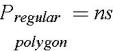
where s 1 , s 2 ,..., s n are the individual lengths of each of the sides of the polygon. A square is an equilateral polygon; its sides are of equal length. Hence, a square s perimeter P is found by multiplying the length s of a side by 4, or P = 4 s. In fact, the perimeter P of any equilateral polygon is
where n